
Filter
2065
Filtered Results: 2065
Text search:
American
Nurse
Featured
Recommendations
203
New Publications
419
Language
Document type
No document type
1067
Studies & Reports
363
Guidelines
302
Manuals
165
Strategic & Response Plan
60
Training Material
51
Fact sheets
27
Situation Updates
13
Resource Platforms
9
Infographics
3
Brochures
2
Dashboards/Maps
1
App
1
Online Courses
1
Countries / Regions
Global
83
India
66
South Africa
56
Kenya
45
Latin America and the Carribbean
45
Sierra Leone
33
Western and Central Europe
31
Ethiopia
31
Tanzania
30
Liberia
30
Nigeria
29
Africa
29
Syria
28
Uganda
26
Rwanda
22
Malawi
19
Zambia
19
Ghana
18
Philippines
17
Namibia
17
Nepal
15
Haiti
15
Bangladesh
15
Ukraine
13
Asia
13
Eastern Europe
13
Russia
13
South Sudan
13
Myanmar / Burma
13
Venezuela
12
South–East Asia Region
12
Brazil
11
Indonesia
11
Zimbabwe
10
USA
10
Colombia
9
Burkina Faso
9
Guinea
9
Mozambique
9
Cambodia
9
Eswatini/ Swaziland
9
Congo, Democratic Republic of
8
Botswana
8
Lesotho
7
Germany
7
Thailand
5
Senegal
5
Afghanistan
5
Peru
5
West and Central Africa
5
Middle East and North Africa
5
Eastern Europe and Central Asia
5
East and Southern Africa
5
Lebanon
5
Yemen
5
Pakistan
5
China
4
Chile
4
Cameroon
4
Canada
4
Jordan
4
Bolivia
4
Georgia
4
North Macedonia
3
Tajikistan
3
Mexico
3
Benin
3
Kyrgyzstan
3
North America
3
Jamaica
3
Southern Africa
3
Argentina
3
Vietnam
3
Moldova
3
Palestine
3
Iraq
3
Somalia
3
El Salvador
2
Turkey
2
Iran
2
Albania
2
Morocco
2
Armenia
2
Hungary
2
Lithuania
2
Belgium
2
France
2
United Kingdom
2
Portugal
2
Belarus
2
Egypt
2
Sudan
2
Greece
2
Central African Republic
2
Honduras
2
Angola
2
Madagascar
2
Guatemala
2
Serbia
1
Kazakhstan
1
Fiji
1
Laos
1
Estonia
1
Niger
1
Qatar
1
Guinea-Bissau
1
Ireland
1
Saudi Arabia
1
Western Pacific Region
1
Paraguay
1
Tunisia
1
Norway
1
Spain
1
South Korea
1
Côte d’Ivoire / Ivory Coast
1
Papua New Guinea
1
Nicaragua
1
Romania
1
Poland
1
Mali
1
Libya
1
Ecuador
1
Authors & Publishers
Publication Years
Category
Countries
550
Clinical Guidelines
224
Women & Child Health
187
Public Health
141
Key Resources
109
Capacity Building
65
Pharmacy & Technologies
14
Annual Report MEDBOX
2
Toolboxes
Mental Health
264
HIV
155
Caregiver
149
COVID-19
139
TB
108
AMR
79
Ebola & Marburg
62
Disability
61
NCDs
55
Global Health Education
50
NTDs
46
Planetary Health
45
Conflict
39
Rapid Response
38
Pharmacy
36
Refugee
34
2.0 Rapid Response
23
Social Ethics
22
Natural Hazards
16
Specific Hazards
14
Cholera
14
Zika
13
Health Financing Toolbox
12
Malaria
10
Polio
3
Typhoon
1
The Asia Pacific Observatory on Health Systems and Policies is a collaborative partnership which supports and promotes evidence-based health policy making in the Asia Pacific Region. Based in WHO’s Regional Office for South-East Asia, it brings together governments, international agencies, foundat...
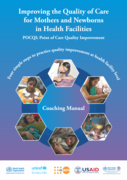
Four simple steps to practice quality improvement at health facility level
Antimicrobial resistance (AMR) is an important public health concern shared by developed and developing countries. In developing countries the burden of infectious diseases is greater and exacerbated by limited access to, and availability and affordability of, antimicrobials required to treat infect...

Every year, an estimated 15 million babies are born preterm – before 37 weeks of pregnancy. That is more than 1 in 10 live births. Approximately 1 million children die each year worldwide due to complications from their early birth. Those that survive often face a lifetime of ill-health including ...
Int. J. Environ. Res. Public Health 2018, 15(12), 2626; https://doi.org/10.3390/ijerph15122626
Climate change is increasing risks to human health and to the health systems that seek to protect the safety and well-being of populations. Health authorities require information about current associatio...

Non-communicable diseases (NCDs) are the second common cause of death in sub-Saharan Africa (SSA) accounting for about 35% of all deaths, after a composite of communicable, maternal, neonatal, and nutritional diseases. Despite prior perception of low NCDs mortality rates, current evidence suggests t...

Available in English, French, Spanish and Russian from the website https://apps.who.int/iris/handle/10665/344562
Depression is a leading cause of non-fatal disease burden worldwide, with a lifetime prevalence of 9% among European adult men and 17% among European adult women.
The task at hand requires substantial investments in preventive mental health care, but the potential benefits can be equally rewarding....

Review
published: 12 August 2016 doi: 10.3389/fpubh.2016.00166
Frontiers in Public Health | www.frontiersin.org 1 August 2016 | Volume 4 | Article 166

While epidemiological data for type 1 diabetes (T1D) in low/middle-income countries, and particularly low-income countries (LICs) including Liberia is lacking, prevalence in LICs is thought to be increasing. T1D care in LICs is often impacted by challenges in diagnosis and management. These challeng...

This is one of seven Medical Peace Work courses.
Cochrane Database Syst Rev. 2016 Jul 1; (6): 1–61 -Published online 2016 July 1
This practical manual is designed to support implementation of the World Health Organization (WHO) Guidelines on core components of infection prevention and control programmes at the national level, with special focus on countries with limited resources.
The Guidelines describe what is necessary ...


Findings on maternal and child health in Nepal, Mozambique and
Rwanda, and neglected tropical diseases in Cambodia and Sierra Leone | This report synthesises findings from five country case studies from the health dimension of this project, which focus on maternal and child health (MCH) (Mozambique...
