
Filter
7911
Filtered Results: 7911
Text search:
risk
and
impact
management
Featured
Recommendations
759
New Publications
2019
Language
Document type
No document type
4114
Studies & Reports
1471
Guidelines
1099
Manuals
478
Strategic & Response Plan
373
Fact sheets
133
Training Material
122
Situation Updates
77
Resource Platforms
20
Infographics
13
Brochures
6
Online Courses
5
Countries / Regions
Global
398
India
273
Kenya
224
Ethiopia
157
Myanmar / Burma
157
Sierra Leone
150
Nigeria
149
Western and Central Europe
147
South Africa
146
Nepal
138
Liberia
137
Uganda
132
Africa
120
Latin America and the Carribbean
117
Bangladesh
112
Syria
107
Tanzania
107
Zambia
103
Malawi
99
Ghana
89
Rwanda
85
Ukraine
84
Namibia
77
Congo, Democratic Republic of
69
Philippines
63
South Sudan
62
South–East Asia Region
57
Mozambique
56
Eastern Europe
56
Guinea
51
Indonesia
49
Asia
47
Zimbabwe
46
Lesotho
45
Brazil
44
Haiti
40
Cambodia
40
West and Central Africa
39
Russia
38
Yemen
38
Senegal
37
East and Southern Africa
37
Middle East and North Africa
33
Botswana
33
Afghanistan
31
Pakistan
29
Burkina Faso
27
Eastern Europe and Central Asia
27
Venezuela
23
Lebanon
22
Germany
20
Sudan
20
Cameroon
19
Western Pacific Region
19
Colombia
18
Thailand
18
Jordan
18
Central African Republic
18
Somalia
18
Eswatini/ Swaziland
18
Mali
17
Vietnam
16
China
15
Iraq
14
Turkey
13
Laos
13
USA
13
Tajikistan
12
Moldova
12
Angola
12
Sri Lanka
10
Benin
9
Chile
9
Iran
9
Burundi
9
Peru
9
Guinea-Bissau
9
Côte d’Ivoire / Ivory Coast
9
Palestine
9
Chad
9
Albania
8
North America
8
Papua New Guinea
7
Georgia
7
Libya
7
Ecuador
7
Madagascar
7
Timor Leste/ East Timor
6
Paraguay
6
North Macedonia
5
Mexico
5
El Salvador
5
Togo
5
Niger
5
Jamaica
5
United Kingdom
5
Egypt
5
Gambia
4
Kyrgyzstan
4
Turkmenistan
4
Southern Africa
4
Argentina
4
Romania
4
Greece
4
Poland
4
Serbia
3
Kazakhstan
3
Canada
3
Fiji
3
Singapore
3
Estonia
3
Armenia
3
Croatia
3
Hungary
3
Saudi Arabia
3
Japan
3
France
3
Mauritius
3
Portugal
3
Spain
3
Belarus
3
Bolivia
3
Honduras
3
Bhutan
3
North Korea
2
Malaysia
2
Vanuatu
2
Bulgaria
2
Italy
2
Dominican Republic
2
Djibouti
2
Guatemala
2
Switzerland
1
Uzbekistan
1
Morocco
1
Mongolia
1
Qatar
1
Mauritania
1
Lithuania
1
Denmark
1
Belgium
1
Maldives
1
Tunisia
1
Morocco
1
Azerbaijan
1
Bosnia and Herzegovina
1
Belize
1
Costa Rica
1
Panama
1
Nicaragua
1
Slovakia
1
Solomon Islands
1
Authors & Publishers
Publication Years
Category
Countries
2756
Key Resources
584
Clinical Guidelines
569
Public Health
455
Women & Child Health
431
Capacity Building
159
Pharmacy & Technologies
61
Annual Report MEDBOX
3
Toolboxes
COVID-19
701
Mental Health
599
HIV
582
TB
406
Planetary Health
374
Disability
252
Conflict
246
NTDs
231
AMR
221
Caregiver
213
Ebola & Marburg
209
NCDs
183
Rapid Response
153
Refugee
149
Natural Hazards
146
Global Health Education
138
Pharmacy
105
2.0 Rapid Response
105
Malaria
101
Health Financing Toolbox
98
Zika
52
Specific Hazards
51
Cholera
48
Polio
43
Social Ethics
23
Typhoon
7
South Sudan
2
Prioritise education in conflict-affected areas:
Across the world 28 million1 primary school-age children living in conflict-affected countries are
out-of-school, and they form half of the world’s total out-of-school population. During conflict,
infrastructure assets such as schools are damaged...
Available in Arabic, Chinese, English, French, Portuguese, Russian and Spanish
https://apps.who.int/iris/handle/10665/334254
Background paper for the Oslo Summit on Education for Development.
This paper covers the four topics of the Oslo Summit: investment in education, quality of learning, education in emergencies and girls’ education. Disability continues to be one of the primary causes of educational disadvantage a...
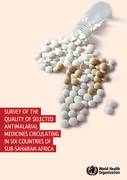
Survey of the Quality of Selected Antimalarial Medicines Circulating in Six Countries of Sub-Saharan Africa
recommended
The survey aimed at evaluating the quality of selected antimalarials in six countries of sub-Saharan Africa (Cameroon, Ethiopia, Ghana, Kenya, Nigeria and the United Republic of Tanzania). These countries have been supported by WHO to strengthen their regulatory controls o...
This training module is meant to strengthen the capacity of CHVs to prevent the Non Communicable Diseases at the community level . The Government of Kenya is committed to supporting community health initiatives and accelerating the achievement of the KHSS&IP goals, Millennium Development G...

Cancer in sub-Saharan Africa
recommended
Lancet Oncol 2022; 23: e251–312Published OnlineMay 9, 2022 https://doi.org/10.1016/S1470-2045(21)00720-8
In sub-Saharan Africa (SSA), urgent action is needed to curb a growing crisis in cancer incidence and mortality.
Without rapid interventions, data estimates show a major increase in cancer mo...

The article is a scoping review that explores the challenges in diagnosing asthma in children in three sub-Saharan African countries: Nigeria, South Africa, and Uganda. It identifies key barriers, such as a lack of community awareness, inadequate healthcare access, limited diagnostic tools like spir...

In Sierra Leone, Health care delivery is organized around a three-tier system i) primary level constituting peripheral health units (community health centers, community health posts, and maternal and child health posts secondary level constituting district hospitals tertiary level comprising region...

Int J Tuberc Lung Dis. 2019 Jul 1;23(7):858–864.Namibia ranks among the 30 high TB burden countries worldwide. Here, we report results of the second nationwide anti-TB drug resistance survey. To assess the prevalence and trends of multidrug-resistant TB (MDR-TB) in Namibia.
From 2014 to 2015, pat...

The purpose of the guideline is to provide information to stakeholders on the necessary requirements for a complete prequalification dossier for insecticide-treated nets (ITNs). Its aim is to establish the baseline for dossier requirements which are necessary to assess ITN products for the purposes ...
This brief focuses on disability rights in the ASEAN countries, namely Brunei Darussalam, Cambodia, Indonesia, Lao People’s Democratic
Republic (PDR), Malaysia, Myanmar, the Philippines, Singapore, Thailand and Viet Nam.
The equation is simple: we cannot effectively respond to a global pandemic when millions of people are still caught in warzones. We cannot treat sick people when hospitals are being bombed, or prevent the spread of coronavirus when tens of millions are forced to flee from violence. We must have a gl...
PHARMA’S RESPONSE TO THE COVID-19 VACCINES CRISIS. Update Feb., 14, 2022. In September 2021, Amnesty International published A Double Dose of Inequality, which assessed the extent to which the pharmaceutical industry was restricting access to Covid-19 vaccines. This report updates that assessment ...
Mortality due to enteric infections is projected to increase because of global warming; however, the different temperature sensitivities of major enteric pathogens have not yet been considered in projections on a global scale. We aimed to project global temperature-attributable enteric infection mor...
Chromoblastomycosis (CBM), represents one of the primary implantation mycoses caused by melanized fungi widely found in nature. It is characterized as a Neglected Tropical Disease (NTD) and mainly affects populations living in poverty with significant morbidity, including stigma and discrimination.
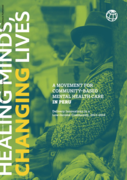
This report explores community-focused change initiatives in the financing, organization, and delivery of mental health services in Peru from 2013 to 2016. It examines the national dimension of reforms but focuses above all on implementation and results in the economically fragile district of Caraba...
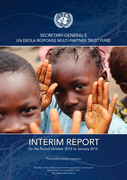
The report will describe how the Ebola Response MPTF, which has attracted contributions from 38 Member States, one business and many individuals, has offered a transparent and strategic tool to support the Ebola response. As of 31 January 2015, the Fund had total pledges amounting to US$142 million,...

Webinar.
The purpose of this booklet is to help readers understand why data on children with disabilities are currently inadequate, the difficulties that surround the gathering of high-quality data on disabled children, and why there is a real need to improve the collection, analysis, dissemination...
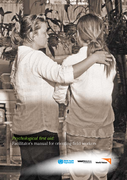
This manual is designed to orient helpers to offer psychologicalfirst aid (PFA) to people following a serious crisis event. PFA involves humane, supportive and practical assistance for people who are distressed, in ways that respect their dignity, culture and abilities. PFA is an approach that can b...
