
Filter
7911
Filtered Results: 7911
Text search:
risk
and
impact
management
Featured
Recommendations
759
New Publications
2019
Language
Document type
No document type
4114
Studies & Reports
1471
Guidelines
1099
Manuals
478
Strategic & Response Plan
373
Fact sheets
133
Training Material
122
Situation Updates
77
Resource Platforms
20
Infographics
13
Brochures
6
Online Courses
5
Countries / Regions
Global
398
India
273
Kenya
224
Ethiopia
157
Myanmar / Burma
157
Sierra Leone
150
Nigeria
149
Western and Central Europe
147
South Africa
146
Nepal
138
Liberia
137
Uganda
132
Africa
120
Latin America and the Carribbean
117
Bangladesh
112
Syria
107
Tanzania
107
Zambia
103
Malawi
99
Ghana
89
Rwanda
85
Ukraine
84
Namibia
77
Congo, Democratic Republic of
69
Philippines
63
South Sudan
62
South–East Asia Region
57
Mozambique
56
Eastern Europe
56
Guinea
51
Indonesia
49
Asia
47
Zimbabwe
46
Lesotho
45
Brazil
44
Haiti
40
Cambodia
40
West and Central Africa
39
Russia
38
Yemen
38
Senegal
37
East and Southern Africa
37
Middle East and North Africa
33
Botswana
33
Afghanistan
31
Pakistan
29
Burkina Faso
27
Eastern Europe and Central Asia
27
Venezuela
23
Lebanon
22
Germany
20
Sudan
20
Cameroon
19
Western Pacific Region
19
Colombia
18
Thailand
18
Jordan
18
Central African Republic
18
Somalia
18
Eswatini/ Swaziland
18
Mali
17
Vietnam
16
China
15
Iraq
14
Turkey
13
Laos
13
USA
13
Tajikistan
12
Moldova
12
Angola
12
Sri Lanka
10
Benin
9
Chile
9
Iran
9
Burundi
9
Peru
9
Guinea-Bissau
9
Côte d’Ivoire / Ivory Coast
9
Palestine
9
Chad
9
Albania
8
North America
8
Papua New Guinea
7
Georgia
7
Libya
7
Ecuador
7
Madagascar
7
Timor Leste/ East Timor
6
Paraguay
6
North Macedonia
5
Mexico
5
El Salvador
5
Togo
5
Niger
5
Jamaica
5
United Kingdom
5
Egypt
5
Gambia
4
Kyrgyzstan
4
Turkmenistan
4
Southern Africa
4
Argentina
4
Romania
4
Greece
4
Poland
4
Serbia
3
Kazakhstan
3
Canada
3
Fiji
3
Singapore
3
Estonia
3
Armenia
3
Croatia
3
Hungary
3
Saudi Arabia
3
Japan
3
France
3
Mauritius
3
Portugal
3
Spain
3
Belarus
3
Bolivia
3
Honduras
3
Bhutan
3
North Korea
2
Malaysia
2
Vanuatu
2
Bulgaria
2
Italy
2
Dominican Republic
2
Djibouti
2
Guatemala
2
Switzerland
1
Uzbekistan
1
Morocco
1
Mongolia
1
Qatar
1
Mauritania
1
Lithuania
1
Denmark
1
Belgium
1
Maldives
1
Tunisia
1
Morocco
1
Azerbaijan
1
Bosnia and Herzegovina
1
Belize
1
Costa Rica
1
Panama
1
Nicaragua
1
Slovakia
1
Solomon Islands
1
Authors & Publishers
Publication Years
Category
Countries
2756
Key Resources
584
Clinical Guidelines
569
Public Health
455
Women & Child Health
431
Capacity Building
159
Pharmacy & Technologies
61
Annual Report MEDBOX
3
Toolboxes
COVID-19
701
Mental Health
599
HIV
582
TB
406
Planetary Health
374
Disability
252
Conflict
246
NTDs
231
AMR
221
Caregiver
213
Ebola & Marburg
209
NCDs
183
Rapid Response
153
Refugee
149
Natural Hazards
146
Global Health Education
138
Pharmacy
105
2.0 Rapid Response
105
Malaria
101
Health Financing Toolbox
98
Zika
52
Specific Hazards
51
Cholera
48
Polio
43
Social Ethics
23
Typhoon
7
South Sudan
2

The world is facing a sustainable development crisis. The 2024 Financing for Sustainable Development Report: Financing for Development at a Crossroads finds that financing challenges are at the heart of the crisis and imperil the SDGs and climate action. The window to rescue the SDGs and prevent a c...

Pillar 3 of the Global technical strategy for malaria 2016–2030 calls for the transformation of malaria surveillance into a core intervention in all malaria-endemic countries, as well as in countries which have eliminated malaria but remain susceptible to re-establishment of transmission. This ref...
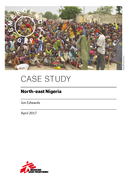
This case study examines the humanitarian response to the conflict-related crisis in the North-East of Nigeria, focusing primarily on the period from 2015 to the end of 2016. The aim is test the central hypotheses of the Emergency Gap project: that the current structure, conceptual underpinning and...
Adapting community-led approaches . Three out of 10 people in urban areas do not use improved sanitation facilities, and one out of 10 people are forced to practise open defecation. Still higher proportions do not have access to safely managed sanitation facilities, where the fecal sludge
is contai...

“Because we struggle to survive” Child Labour among Refugees of the Syrian Conflict | This study provides pertinent first-hand information on the reality facing Syrian children who are working either in their homeland, the neighbouring countries or elsewhere in Europe. Syria's civil war is the w...

West Africa is experiencing the largest, most severe, most complex outbreak of Ebola virus disease in history. On 11 August 2014, WHO convened a consultation where the participants concluded that in the particular context of the current Ebola outbreak in West Africa, it is ethically acceptable to of...
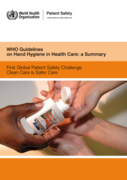
Confronted with the important issue of patient safety, in 2002 the Fifty-fifth World Health Assembly adopted a resolution urging countries to pay the closest possible attention to the problem and to strengthen safety and monitoring systems. In May 2004, the Fifty-seventh World Health Assembly approv...
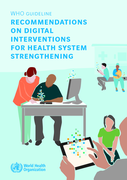
The key aim of this guideline is to present recommendations based on a critical evaluation of the evidence on emerging digital health interventions that are contributing to health system improvements, based on an assessment of the benefits, harms, acceptability, feasibility, resource use and equity...
The Global Task Force on Cholera Control (GTFCC) launched Ending Cholera: A Global
Roadmap to 2030 (Global Roadmap) (1), a strategy that aims to reduce global cholera
deaths by 90% and eliminate the disease in at least 20 countries by 2030. It is
organized according to three main axes:
• E...
27 September 2022
These WHO interim recommendations for use of the Novavax NVX-CoV2373 vaccine were developed on the basis of advice issued by the Strategic Advisory Group of Experts on Immunization (SAGE) and the evidence summary included in the background document and annexes referenced below.

This handbook is intended primarily for front-line health care providers who are likely to see children (among other clients) in their day-to-day practice. These may include general practitioners, nurses, midwives, gynaecologists,
paediatricians, mental health professionals, first responders and st...
Following review of the latest evidence, WHO recommends that TB-LAMP can be used as a replacement for microscopy for the diagnosis of pulmonary TB in adults with signs and symptoms of TB. It can also be considered as a follow-on test to microscopy in adults with signs and symptoms of pulmonary TB, e...

The module is currently available in English, French, Nepali, Portuguese, Russian, and Spanish

An estimated 1.3 billion people – or 16% of global population worldwide – experience a significant disability today. Persons with disabilities have the right to the highest attainable standard of health as those without disabilities. However, the WHO Global report on health equity for persons w...
Asthma is the most common chronic respiratory disease among school-going adolescents worldwide. However, the burden of severe asthma is highest in Sub-Saharan Africa. This study aimed to explore teachers’ perceptions of asthma care across six African countries. We conducted focus group discussions...
Continuing a worrying decade-long rising trend, the number of people forced to flee due to persecution, conflict, violence, human rights violations and events seriously disturbing public order climbed to 89.3 million by the end of 2021. This is more than double the 42.7 million people who remained f...
There is no secret to our procedure: the daily scanning of the literature helps us to stay afloat in the never-ending waves of new publications about SARS-CoV-2 and COVID-19. Many papers discussed in the Top 10 will eventually make it into subsequent editions of COVID Reference.
This manual provides guidance for policymakers on the issue of prehospital trauma care systems. The main areas covered include the organisation of the prehospital trauma care system, capacity development, data collection, transportation and communication, as well as ethical and legal considerations
Available in Arabic, Chinese, English, French, Portuguese, Russian and Spanish
https://apps.who.int/iris/handle/10665/334254

An estimated 1.3 billion people globally experience significant disability. This figure has grown over the last decade and will continue to rise due to demographic and epidemiological changes. In 2022, the World Health Organization launched the Global report on health equity for persons with disabil...
