
Filter
8716
Filtered Results: 8716
Text search:
I-TECH
Featured
Recommendations
773
New Publications
2214
Language
Document type
No document type
4755
Studies & Reports
1595
Guidelines
1130
Manuals
491
Strategic & Response Plan
332
Training Material
174
Fact sheets
123
Situation Updates
54
Brochures
24
Resource Platforms
15
Infographics
14
Videos
5
Online Courses
3
Dashboards/Maps
1
Countries / Regions
India
396
Global
357
Kenya
220
Nepal
171
Ethiopia
167
Uganda
164
Nigeria
157
Congo, Democratic Republic of
152
Sierra Leone
150
South Africa
143
Western and Central Europe
137
Myanmar / Burma
129
Liberia
123
Africa
118
Tanzania
116
Bangladesh
116
Latin America and the Carribbean
113
Rwanda
107
Malawi
107
Zambia
106
Senegal
101
Germany
96
Ukraine
92
Syria
90
Ghana
88
Burkina Faso
86
Namibia
78
Benin
77
Philippines
73
Russia
73
Haiti
62
Guinea
59
Eastern Europe
59
Indonesia
54
Cameroon
53
Asia
50
Brazil
50
Lesotho
49
Zimbabwe
47
South Sudan
47
West and Central Africa
45
Mozambique
44
Cambodia
43
Madagascar
43
East and Southern Africa
41
Central African Republic
39
Colombia
37
Middle East and North Africa
37
South–East Asia Region
36
Yemen
32
Mali
32
Botswana
32
Afghanistan
31
Venezuela
31
Eastern Europe and Central Asia
28
Pakistan
27
Eswatini/ Swaziland
24
Paraguay
20
Sudan
20
Niger
18
Côte d’Ivoire / Ivory Coast
18
Argentina
18
Lebanon
18
Thailand
17
Vietnam
17
Laos
16
Peru
15
Western Pacific Region
15
Chad
15
Togo
14
Moldova
14
Sri Lanka
13
Iraq
13
Tajikistan
12
China
12
Jordan
12
Bolivia
12
Somalia
10
Georgia
9
Albania
8
Burundi
8
Papua New Guinea
8
Palestine
8
Angola
8
El Salvador
7
Chile
7
USA
7
North Macedonia
6
United Kingdom
6
Southern Africa
6
Romania
6
Libya
6
Ecuador
6
Iran
5
Kyrgyzstan
5
North America
5
France
5
Portugal
5
Spain
5
Greece
5
Poland
5
Bhutan
5
Timor Leste/ East Timor
4
Mexico
4
Serbia
4
Turkey
4
Gambia
4
Morocco
4
Guinea-Bissau
4
Saudi Arabia
4
Egypt
4
Guatemala
4
Kazakhstan
3
Canada
3
Congo-Brazzaville
3
Malaysia
3
Mongolia
3
Hungary
3
Turkmenistan
3
Japan
3
Belarus
3
Bosnia and Herzegovina
3
Switzerland
2
Singapore
2
Qatar
2
Armenia
2
Croatia
2
Gabon
2
Jamaica
2
Tunisia
2
Djibouti
2
North Korea
1
Australia
1
Fiji
1
Estonia
1
Uzbekistan
1
Mauritania
1
Italy
1
Lithuania
1
Denmark
1
Belgium
1
Mauritius
1
Norway
1
Azerbaijan
1
Israel
1
Latvia
1
Slovakia
1
Honduras
1
Authors & Publishers
Publication Years
Category
Countries
3441
Clinical Guidelines
597
Women & Child Health
460
Key Resources
459
Public Health
426
Capacity Building
194
Pharmacy & Technologies
92
Annual Report MEDBOX
2
Toolboxes
COVID-19
692
Mental Health
640
HIV
523
TB
484
Planetary Health
348
Disability
339
NTDs
301
Caregiver
262
Ebola & Marburg
244
AMR
213
Conflict
210
Refugee
185
Global Health Education
158
Rapid Response
155
NCDs
135
Pharmacy
133
Malaria
108
Health Financing Toolbox
99
Natural Hazards
95
2.0 Rapid Response
92
Social Ethics
64
Specific Hazards
60
Cholera
56
Zika
50
Polio
47
Typhoon
4
South Sudan
2

This global guidance was developed to support malaria-free countries and those that are close to malaria elimination to prevent re-establishment. The document outlines key concepts and principles for preventing re-establishment and provides guidance on strategies, interventions, planning and managem...
The Manual for Parasitological Surveillance in Prevention of Reintroduction or Re-establishment of Malaria in Sri Lanka (2019) provides guidelines to health professionals on how to conduct effective malaria surveillance to prevent the reintroduction of the disease in Sri Lanka, which was certified m...

This toolkit is a comprehensive set of practical tools and resources designed to support country-level risk communication and community engagement (RCCE) practitioners, decision-makers and partners to plan and implement readiness and response activities for Ebola disease outbreaks. The toolkit conta...

This toolkit is a comprehensive set of practical tools and resources designed to support country-level risk communication and community engagement (RCCE) practitioners, decision-makers, and partners to plan and implement readiness and response activities for yellow fever outbreaks. The toolkit conta...

This toolkit is a comprehensive set of practical tools and resources designed to support country-level risk communication and community engagement (RCCE) practitioners, decision-makers, and partners to plan and implement readiness and response activities for yellow fever outbreaks. The toolkit conta...

This document highlights the latest WHO recommendations designed to optimize health outcomes, streamline delivery and address persistent barriers to prevention and care. It especially focuses on people often left behind in service delivery, including adolescents and young people, key populations and...
Buruli ulcer (BU) is a skin-related neglected tropical disease (skin NTD) caused by infection with
Mycobacterium ulcerans. BU is the third most common mycobacterial disease after tuberculosis and leprosy
in people who are not immunocompromised. The infection manifests in non-ulcerative forms as no...
Effective surveillance and monitoring of noncommunicable diseases (NCDs) and their risk factors are essential for informing evidence-based public health policies, addressing health inequities, and ensuring progress toward global and regional targets. By tracking trends in NCDs, their modifiable risk...

Noncommunicable diseases (NCDs) (e.g., cardiovascular diseases, cancers, diabetes, and chronic respiratory diseases) and mental health conditions (e.g., Alzheimer’s disease and related dementias, depression, anxiety, autism spectrum disorders) are the world’s leading cause of preventable illness...

The objective of this guideline is to present the complete set of all WHO recommendations and best practice statements relating to abortion. While legal, regulatory, policy and service-delivery contexts may vary from country to country, the recommendations and best practices described in this docume...

This guidance synthesizes current evidence on dengue laboratory testing and diagnostics and provides practical recommendations for laboratories, clinicians, public health officials, and programme managers involved in dengue diagnosis, surveillance, and control, in the context of the global emergency...

Non-Communicable Diseases (NCDs) have emerged as conditions of great public health concern in Kenya accounting for 39% of deaths annually. The Ministry of Health through the Department of Non-Communicable Diseases has adopted the vision of achieving a nation free from preventable burden of NCDs. Fur...

For education to be competency-based and effective, appropriate training methodologies have to be used to support the learner to have the appropriate knowledge and to translate this knowledge into skills and competencies. Such education and training should lead to a change in attitudes, beliefs a...

To contribute to the availability of basic knowledge and skills for the provision of palliative care in
the African region, the African Palliative Care Association (APCA) has developed a competencybased core curriculum framework for use in introductory training on palliative care. The curriculum ...

The Guidelines for the Use of the APCA African Palliative Outcome Scale (POS) has been developed by the APCA, in collaboration with
stakeholders, to help appropriately trained health practitioners and researchers across the region to utilise the APCA African POS in their work place (Powell et...

In the absence of a such a measure, and building on the success of developing the APCA African
Palliative Outcome Scale (POS) for adults, the African Palliative Care Association has developed the
APCA African Children’s POS. The tool has been validated across diseases, countries, settings and ...
Règlement sanitaire international (2005)
recommended
La troisième édition du RSI intègre les amendements à l’annexe 7 qui ont été adoptés par la Soixante-Septième Assemblée mondiale de la Santé, par la résolution WHA67.13 (2014). Aux termes de l’annexe 7 modifiée, la durée de la protection conférée par l’administration d’un vacc...

Drawing on the World Health Organization’s package of NCD best buys, the report demonstrates how these evidence-based measures can help countries reduce premature deaths, strengthen health systems, and advance progress towards the Sustainable Development Goals. It provides policymakers, donors, ad...
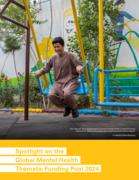
Promoting and protecting the mental health and psychosocial wellbeing of children, adolescents, and their caregivers remains undamental to achieving the Sustainable Development Goals (SDGs), with a direct contribution to SDG 3 (Good Health and Well- eing). In 2024, UNICEF accelerated the scale-up o...

he UNFPA “Programmatic guidelines: Cash and Voucher Assistance in Sexual and Reproductive Health programming in Emergencies” explains how CVA can be effectively integrated into humanitarian responses to help women, girls, and other vulnerable groups access lifesaving and comprehensive SRH servic...
