
Filter
8025
Filtered Results: 8025
Text search:
course
Featured
Recommendations
728
New Publications
2081
Language
Document type
No document type
4624
Studies & Reports
1172
Guidelines
927
Manuals
429
Strategic & Response Plan
228
Training Material
214
Online Courses
150
Fact sheets
148
Situation Updates
40
Resource Platforms
31
Brochures
27
Infographics
22
Videos
12
App
1
Countries / Regions
India
435
Global
318
Kenya
245
Nepal
171
Ethiopia
164
Nigeria
151
South Africa
151
Western and Central Europe
141
Uganda
140
Sierra Leone
138
Liberia
136
Malawi
125
Tanzania
118
Zambia
109
Africa
101
Bangladesh
100
Latin America and the Carribbean
98
Myanmar / Burma
98
Rwanda
91
Ghana
84
Namibia
82
Syria
81
Ukraine
73
Philippines
71
Congo, Democratic Republic of
65
Senegal
64
Germany
64
Eastern Europe
64
Indonesia
62
Russia
53
Lesotho
52
Zimbabwe
52
Haiti
47
South Sudan
45
South–East Asia Region
44
Burkina Faso
43
Asia
42
Mozambique
38
Brazil
38
Guinea
36
Cambodia
33
East and Southern Africa
30
Botswana
29
West and Central Africa
28
Cameroon
25
Benin
24
Afghanistan
24
Madagascar
23
Yemen
22
Venezuela
21
Eastern Europe and Central Asia
21
Lebanon
20
Central African Republic
20
Eswatini/ Swaziland
20
Middle East and North Africa
19
Pakistan
19
Colombia
15
Mali
15
China
14
USA
14
Tajikistan
13
Western Pacific Region
13
Vietnam
13
Moldova
13
Peru
12
Jordan
12
Sudan
12
Georgia
12
Angola
11
Guinea-Bissau
10
North America
10
Thailand
9
Turkey
8
Togo
8
Albania
8
Côte d’Ivoire / Ivory Coast
8
Sri Lanka
8
Somalia
8
Bolivia
7
Chad
7
Iraq
7
Iran
6
Laos
6
Jamaica
6
Portugal
6
Argentina
6
Kazakhstan
5
Chile
5
Kyrgyzstan
5
Niger
5
Burundi
5
Paraguay
5
United Kingdom
5
Spain
5
Papua New Guinea
5
Poland
5
Libya
5
North Macedonia
4
Timor Leste/ East Timor
4
Serbia
4
Gambia
4
Italy
4
Armenia
4
Greece
4
Palestine
4
Ecuador
4
Mexico
3
Estonia
3
Morocco
3
Croatia
3
Hungary
3
Turkmenistan
3
Mauritius
3
Bosnia and Herzegovina
3
Southern Africa
3
Egypt
3
Romania
3
Bhutan
3
Switzerland
2
El Salvador
2
Canada
2
Fiji
2
Dominican Republic
2
Lithuania
2
Saudi Arabia
2
France
2
Tunisia
2
Azerbaijan
2
Belarus
2
Singapore
1
Congo-Brazzaville
1
Uzbekistan
1
Mongolia
1
Bulgaria
1
Ireland
1
Japan
1
Belgium
1
Maldives
1
Norway
1
French Guyana
1
Israel
1
Latvia
1
Guyana
1
Oman
1
Nicaragua
1
Slovakia
1
Solomon Islands
1
Guatemala
1
Authors & Publishers
Publication Years
Category
Countries
3002
Clinical Guidelines
634
Women & Child Health
483
Key Resources
427
Public Health
399
Capacity Building
330
Pharmacy & Technologies
56
Annual Report MEDBOX
3
Toolboxes
Mental Health
685
HIV
609
COVID-19
575
TB
450
Disability
304
Caregiver
261
NTDs
222
Planetary Health
202
Ebola & Marburg
201
Conflict
195
Refugee
180
AMR
174
Rapid Response
138
NCDs
133
Global Health Education
124
Pharmacy
115
Malaria
92
Health Financing Toolbox
80
Natural Hazards
78
2.0 Rapid Response
72
Social Ethics
68
Specific Hazards
45
Cholera
45
Zika
43
Polio
38
Typhoon
2
South Sudan
1
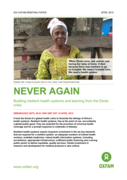
Oxfam Briefing Paper
As the Group of Eight (G8) world leaders meet in Saint Petersburg, Russia for this year’s G8 Summit, it is important to take stock of international efforts to finance the response to the global HIV/AIDS epidemic. Financing a sufficient and sustained response to the epidemic has emerged as one of t...

A manual for impact assessments. The SCH Practical and Precision Assessment (SPPA) strategy is an evidence-based approach for conducting impact assessments for SCH. The SPPA was identified by programme managers and SCH experts from the African region as a feasible and sufficiently accurate approach ...
The harmful use of alcohol causes approximately 3 million deaths every year and the overall burden of disease and injuries attributable to alcohol consumption remains unacceptably high. The pace of development and implementation of alcohol policies has been uneven in WHO regions, and resources and c...

The sixteenth meeting of the Strategic and Technical Advisory Group for Neglected Tropical Diseases (STAG-NTD) was held as a hybrid meeting, 27–28 September 2022.
Dr Ren Minghui, Assistant Director-General, Universal Health Coverage/Communicable and Noncommunicable Diseases, welcomed participan...
This curriculum can be used freely in order to stimulate means of ethical analysis, reflection and decision-making.

The key actions, activities, and approaches in this document are organized within each of the 5Cs (see Table 1 in the PDF) and those of the Strategic preparedness and response plan (SPRP) pillars as follows:
National action plan key activities, prioritized for the current context and the current ...
Lack of satisfactory progress in mainstreaming disaster risk reduction within development is attributed to various factors. One of the important factor that is often not much appreciated is the inadequate comprehension of mainstreaming and the absence of clear, cogent and practical guidelines, tools...
Family planning: a global handbook for providers
recommended
4th edition 2022 of the Handbook includes new WHO recommendations that expand contraceptive choices. Also, guidance on starting ongoing contraception following emergency contraception is provided.
Drawing on lessons from recent outbreaks, this new edition details tangible me...
Young people living in the Central African Republic, Chad, Nigeria, Guinea, and Guinea-Bissau are the most at risk of the impacts of climate change, threatening their health, education, and protection, and exposing them to deadly diseases. The report is the first comprehensive analysis of climate ri...
These guidelines – an update to the World Health Organization’s 2015 publication Consolidated strategic information guidelines – present a set of essential aggregate indicators and guidance on choosing, collecting and systematically analysing strategic information to manage and monitor the nat...

This guidance document is meant to support practitioners working in disaster prone contexts to develop and implement more effective integrated resilience programming. It promotes programming that cuts across different fields of work like rights awareness, food security, emergency preparedness, livel...
2nd edition. The purpose of the WHO human health risk assessment toolkit: chemical hazards is to provide its users with guidance to identify, acquire and use the information needed to assess chemical hazards, exposures and the corresponding health risks in their given health risk assessment contexts...
The overview of findings from five Latin American countries
Laboratory Biossafety Manual
May 9, 2022.Since the onset of the COVID-19 pandemic, a large number of clinical trials have been planned and developed to assess the effectiveness and safety of various interventions that could prevent hospitalizations and progression to severe disease in people infected with SARS-CoV-2. Currently,...
Service Availability and Readiness Assessment Tool
July 2021. This publication brings together important clinical and programmatic updates produced by WHO since 2016 and provides comprehensive, evidence-informed recommendations and good practice statements within a public health, rights-based and person-centred approach.
These guidelines bring in...
