
Filter
4213
Filtered Results: 4213
Text search:
Datta,
B.K.
Featured
Recommendations
288
New Publications
823
Language
Document type
No document type
2188
Studies & Reports
1025
Guidelines
532
Manuals
193
Strategic & Response Plan
104
Fact sheets
87
Training Material
53
Situation Updates
18
Resource Platforms
6
Infographics
6
Dashboards/Maps
1
Countries / Regions
India
220
Global
180
Kenya
128
South Africa
110
Indonesia
102
Western and Central Europe
86
Brazil
70
Africa
64
Nepal
61
Malawi
59
Latin America and the Carribbean
58
Uganda
57
Zambia
56
Nigeria
55
Ethiopia
53
Liberia
52
Tanzania
51
Sierra Leone
50
Ghana
44
Russia
44
Ukraine
42
Eastern Europe
37
Myanmar / Burma
36
Germany
35
Bangladesh
34
Philippines
33
Zimbabwe
32
Mozambique
32
Rwanda
31
Syria
24
Congo, Democratic Republic of
24
Burkina Faso
21
Asia
21
Namibia
21
Lesotho
20
Benin
20
Middle East and North Africa
20
Senegal
19
West and Central Africa
18
South–East Asia Region
18
Cameroon
17
Cambodia
16
Eastern Europe and Central Asia
16
Botswana
16
South Sudan
15
Colombia
14
Guinea
14
Haiti
13
Yemen
12
Chile
11
East and Southern Africa
11
Vietnam
10
Venezuela
9
Angola
9
Pakistan
9
Thailand
8
China
8
Eswatini/ Swaziland
8
Tajikistan
7
USA
7
Jordan
7
Sudan
7
Mali
7
Argentina
6
Ecuador
6
Laos
5
Afghanistan
5
Peru
5
Paraguay
5
North America
5
Madagascar
5
Albania
4
Kyrgyzstan
4
Western Pacific Region
4
Portugal
4
Côte d’Ivoire / Ivory Coast
4
Sri Lanka
4
Egypt
4
Georgia
4
Honduras
4
Chad
4
Somalia
4
Guatemala
4
Timor Leste/ East Timor
3
Turkey
3
Kazakhstan
3
Canada
3
Estonia
3
Niger
3
Italy
3
Guinea-Bissau
3
France
3
United Kingdom
3
Spain
3
Lebanon
3
Moldova
3
Poland
3
Libya
3
North Macedonia
2
Mexico
2
El Salvador
2
Togo
2
Congo-Brazzaville
2
Burundi
2
Qatar
2
Armenia
2
Dominican Republic
2
Hungary
2
Jamaica
2
Tunisia
2
Israel
2
Bosnia and Herzegovina
2
Southern Africa
2
Papua New Guinea
2
Nicaragua
2
Romania
2
Iraq
2
Iran
1
Singapore
1
Morocco
1
Mongolia
1
Mauritania
1
Lithuania
1
Saudi Arabia
1
Gabon
1
Uruguay
1
Turkmenistan
1
Japan
1
Belarus
1
Latvia
1
Bolivia
1
Belize
1
Costa Rica
1
Panama
1
Slovakia
1
Greece
1
Palestine
1
Central African Republic
1
Solomon Islands
1
Cuba
1
Authors & Publishers
Publication Years
Category
Countries
1506
Clinical Guidelines
329
Public Health
229
Women & Child Health
194
Key Resources
148
Capacity Building
53
Pharmacy & Technologies
33
Toolboxes
Mental Health
383
COVID-19
376
HIV
353
TB
268
Planetary Health
210
NTDs
188
AMR
137
NCDs
126
Disability
119
Caregiver
118
Ebola & Marburg
73
Pharmacy
70
Global Health Education
65
Health Financing Toolbox
63
Rapid Response
56
Refugee
54
Conflict
51
Malaria
36
Natural Hazards
30
2.0 Rapid Response
23
Zika
23
Polio
20
Cholera
19
Social Ethics
14
Specific Hazards
12
South Sudan
1
Background: A recent report by the Institute for Health Metrics and Evaluation (IHME) highlights that mental health receives little attention despite being a major cause of disease burden. This paper extends previous assessments of development assistance for mental health (DAMH) in two significant w...
The aim of this toolkit is to guide countries on how to best estimate their current burden of dengue by combining existing data from dengue surveillance systems with on-going research efforts to measure the community burden
of dengue.
This evaluation is the fifth in a series of structured evaluations of CFS and was completed as part of three-year collaboration with World Vision and Columbia University. It was conducted with Syrian refugees in an urban setting in Zarqa, Jordan during the months of February to August 2014. The CFS ...
Global Biodiversity Outlook (GBO) is the flagship publication of the Convention on Biological Diversity (CBD). It is a periodic report that summarizes the latest data on the status and trends of biodiversity and draws conclusions relevant to the further implementation of the Convention.
GBO-5 pro...
Silicosis is not a new disease; the impact of silica dust on respiratory function was observed by Hippocrates in 430 B.C. and in the 16th century by Agricol. In 1713, Rammazini described silicotic nodules in post-mortems of stone cutters presenting with respiratory symptoms. In the mid-late 1800s,...
Guidelines for Good Clinical Laboratory Practices (GCLP) outlines the principles and procedures to be followed by medical laboratories involved in clinical research and/or patient care so as to provide quality data which can be used for health research and patient treatment. As the use of laboratory...
COVID-19 has altered health sector capacity in low-income and middle-income countries (LMICs). Cost data to inform evidence-based priority setting are urgently needed. Consequently, in this paper, we calculate the full economic health sector costs of COVID-19 clinical management in 79 LMICs under di...
This document, endorsed by the WHO Strategic Advisory Group of Experts on Immunization, provides guiding principles to support countries in their decision-making regarding provision or resumption of immunization services during severe disruptive events such as COVID-19, natural disasters or humanita...
The Guidance Notes seek to help operationalize, simplify and standardize the collection and reporting of data through the application of common language and methods. They provide information on the key issues to take into account in the collection of health data and the types of data that should be ...

Neonatal mortality is a major challenge in reducing child mortality rates in Nepal. Despite efforts by the Government of Nepal, data from the last three demographic and health surveys show a rise in the contribution of neonatal deaths to infant and child mortality. The Government of Nepal has implem...
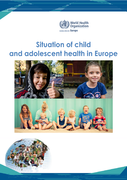
The report focuses on several key areas where health outcomes are falling short, and provides insight into ways in which countries can improve the situation for their children and adolescents. Areas in focus include mental health, overweight/obesity and adolescent risk-taking behaviour.
The report ...

Afr J Tradit Complement Altern Med. (2016) 13(4):123-131
Out of 400 questionnaires distributed to the participants, 389 were returned with data acceptable for analysis. Ages of the participants ranged from 18 to 75 years (Mean=43 + 11.6). Out of the 272 (69.9%) participants who conceded that th...
Out of 400 questionnaires distributed to the participants, 389 were returned with data acceptable for analysis. Ages of the participants ranged from 18 to 75 years (Mean=43 + 11.6). Out of the 272 (69.9%) participants who conceded that th...
Objective: To review research on associations of trauma type with PTSD in the WHO World Mental Health (WMH) surveys, a series of epidemiological surveys that obtained representative data on trauma-specific PTSD.

Journal of Biosocial Science / Volume 34 / Issue 04 / October 2002, pp 525 - 539
DOI: DOI:10.1017/S0021932002005254, Published online: 24 September 2002
This paper examines determinants of one aspect of sexual behaviour – coital frequency – among 2188 married women in the Central African Re...

Cystic echinococcosis (CE) is a well-known neglected parasitic disease. However, evidence supporting the four current treatment modalities is inadequate, and treatment options remain controversial. The aim of this work is to analyse the available data to answer clinical questions regarding medical t...
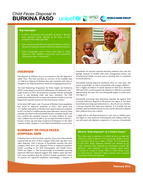
Safe disposal of children’s feces is as essential as the safe disposal of adults’ feces. Th is brief provides an overview of the available data on child feces disposal in Burkina Faso and concludes with ideas to strengthen safe disposal practices, based on emerging good practice. Th e Joint Mon...
PlosOne December 10, 2014 https://doi.org/10.1371/journal.pone.0111913
Plastic pollution is ubiquitous throughout the marine environment, yet estimates of the global abundance and weight of floating plastics have lacked data, particularly from the Southern Hemisphere and remote regions. Here we re...
BUKO Pharma-Kampagne has investigated the causes and consequences of antibiotic resistance in India, South Africa, Tanzania and Germany. Together with our partners we collected data and did interviews with numerous stakeholders. The outcome is presented in a brochure that is now available in English...

This guidance provides interim guidance for the integration of SARS-CoV-2 and influenza virologic and genomic surveillance, from sentinel site case enrolment and sampling to the eventual sharing of the virus sequence data, a process known as end-to-end surveillance. This guidance builds on experienc...
