
Filter
8402
Filtered Results: 8402
Text search:
Centers
for
Disease
Control
Featured
Recommendations
810
New Publications
2043
Language
Document type
No document type
4266
Studies & Reports
1359
Guidelines
1263
Manuals
461
Strategic & Response Plan
331
Fact sheets
280
Training Material
134
Resource Platforms
92
Infographics
83
Situation Updates
78
Brochures
29
Online Courses
10
Videos
10
App
4
Dashboards/Maps
2
Countries / Regions
Global
381
India
374
Sierra Leone
226
Liberia
200
Kenya
199
Africa
179
Ethiopia
175
Nigeria
174
Western and Central Europe
151
Uganda
142
Nepal
130
Congo, Democratic Republic of
129
South Africa
123
Latin America and the Carribbean
121
Rwanda
111
Malawi
107
Guinea
105
West and Central Africa
102
Tanzania
101
Syria
100
Zambia
99
Bangladesh
93
Senegal
89
Mozambique
88
Ghana
87
Middle East and North Africa
86
East and Southern Africa
80
Myanmar / Burma
78
Namibia
77
Ukraine
75
Haiti
73
South Sudan
71
Burkina Faso
64
Philippines
64
Eastern Europe
61
Russia
59
Yemen
56
Germany
55
Brazil
51
Guinea-Bissau
47
Zimbabwe
46
Cambodia
45
South–East Asia Region
45
Mali
45
Asia
44
Côte d’Ivoire / Ivory Coast
42
Cameroon
41
Lesotho
40
Angola
39
Indonesia
37
Colombia
32
Venezuela
32
Chad
32
Eastern Europe and Central Asia
29
Niger
26
Botswana
24
Madagascar
23
USA
20
Eswatini/ Swaziland
20
Benin
18
Sudan
18
Somalia
18
Pakistan
18
Central African Republic
17
Afghanistan
16
Argentina
16
Vietnam
16
Thailand
15
Western Pacific Region
15
Paraguay
15
Togo
14
Jordan
13
North America
13
Ecuador
13
China
12
Albania
12
Peru
12
Iraq
12
Tajikistan
11
Chile
11
Moldova
11
Laos
10
Burundi
10
Lebanon
10
Bolivia
9
Saudi Arabia
8
Spain
8
Egypt
8
Georgia
8
North Macedonia
7
Sri Lanka
7
Palestine
7
Timor Leste/ East Timor
6
Gambia
6
Armenia
6
France
6
Portugal
6
Papua New Guinea
6
El Salvador
5
Turkey
5
Iran
5
Romania
5
Poland
5
Honduras
5
Libya
5
Mexico
4
Kazakhstan
4
Canada
4
Italy
4
Hungary
4
Japan
4
Kyrgyzstan
3
Gabon
3
Turkmenistan
3
Tunisia
3
United Kingdom
3
Belarus
3
Southern Africa
3
Djibouti
3
Greece
3
Bhutan
3
Fiji
2
Estonia
2
Congo-Brazzaville
2
Uzbekistan
2
Malaysia
2
Morocco
2
Qatar
2
Bulgaria
2
Mauritania
2
Dominican Republic
2
Ireland
2
Jamaica
2
Belgium
2
Mauritius
2
Slovakia
2
Guatemala
2
North Korea
1
Switzerland
1
Serbia
1
Australia
1
Singapore
1
Austria
1
Cape Verde
1
Lithuania
1
Uruguay
1
Maldives
1
South Korea
1
Morocco
1
Israel
1
Belize
1
Costa Rica
1
Panama
1
Nicaragua
1
Authors & Publishers
Publication Years
Category
Countries
3097
Clinical Guidelines
647
Public Health
463
Key Resources
418
Women & Child Health
286
Capacity Building
120
Pharmacy & Technologies
110
Annual Report MEDBOX
2
Toolboxes
COVID-19
1075
HIV
585
TB
522
Mental Health
481
Ebola & Marburg
473
NTDs
361
AMR
293
Planetary Health
228
Rapid Response
212
NCDs
194
Caregiver
187
Conflict
167
Refugee
139
Disability
131
Malaria
130
Zika
128
Pharmacy
118
Global Health Education
109
2.0 Rapid Response
108
Cholera
102
Natural Hazards
90
Health Financing Toolbox
79
Specific Hazards
57
Polio
48
Social Ethics
15
Typhoon
3
South Sudan
2
What measures can we take to overcome the corona crisis, limit its consequences or use scarce resources efficiently? Every day we experience uncertainties and contradictions on these questions among scientists, health experts, politicians and in society. We must all strive for a broad consensus to o...
The COVID-19 pandemic demonstrated that
the world was not well prepared to respond
to an infectious disease threat of this magnitude. Countries across all socioeconomic and development categories have struggled
to implement effective national responses. Substantial amounts of additional investmen...
The guidelines presented in this document are designed to provide a useful resource for healthcare professionals involved in clinical case management. They were developed taking into consideration services provided at different levels within the health system and resources available. These guideline...
n 2015, Member States of the United Nations adopted the 2030 Agenda for Sustainable Development and its accompanying Sustainable Development Goals (SDGs), with the third goal of the agenda focusing on health – good health and well-being. This has the attainment of universal health coverage (UHC) a...

J Fungi (Basel) . 2019 Aug 16;5(3):75. doi: 10.3390/jof5030075 . Namibia is a sub-Saharan country with one of the highest HIV infection rates in the world. Although care and support services are available that cater for opportunistic infections related to HIV, the main focus is narrow and predominan...
The Access to Controlled Medications Programme identified the development of treatment guidelines that cover the treatment of all types of pain as one of the core areas of focus for improving access to opioid analgesics. Such guidelines are interesting both for health-care professionals and policy-...
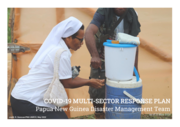
his revision to the Disaster Management Team’s (DMT) multi-sector response plan for COVID-19 is meant to align the multi-sector plan with the Department of Health’s COVID-19 Emergency Response Plan issued on 24 April 2020. Additionally, at the time of this version, the Department of Education an...
This revision to the Disaster Management Team’s (DMT) multi-sector response plan for COVID-19 is meant to align the multi-sector plan with the Department of Health’s COVID-19 Emergency Response Plan issued on 24 April 2020.
Chapter 10 of Pediatric Surgery: This chapter provides an overview of some of the challenges when providing anaesthesia care for children in Africa. The chapter reviews
the cardiac, respiratory, and renal differences of children in comparison to adults. Additionally, it addresses preoperative asses...
Investing in and building longer-term health emergency preparedness during the COVID-19 pandemic
recommended
Interim Guidance
This document is to help Member States build on actions taken during the COVID-19 pandemic to improve national medium- to long-term preparedness for future threats. It maps COVID-19 preparedness and response actions to the building of sustainable International Health Regulations (2...
The number of new Ebola infections in Sierra Leone is declining, despite the outbreak continuing to claim lives. New cases have dropped to around 9-12 per week, according to recent WHO figures. There were over 500 cases per week at the height of the crisis around late November 2014.
The impact on t...
This study aimed to understand the patterns of HIV drug resistance in pregnant women in Mozambique. This might help in tailoring optimal regimens for prevention of mother to child transmission of HIV (pMTCT) and antenatal care.

The RTA covered UNICEF’s response to COVID-19 from March 2020 – when WHO declared the disease a pandemic – until January 2021. Further, the RTA applied a broad and cross-cutting lens to all 21 UNICEF county offices across the region, focusing on six case study countries: Kenya, Madagascar, Nam...

This guide aims to provide an overview of successful practice from the field for the disaster risk reduction/management practitioner interested in EWS. It presents guiding principles that will build a strong foundation for the design or strengthening of EWS at any level. It is not an operational, bu...
As detailed in MSF’s report Confronting the mental health emergency on Samos and Lesbos, the scale of the needs for mental healthcare and the severity of patients’ conditions have overwhelmed the capacity of mental health services on the islands.
With sustained economic growth in many parts of the developing world, an increasing number of countries are transitioning away from the most subsidized development finance as they exceed income and other qualification requirements. Cross-country evidence suggests that Development Assistance Committe...

DIAGNOSING PTSD IN CHILDHOOD | The following literature review addresses the developmental and domain-specific consequences of previous and current diagnostic criteria for posttraumatic stress disorder (PTSD) in pre-adolescent children. PTSD was introduced in 1980 to capture extreme responses follow...

Based on the survey, five principles for deinstitutionalization were identified: community-based services must be in place; the health workforce must be committed to change; political support at the highest and broadest levels is crucial; timing is key; and additional financial resources are needed.
BMJ Open2018;8:e020423. doi:10.1136/bmjopen-2017-02042
EC has been increasingly used in the evaluation of maternal and child health programmes.12–15 For instance, Nesbitt et al compared crude coverage and EC of pregnant women with facility-based obstetric services in Ghana and estimated that alth...

The HIV/AIDS Sustainability Index Dashboard is a tool completed every two years by President’s Emergency Plan for AIDS Relief (PEPFAR) teams, host government and partner stakeholders to sharpen the understanding of each country’s sustainability landscape and to assist PEPFAR and other donors in ...
