
Filter
1564
Filtered Results: 1564
Text search:
Best
Care
Always
South
Africa
Featured
Recommendations
160
New Publications
342
Language
Document type
No document type
876
Studies & Reports
262
Guidelines
204
Manuals
124
Strategic & Response Plan
38
Training Material
37
Fact sheets
9
Situation Updates
5
Resource Platforms
3
Brochures
2
Dashboards/Maps
1
App
1
Infographics
1
Online Courses
1
Countries / Regions
South Africa
101
Global
84
Africa
41
Nigeria
37
India
35
Kenya
33
Uganda
33
Sierra Leone
31
Ghana
27
Tanzania
23
Malawi
22
Liberia
22
Ethiopia
21
Rwanda
19
Zambia
19
Nepal
18
Namibia
17
Bangladesh
14
Lesotho
13
Syria
13
Congo, Democratic Republic of
12
Mozambique
10
South Sudan
10
Cameroon
9
Zimbabwe
9
Guinea
8
Latin America and the Carribbean
8
Western and Central Europe
8
East and Southern Africa
8
Botswana
8
West and Central Africa
7
Indonesia
7
Myanmar / Burma
7
China
6
Senegal
6
Cambodia
6
Asia
6
Vietnam
6
Eswatini/ Swaziland
6
Thailand
5
Middle East and North Africa
5
South–East Asia Region
5
Southern Africa
5
Brazil
5
Yemen
5
Burkina Faso
4
Germany
4
Lebanon
4
Central African Republic
4
Colombia
3
Ukraine
3
Laos
3
Philippines
3
Haiti
3
Eastern Europe
3
Sri Lanka
3
North Macedonia
2
Mexico
2
Serbia
2
Afghanistan
2
Peru
2
Morocco
2
Jordan
2
Western Pacific Region
2
Eastern Europe and Central Asia
2
Gabon
2
Portugal
2
Sudan
2
Iraq
2
Somalia
2
Madagascar
2
Pakistan
2
Tajikistan
1
Timor Leste/ East Timor
1
Turkey
1
Benin
1
Iran
1
Albania
1
Canada
1
Estonia
1
Kyrgyzstan
1
Niger
1
Malaysia
1
Qatar
1
USA
1
Hungary
1
North America
1
Turkmenistan
1
Jamaica
1
Japan
1
France
1
Mauritius
1
Tunisia
1
United Kingdom
1
Norway
1
Spain
1
Côte d’Ivoire / Ivory Coast
1
Argentina
1
Moldova
1
Russia
1
Egypt
1
Palestine
1
Georgia
1
Mali
1
Angola
1
Chad
1
Ecuador
1
Authors & Publishers
Publication Years
Category
Countries
409
Clinical Guidelines
163
Women & Child Health
124
Key Resources
120
Public Health
112
Capacity Building
54
Pharmacy & Technologies
20
Toolboxes
HIV
179
Mental Health
128
TB
101
Disability
101
COVID-19
81
Planetary Health
50
Caregiver
45
Refugee
43
Global Health Education
43
AMR
43
Ebola & Marburg
41
NTDs
40
Conflict
34
Malaria
28
Rapid Response
27
Pharmacy
24
NCDs
22
Natural Hazards
19
2.0 Rapid Response
19
Health Financing Toolbox
18
Social Ethics
17
Cholera
12
Specific Hazards
10
Zika
7
Polio
5
Typhoon
1
There are indigenous communities at high risk in every country of the region. At stake are the lives of 45 million people who belong to more than 800 indigenous peoples. Of these, some 100 are spread across several countries, around 200 maintain voluntary isolation or are in initial contact, and nea...
Male circumcision reduces a man’s risk of heterosexual acquisition of HIV by about 60%. This guideline provides an evidence-based recommendation on the use of adult male circumcision devices for HIV prevention in public health programmes in high HIV prevalence, resource-limited settings. It also p...

The Infection Prevention and Control (IPC) Guidelines aim to support healthcare workers improve quality and safety health care. The Guidelines further aim to promote and facilitate the overall goal of IPC by providing evidence-based recommendations on the critical aspects of IPC, focusing on the fun...
The micronutrient powders will be distributed at the health facilities where instructions on use will be provided by Health Care Providers. Community Health Volunteers will educate, counsel, and mobilize caregivers at the community level to visit health facilities for nutrition assessment and provis...
The report showed commitments made three decades ago to protect the rights of children remain unfulfilled for millions. Violence still affects countless children. Discrimination based on age, gender, disability, sexual orientation and religion harms children worldwide.
Key factors include a lack ...

COVID-19 has heavily emphasized how contact tracing is crucial for managing outbreaks, and as part of the strategy for adjusting, and eventually lifting, lockdowns and other stringent public health and social measures. As the pandemic develops further, it will be a core measure to manage further wav...

OECD Development Policy Tools
Recognising that donor policies and responses constantly evolve, this guidance recommends that donors operating in situations of forced displacement prioritise three broad areas of work, where they can best contribute to existing capacities at the national, regiona...
Recognising that donor policies and responses constantly evolve, this guidance recommends that donors operating in situations of forced displacement prioritise three broad areas of work, where they can best contribute to existing capacities at the national, regiona...

ABSTRACT
More than 500 million people worldwide live with cardiovascular disease (CVD). Health systems today face fundamental challenges in delivering optimal care due to ageing populations, healthcare workforce constraints, financing, availability and affordability of CVD medicine, and service del...
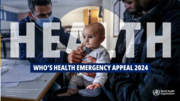
In 2024, we need US$1.5 billion to provide live-saving health care to millions of people in emergencies. An alarming combination of conflict, climate-related threats and increasing economic hardship mean an estimated 166 million people require health assistance.
Management of Diabetes Mellitus-Tuberculosis
recommended
1st edition
This resource provides practical guidance for front line health workers responsible for the diagnosis, management and care of patients with these two diseases. Published in collaboration with the World Diabetes Foundation
This recommendation is an update of one of the 49 recommendations that were published in the WHO recommendations on antenatal care for a positive pregnancy experience. The recommendation was developed initially using the standardized operating procedures described in the WHO handbook for guideline d...
23 December 2020 This document summarizes WHO recommendations for the rational use of personal protective equipment (PPE) in health care settings and temporary strategies during acute supply shortages. This document also contains 2 Annex sections describing updated PPE use recommendations for health...

Cardiovascular diseases (CVDs) are a growing public health problem in Ghana and other African countries. Strokes and other CVDs have become a leading cause of death due to increasing risk factors such as hypertension. According to the Global Burden of Disease study (GBD), ischaemic heart disease was...
Interim guidance. 12 May 2021. The Continuity of essential health services: Facility Assessment Tool can be used by countries to rapidly assess the capacity of health facilities to maintain the provision of essential health services during the COVID-19 pandemic. It can help to alert the authorities ...

Replacement of Annex 2 of WHO Technical Report Series, No. 964...
Climate change is having the largest impact on the world’s poorest and most vulnerable people. Within this group, 20% are people with disabilities, who are nearly always doubly disadvantaged.

Chronic kidney disease (CKD) is an important contributor to mortality from noncommunicable diseases. No decrease has been seen for CKD mortality contrary to many other important non-communicable diseases (e.g., cardiovascular disease). The prevalence of CKD and kidney failure are increasing all over...

Every year, nearly 250 million people move across borders temporarily or permanently for a job opportunity, studying, to flee a crisis back home, or for other reasons. Another 750 million move for similar reasons within the borders of their countries. With the understanding that human mobility affec...
The Access to Controlled Medications Programme identified the development of treatment guidelines that cover the treatment of all types of pain as one of the core areas of focus for improving access to opioid analgesics. Such guidelines are interesting both for health-care professionals and policy-...
