
Filter
1958
Filtered Results: 1958
Text search:
hiv
financing
Featured
Recommendations
135
New Publications
620
Language
Document type
No document type
1224
Studies & Reports
349
Guidelines
134
Strategic & Response Plan
102
Manuals
47
Situation Updates
42
Fact sheets
28
Training Material
12
Infographics
11
Resource Platforms
6
Brochures
2
Dashboards/Maps
1
Countries / Regions
Global
122
Kenya
96
Uganda
58
Malawi
56
Zambia
55
Ethiopia
52
Rwanda
49
Sierra Leone
47
Nigeria
44
Liberia
44
Western and Central Europe
42
India
40
Tanzania
39
Nepal
38
Namibia
37
Africa
36
South Africa
36
Myanmar / Burma
31
Ghana
30
Bangladesh
30
Eastern Europe
30
Asia
27
Lesotho
24
Ukraine
23
Mozambique
22
Cambodia
22
Philippines
19
Latin America and the Carribbean
18
Senegal
17
Zimbabwe
16
Botswana
15
South–East Asia Region
13
Congo, Democratic Republic of
12
East and Southern Africa
12
Indonesia
12
Haiti
11
Russia
9
South Sudan
9
Eswatini/ Swaziland
9
Guinea
7
Venezuela
7
West and Central Africa
7
Pakistan
7
Tajikistan
6
Syria
6
North Macedonia
5
Cameroon
5
Albania
5
Burkina Faso
5
Middle East and North Africa
5
Eastern Europe and Central Asia
5
Vietnam
5
Moldova
5
Sudan
5
Georgia
5
Somalia
5
Benin
4
Germany
4
Papua New Guinea
4
Brazil
4
Central African Republic
4
Thailand
3
China
3
Peru
3
Jordan
3
Western Pacific Region
3
Madagascar
3
Serbia
2
Gambia
2
Iran
2
Laos
2
Afghanistan
2
Qatar
2
Armenia
2
Paraguay
2
Jamaica
2
Japan
2
Southern Africa
2
Yemen
2
Switzerland
1
Colombia
1
Timor Leste/ East Timor
1
Togo
1
Kazakhstan
1
Kyrgyzstan
1
Uzbekistan
1
Bulgaria
1
USA
1
Croatia
1
Saudi Arabia
1
North America
1
Turkmenistan
1
Mauritius
1
Portugal
1
Spain
1
Azerbaijan
1
Bosnia and Herzegovina
1
Côte d’Ivoire / Ivory Coast
1
Lebanon
1
Djibouti
1
Egypt
1
Palestine
1
Mali
1
Chad
1
Libya
1
Iraq
1
Authors & Publishers
Publication Years
Category
Countries
915
Women & Child Health
99
Public Health
96
Key Resources
70
Clinical Guidelines
66
Capacity Building
11
Pharmacy & Technologies
8
Annual Report MEDBOX
1
Toolboxes
HIV
270
TB
222
Health Financing Toolbox
101
COVID-19
85
Mental Health
53
Global Health Education
50
AMR
47
Caregiver
41
Disability
37
Pharmacy
29
Conflict
25
Ebola & Marburg
24
Planetary Health
22
NCDs
19
Rapid Response
18
NTDs
17
Refugee
15
Natural Hazards
12
Malaria
11
Polio
8
2.0 Rapid Response
7
Cholera
4
Social Ethics
3
Zika
2
Specific Hazards
1

Myanmar is one of the world’s 22 high tuberculosis (TB) burden countries, and supporting TB control in Myanmar is a global priority. This report reflects the findings, discussions, conclusions and recommendations of the fourth international review mission of the Myanmar National TB Programme (NTP)...

Epidemiology, Control, and Financing
From 2000 to 2010, Rwanda implemented comprehensive health sector reforms to strengthen the public health system, with the aim of reducing maternal and newborn deaths in line with Millennium Development Goal 5, among many other improvements in national health. Based on a systematic review of the lit...
The country snapshot provides information on the HIV epidemic and response in Myanmar country .
Putting Asia’s HIV response back on track
Zambia has completed the implementation of the National TB Strategic Plan (2017-2021) that set in motion the TB elimination agenda in Zambia through coordinated and accelerated TB response. During this period, the National TB and Leprosy Programme (NTLP) registered tremendous success.
The NTLP is ...
2018 Controlling the HIV Epidemic Summit Geneva, 3-4 May 2018
3 May 2018

A historic funding crisis is threatening to unravel decades of progress unless countries can make radical shifts to HIV programming and funding. The report highlights the impact that the sudden, large-scale funding cuts from international donors are having on countries most affected by HIV. Yet it a...

A historic funding crisis is threatening to unravel decades of progress unless countries can make radical shifts to HIV programming and funding. The report highlights the impact that the sudden, large-scale funding cuts from international donors are having on countries most affected by HIV. Yet it a...
SAHARA-J: Journal
of Social Aspects of HIV/AIDS, 13:1, 1-7, DOI: 10.1080/17290376.2015.1123646
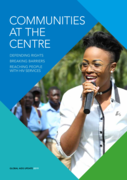
Defending Rights
Breaking Barriers
Reaching People with HIV Services
Global Aids Update 2019

Ending the epidemics of HIV, tuberculosis and malaria by 2030 is within reach, but not yet fully in our grasp.
With only 11 years left, we have no time to waste. We must step up the fight now.
The 2018 global health financing report presents health spending data for all WHO Member States between 2000 and 2016 based on the SHA 2011 methodology. It shows a transformation trajectory for the global spending on health, with increasing domestic public funding and declining external financing. T...

PEPFAR Malawi’s Country Operational Plan 2022 (COP22) embodies joint priorities from national and subnational dialogues building on the 2020-2025 National Strategic Plan for HIV/AIDS. The interagency team has developed a person-centered, district-tailored and Malawi Population-Based HIV Impact Ass...
FOLLOW-UP TO THE 2011 POLITICAL DECLARATION ON HIV/AIDS: INTENSIFYING EFFORTS TO ELIMINATE HIV/AIDS | Reporting Period: January – December 2014
PLoS ONE 15(1): e0228135.
The introduction of “Treat All” (TA) has been promoted to increase the effectiveness of HIV/AIDS treatment by having patients initiate antiretroviral therapy at an earlier stage of their illness. The impact of introducing TA on the unit cost of treatment has been less ...
From policy to practice: how the TB-HIV response is working
“The HIV community must place much more focus on TB co-infection than
it has done to date. TB takes the lives of over 1000 people living with HIV
every day, a number which is absolutely unacceptable. This report highlights that
TB d...
