
Filter
7071
Filtered Results: 7071
Text search:
Community
Health
Committee
Featured
Recommendations
608
New Publications
2004
Language
Document type
No document type
4056
Studies & Reports
1218
Guidelines
809
Manuals
392
Strategic & Response Plan
313
Training Material
93
Fact sheets
87
Situation Updates
67
Resource Platforms
15
Infographics
12
Brochures
7
Online Courses
2
Countries / Regions
India
301
Global
298
Kenya
225
Uganda
170
South Africa
167
Sierra Leone
164
Nepal
162
Nigeria
146
Myanmar / Burma
145
Liberia
144
Ethiopia
140
Western and Central Europe
118
Bangladesh
117
Malawi
115
Rwanda
111
Zambia
103
Syria
102
Ghana
92
Africa
89
Tanzania
85
Namibia
78
Latin America and the Carribbean
77
Congo, Democratic Republic of
74
South Sudan
66
Ukraine
65
Philippines
60
Lesotho
52
Cambodia
52
Eastern Europe
52
Mozambique
50
Zimbabwe
49
South–East Asia Region
46
Guinea
45
Asia
42
Indonesia
41
Senegal
40
Burkina Faso
35
West and Central Africa
33
East and Southern Africa
33
Botswana
33
Yemen
32
Russia
30
Afghanistan
29
Haiti
28
Venezuela
26
Middle East and North Africa
25
Cameroon
24
Eastern Europe and Central Asia
23
Central African Republic
23
Lebanon
21
Brazil
21
Pakistan
21
Eswatini/ Swaziland
20
Jordan
19
Germany
19
Colombia
18
Benin
18
Thailand
16
Vietnam
16
Sudan
16
China
15
Mali
15
Tajikistan
14
Somalia
14
Laos
13
Western Pacific Region
13
Sri Lanka
13
Albania
11
Iraq
11
USA
10
Moldova
10
Palestine
9
Angola
9
Madagascar
9
Guinea-Bissau
8
Mexico
7
Togo
7
Kyrgyzstan
7
Niger
7
Peru
7
Southern Africa
7
Timor Leste/ East Timor
6
Burundi
6
North America
6
Côte d’Ivoire / Ivory Coast
6
Papua New Guinea
6
Georgia
6
Poland
6
Chad
6
Gambia
5
Kazakhstan
5
Iran
5
Paraguay
5
Argentina
5
Libya
5
Serbia
4
Turkey
4
Chile
4
Hungary
4
Romania
4
Bhutan
4
Ecuador
4
North Macedonia
3
Canada
3
Fiji
3
Armenia
3
Turkmenistan
3
Jamaica
3
Japan
3
Mauritius
3
United Kingdom
3
Portugal
3
Belarus
3
Bosnia and Herzegovina
3
Bolivia
3
Greece
3
El Salvador
2
Singapore
2
Malaysia
2
Mauritania
2
Italy
2
Croatia
2
Lithuania
2
Azerbaijan
2
Egypt
2
Honduras
2
Guatemala
2
North Korea
1
Switzerland
1
Estonia
1
Uzbekistan
1
Vanuatu
1
Morocco
1
Qatar
1
Bulgaria
1
Dominican Republic
1
Saudi Arabia
1
Gabon
1
Denmark
1
Belgium
1
Maldives
1
Norway
1
Spain
1
Israel
1
Guyana
1
Slovakia
1
Authors & Publishers
Publication Years
Category
Countries
2870
Key Resources
497
Clinical Guidelines
411
Public Health
383
Women & Child Health
368
Capacity Building
123
Pharmacy & Technologies
35
Toolboxes
Mental Health
500
COVID-19
479
HIV
477
Disability
364
TB
304
Conflict
256
Ebola & Marburg
223
Planetary Health
218
AMR
209
Caregiver
184
Refugee
163
NTDs
157
Rapid Response
143
Global Health Education
112
NCDs
111
Pharmacy
110
Natural Hazards
108
Health Financing Toolbox
85
Malaria
78
2.0 Rapid Response
77
Polio
47
Cholera
37
Specific Hazards
35
Social Ethics
35
Zika
35
Typhoon
6
South Sudan
1
The 6th edition of the essential medicine list has been developed based on the 5th edition list of essential medicines, the National Standard Treatment Guidelines and Protocols 2013, list of laboratory commodities and List of Consumables used in public health facilities.
While the full effects of COVID-19 remain unknown, the pandemic continues to profoundly impact regional migration and mobility dynamics, with deep health, social and economic consequences for the most vulnerable, including migrants, displaced populations and their host communities, and returnees.
This short paper aims to identify key evidence gaps in our knowledge of livestock- and fisheries-linked antimicrobial resistance in the developing world, and to document on-going or planned research initiatives on this topic by key stakeholders.
The antimicrobial resistant (AMR) infections in anima...

It is the policy of the GoR to ensure that children’s rights are met through the provision of basic needs and services for all children in the country, and protect them from abuse and exploitation. Children are defined as persons below the age of 18 years and the ICRP covers children from the time...
Aligned to the Lancet Migration Global Statement to include migrants and refugees incountries’response to COVID-19, this update focuses on Mexico’s challenges and opportunities to build an inclusive response that is based on a contextualized adaptation of there commendations published by th...

The report showed commitments made three decades ago to protect the rights of children remain unfulfilled for millions. Violence still affects countless children. Discrimination based on age, gender, disability, sexual orientation and religion harms children worldwide.
Key factors include a lack ...
The primary role of Benin’s Department of Pharmacy and Medicines (DPMED) is to develop and apply the national pharmaceutical policy. The main objective of this policy is to ensure the availability and accessibility of quality medicines for the population. To fulfill its mandate, DPMED aims to stre...
Chapter · January 2009 DOI: 10.1007/978-0-387-72711-0_25
D.D. Celentano and C. Beyrer (eds.), Public Health Aspects of HIV/AIDS in Low and Middle Income Countries, DOI: 10.1007/978-0-387-72711-0 25, c Springer Science+Business Media, LLC 2008

The reader acknowledges that this report is intended as an evidence-based asthma management strategy, for the use of health professionals and policy-makers. It is based, to the best of our knowledge, on current best evidence and medical knowledge and practice at the date of publication. When assessi...
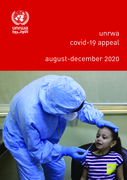
COVID-19 has resulted in an unprecedented global crisis. As the pandemic spreads and countries around the world continue to struggle to contain its health and socio-economic consequences, UNRWA is issuing a new humanitarian appeal from August through December 2020 to address the worst impacts of the...
Protecting the fundamental rights of people affected by HIV
Under the Constitution of the Republic of the Union of Myanmar (2008), every citizen - including people living with HIV - has the right to work, access health care, and receive basic education.
However, stigma and discrimination r...
Under the Constitution of the Republic of the Union of Myanmar (2008), every citizen - including people living with HIV - has the right to work, access health care, and receive basic education.
However, stigma and discrimination r...
The International Organization for Migration (IOM) and partners from 27 humanitarian and development organisations and governments are appealing for USD 84 million to provide life-saving assistance to hundreds of thousands of African migrants and host community members affected by COVID-19 in the Ho...
No publication year indicated
In the context of the floods in August 2015 in Myanmar, the Disaster Risk Reduction Working Group (DRR WG) was requested to provide clear recommendations to the DMH (Department of Hydrology and Meteorology)to strengthen preparedness activities, in particular for t...
In the context of the floods in August 2015 in Myanmar, the Disaster Risk Reduction Working Group (DRR WG) was requested to provide clear recommendations to the DMH (Department of Hydrology and Meteorology)to strengthen preparedness activities, in particular for t...
Earthquake Haiti: Guidelines and Resources
recommended
25 August 2021. The earthquake on August 14, 2021 was almost as strong as the severe quake in 2010, which killed about 300,000 people. The current number of victims is more than 2,200 people, and more than 12,000 people have been injured. More than 52,000 houses were destroyed and more than 77,000 ...

Sudan recorded the first COVID-19 case on 13 March 2020 and, at the beginning of July, the Federal Ministry of Health had confirmed that nearly 10,000 people had contracted the virus, including over 600 who died from the disease across the country. Although more than 70 per cent of the confirmed cas...
Antimicrobial resistant (AMR) organisms are increasing globally, threatening to render existing treatments ineffective against many infectious diseases. In Africa, AMR has already been documented to be a problem for HIV and the pathogens that cause malaria, tuberculosis, typhoid, cholera, meningitis...
Vol 5 No 27 | ISSN 2039-2117 (online) | ISSN 2039-9340 (print) | The rate of sexual victimization of mentally retarded children is alarming and it goes unnoticed because the perpetrators could be parents, step- parents, relatives, well-respected individuals by family members, neighbours and educator...
Hands-on information and practical advice for everyday life and work in the field as well as background information on crisis management structures in international organizations lie at the heart of the new handbook. It has been developed in the realm of Europe’s New Training Initiative for Civili...
The availability, prices and affordability of essential medicines in Malawi: A cross-sectional study
The Malawian government recently introduced cost-covering consultation fees for self-referral patients in tertiary public hospitals. Previously, patients received medicines free of charge in government-owned health facilities, but must pay elsewhere. Before the government implements a payment policy...
