
Filter
5109
Filtered Results: 5109
Text search:
Datta,
B.
et
al.
Featured
Recommendations
371
New Publications
1071
Language
Document type
No document type
2608
Studies & Reports
1244
Guidelines
658
Manuals
252
Strategic & Response Plan
128
Fact sheets
105
Training Material
69
Situation Updates
21
Resource Platforms
10
Infographics
9
Dashboards/Maps
2
Online Courses
2
Brochures
1
Countries / Regions
Global
235
India
155
Kenya
126
South Africa
125
Latin America and the Carribbean
111
Western and Central Europe
108
Ethiopia
96
Africa
94
Brazil
83
Malawi
76
Nigeria
74
Zambia
74
Nepal
70
Sierra Leone
69
Tanzania
68
Uganda
62
Liberia
56
Bangladesh
54
Myanmar / Burma
54
Russia
53
Ukraine
50
Ghana
50
Indonesia
48
Rwanda
44
Mozambique
40
Eastern Europe
39
Germany
38
Namibia
37
Zimbabwe
35
Syria
34
Philippines
33
Senegal
32
Congo, Democratic Republic of
32
South–East Asia Region
30
Asia
27
Burkina Faso
26
Lesotho
25
Guinea
23
Benin
21
Middle East and North Africa
21
Colombia
20
Cameroon
19
Haiti
19
Cambodia
19
West and Central Africa
19
Venezuela
18
Eastern Europe and Central Asia
18
Botswana
17
East and Southern Africa
16
South Sudan
16
Pakistan
16
Yemen
14
Thailand
12
Chile
12
Sudan
12
Jordan
11
Angola
11
Albania
10
Paraguay
10
Vietnam
10
Tajikistan
9
China
9
USA
9
Lebanon
9
Argentina
8
Eswatini/ Swaziland
8
North America
7
Mali
7
Somalia
7
Madagascar
7
Kyrgyzstan
6
Peru
6
Southern Africa
6
Ecuador
6
Afghanistan
5
Guinea-Bissau
5
Portugal
5
Moldova
5
Egypt
5
Georgia
5
Chad
5
Libya
5
Iraq
5
Timor Leste/ East Timor
4
El Salvador
4
Turkey
4
Laos
4
Western Pacific Region
4
United Kingdom
4
Spain
4
Côte d’Ivoire / Ivory Coast
4
Sri Lanka
4
Guatemala
4
Mexico
3
Kazakhstan
3
Iran
3
Canada
3
Estonia
3
Niger
3
Burundi
3
Qatar
3
Italy
3
Saudi Arabia
3
France
3
Tunisia
3
Israel
3
Romania
3
Palestine
3
Honduras
3
North Macedonia
2
Morocco
2
Armenia
2
Jamaica
2
Bosnia and Herzegovina
2
Bolivia
2
Papua New Guinea
2
Djibouti
2
Greece
2
Central African Republic
2
North Korea
1
Switzerland
1
Togo
1
Singapore
1
Congo-Brazzaville
1
Mauritania
1
Dominican Republic
1
Hungary
1
Lithuania
1
Turkmenistan
1
Japan
1
Mauritius
1
Belarus
1
Latvia
1
Nicaragua
1
Slovakia
1
Poland
1
Bhutan
1
Solomon Islands
1
Cuba
1
Authors & Publishers
Publication Years
Category
Countries
1684
Clinical Guidelines
408
Public Health
289
Women & Child Health
241
Key Resources
231
Capacity Building
72
Pharmacy & Technologies
42
Toolboxes
HIV
502
Mental Health
486
COVID-19
456
TB
318
Planetary Health
260
NTDs
223
Disability
166
AMR
155
NCDs
152
Caregiver
149
Ebola & Marburg
101
Health Financing Toolbox
88
Global Health Education
86
Rapid Response
81
Pharmacy
74
Conflict
70
Refugee
68
Natural Hazards
41
2.0 Rapid Response
39
Malaria
38
Zika
32
Polio
24
Specific Hazards
20
Cholera
20
Social Ethics
17
South Sudan
1
Typhoon
1

The WHO guidelines for malaria bring together the Organization’s most up-to-date recommendations for malaria in one user-friendly and easy-to-navigate online platform.
The WHO guidelines for malaria bring together the Organization’s most up-to-date recommendations for malaria in one user-frie...

WHO recommends artemisinin-based combination therapies for treating uncomplicated malaria, alongside studies to monitor treatment effectiveness. Given the threat of antimalarial resistance, including partial resistance in several African countries, molecular tools are vital for tracking resistance. ...

4th edition, Reference Manual

These guidelines update earlier WHO recommendations to maximize the HIV prevention impact of safe VMMC services and aim to guide the transition to the sustained provision of interventions with a focus on the health and well-being of both adolescent boys and men.
Glaucoma, a disease that gradually affects the optic nerve, is the second leading cause of vision loss globally, and it continues to pose a challenge to the eye health professionals.
The present report is based on a longitudinal analysis of assessments on mixed migration routes and dynamics, conducted over the course of 2018. It is based on six rapid thematic studies, conducted over the course of 2018, as well as a longitudinal analysis of changes in mixed migration routes and d...
THE REPUBLIC OF BOTSWANA | MINISTRY OF HEALTH | DEPARTMENT OF PUBLIC HEALTH | NATIONAL MALARIA CONTROL PROGRAMME

The "Integrated Management of Malaria Training – Health Worker’s Manual" is a practical guide developed by Uganda’s Ministry of Health to train healthcare workers at all levels in the effective diagnosis, treatment, prevention, and management of malaria. It aligns with national malaria treatme...

This paper was commissioned by the German Federal Ministry for Economic Cooperation and Development (BMZ) in 2015, and produced by the Deutsche Gesellschaft für Internationale Zusammenarbeit (GIZ) GmbH, in cooperation with German civil society actors and freelance psychologists working in the field...
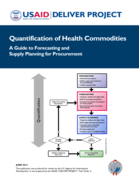
The USAID | DELIVER PROJECT, Task Order 4, developed this guide for quantifying health commodities; it will assist technical advisors, program managers, warehouse managers, procurement officers, and service providers in (1) estimating the total commodity needs and costs for successful implementation...
Paper commissioned for the EFA Global Monitoring Report 2010, Reaching the marginalized
Update, 23 de junio de 2022
Assessment and management of prolonged symptoms of COVID-19.
Introdução
Apesar de inicialmente ter sido considerada uma infecção aguda do sistema respiratório,
atualmente sabe-se do comprometimento multissistêmico e protraído da COVID-19 em alguns indivíduos [1]. Segundo dados prelimi...
Rapid review and case studies from Member States

This summary assesses the current state of evidence on each approach in tabular form, providing: the definition and objectives; evidence of effectiveness; operational considerations (e.g., training, staffing, and logistics); cost considerations and evidence on cost-effectiveness; operational success...
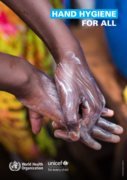
Three billion people – 40 per cent of the world’s population – do not have a place in their homes to wash their hands with water and soap. Three quarters of those who lack access to water and soap live in the world’s poorest countries and are amongst the most vulnerable: children and familie...
