
Filter
598
Filtered Results: 598
Text search:
World
Health
Organization
(WHO),
Myanmar,
Ministry
of
Health
Featured
Recommendations
49
New Publications
252
Language
Document type
No document type
387
Studies & Reports
92
Guidelines
48
Manuals
39
Strategic & Response Plan
18
Situation Updates
5
Infographics
3
Fact sheets
3
Training Material
2
Online Courses
1
Countries / Regions
Myanmar / Burma
160
Bangladesh
40
Global
38
Asia
28
South–East Asia Region
25
India
13
Nepal
11
Indonesia
10
Thailand
9
Cambodia
7
Syria
6
Philippines
6
Kenya
5
Nigeria
5
Laos
5
Congo, Democratic Republic of
5
Western and Central Europe
5
Vietnam
4
Ethiopia
4
Afghanistan
3
Malawi
3
Malaysia
3
Mozambique
3
Africa
3
Latin America and the Carribbean
3
Tanzania
3
Yemen
3
Central African Republic
3
Somalia
3
Pakistan
3
Colombia
2
Ukraine
2
Burkina Faso
2
Haiti
2
Sudan
2
Mali
2
South Sudan
2
Tajikistan
1
Mexico
1
Ghana
1
Benin
1
Sierra Leone
1
China
1
Rwanda
1
Cameroon
1
Canada
1
Singapore
1
Zimbabwe
1
Guinea
1
Armenia
1
Jordan
1
West and Central Africa
1
Middle East and North Africa
1
Eastern Europe and Central Asia
1
Turkmenistan
1
Japan
1
East and Southern Africa
1
Uganda
1
Sri Lanka
1
Palestine
1
Libya
1
Iraq
1
Liberia
1
Ecuador
1
Authors & Publishers
Publication Years
Category
Countries
229
Key Resources
48
Clinical Guidelines
35
Public Health
29
Women & Child Health
29
Capacity Building
7
Pharmacy & Technologies
7
Toolboxes
HIV
74
Mental Health
42
TB
41
COVID-19
23
Disability
22
Natural Hazards
19
Planetary Health
19
Conflict
14
NTDs
13
Malaria
13
Rapid Response
12
Refugee
11
AMR
10
Global Health Education
9
Health Financing Toolbox
7
2.0 Rapid Response
7
Pharmacy
6
NCDs
3
Polio
3
Specific Hazards
2
Ebola & Marburg
2
Cholera
1
Caregiver
1
Typhoon
1
This study aims to analyze national and international stakeholders and their initiatives in Early Warning Systems in Myanmar, to identify priority gaps that need to be addressed by all stakeholders. It is presented as a first step towards supporting GoUM in information-gathering under the Myanmar Ac...

No publication year indicated
In the context of the floods in August 2015 in Myanmar, the Disaster Risk Reduction Working Group (DRR WG) was requested to provide clear recommendations to the DMH (Department of Hydrology and Meteorology)to strengthen preparedness activities, in particular for t...
In the context of the floods in August 2015 in Myanmar, the Disaster Risk Reduction Working Group (DRR WG) was requested to provide clear recommendations to the DMH (Department of Hydrology and Meteorology)to strengthen preparedness activities, in particular for t...
A comprehensive compilation is provided of the medicinal plants of the Southeast Asian country of Myanmar (formerly Burma). This contribution, containing 123 families, 367 genera, and 472 species, was compiled from earlier treatments, monographs, books, and pamphlets, with some medicinal uses and pr...

The Government of Myanmar has taken initial steps to implement some of the
recommendations, particularly those made by the Advisory Commission. The overarching
objectives of the recommendations, however, remain largely unaddressed, with no
significant progress observed on human rights concerns ra...
World Drug Report 2017
-5-
Accessed: 14.03.2019
Today, WFP has the capabilities and know-how to tap into mobile technology and artificial intelligence to monitor food security; use satellite technology to locate and track communities in need; and offer digital finance via blockchain technology to put consumer choices in the hands of our beneficia...
Supplement article
The Journal of Infectious Diseases® 2017;216(S7):S675–8
DOI: 10.1093/infdis/jix368
Finding the Missing Tuberculosis Patients • JID 2017:216 (Suppl 7) • S675
Downloaded from https://academic.oup.com/jid/article-abstract/216/suppl_7/S675/4595547
by guest on 13 Nove...
The UNICEF-GAIN Partnership Project
The report notes that iodine deficiency is a leading cause of preventable brain damage worldwide. Insufficient iodine during pregnancy and infancy results in neurological and psychological deficits, reducing a child’s IQ by 8 to 10 points. This translates ...
The report notes that iodine deficiency is a leading cause of preventable brain damage worldwide. Insufficient iodine during pregnancy and infancy results in neurological and psychological deficits, reducing a child’s IQ by 8 to 10 points. This translates ...
Report of the Global Thematic Consultation on Population Dynamics
Nutrition Cluster Handbook
recommended
The purpose of the handbook is to provide those involved in nutrition coordination with relevant tools, guidance, information and resources to support their roles in facilitating predictable, coordinated and effective preparation for, and responses to, nutrition needs in humanitarian emergencies. Ra...

Ending the epidemics of HIV, tuberculosis and malaria by 2030 is within reach, but not yet fully in our grasp.
With only 11 years left, we have no time to waste. We must step up the fight now.
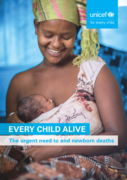
Globally, in low-income countries, the average newborn mortality rate is 27 deaths per 1,000 births, the report says. In high-income countries, that rate is 3 deaths per 1,000. Newborns from the riskiest places to give birth are up to 50 times more likely to die than those from the safest places....
Thailand is exposed to flooding, landslides, drought, earthquakes, tsunamis, heat waves, forest fires, and epidemics. Thailand is also exposed to technological hazards such as chemical accidents. Flooding is the natural hazard with the most significant impact on human life, livelihoods, and the econ...

Climate change is a growing concern for Bangladesh because 90 percent of the country is approximately 10 feet above sea level. An evaluation was completed which discovered that high tides in Bangladesh were increasing 10 times more rapidly than the global average. This predicted rapid increase in se...
Cambodia drafted and adopted the National Action Plan for Disaster Risk Reduction 2014-2018 in 2014. This plan finalized the required policies and legal processes to strengthen DRM in Cambodia. It also focused on capacity building at national and sub-national levels and provided dedicated resources ...
The National Strategy for Natural Disaster, Prevention, Response and Mitigation to 2020, which outlines Vietnam’s main disaster risk management objectives and the National Target Program (NTP) form the overarching policy framework for disaster risk management and climate change adaption activities...
