Filter
643
Filtered Results: 643
Text search:
Scott,
C.
Featured
Recommendations
67
New Publications
121
Language
Document type
No document type
321
Studies & Reports
162
Guidelines
91
Manuals
43
Strategic & Response Plan
11
Fact sheets
9
Training Material
5
Situation Updates
1
Countries / Regions
Global
33
India
16
Africa
14
Western and Central Europe
14
Kenya
13
Russia
13
Eastern Europe
10
Ethiopia
9
Ukraine
8
Lesotho
8
Sierra Leone
8
Germany
8
Congo, Democratic Republic of
8
Malawi
7
Latin America and the Carribbean
7
South Africa
7
Syria
6
Philippines
6
Uganda
6
Liberia
6
Myanmar / Burma
6
Nepal
5
Senegal
5
Zimbabwe
5
Indonesia
5
Nigeria
4
Burkina Faso
4
Asia
4
Venezuela
4
Brazil
4
Yemen
4
Ghana
3
Rwanda
3
Guinea
3
Tanzania
3
Middle East and North Africa
3
South–East Asia Region
3
Somalia
3
Tajikistan
2
Italy
2
USA
2
West and Central Africa
2
Eastern Europe and Central Asia
2
Argentina
2
Bangladesh
2
Vietnam
2
Central African Republic
2
Zambia
2
South Sudan
2
Eswatini/ Swaziland
2
Colombia
1
Thailand
1
Mexico
1
Benin
1
China
1
Chile
1
Cameroon
1
Canada
1
Laos
1
Afghanistan
1
Peru
1
Mozambique
1
Haiti
1
Saudi Arabia
1
Paraguay
1
France
1
United Kingdom
1
Spain
1
Belarus
1
Côte d’Ivoire / Ivory Coast
1
Sudan
1
Chad
1
Botswana
1
Iraq
1
Authors & Publishers
Publication Years
Category
Countries
149
Clinical Guidelines
50
Public Health
46
Women & Child Health
36
Key Resources
34
Capacity Building
4
Pharmacy & Technologies
4
Toolboxes
Mental Health
108
Planetary Health
58
NTDs
39
COVID-19
38
TB
30
HIV
28
Disability
27
Caregiver
26
AMR
25
Malaria
18
Global Health Education
15
Rapid Response
14
Ebola & Marburg
14
NCDs
11
Refugee
9
Natural Hazards
9
Pharmacy
6
Health Financing Toolbox
6
Zika
6
Social Ethics
4
2.0 Rapid Response
4
Conflict
4
Specific Hazards
3
Polio
2

Les organismes résistants aux antimicrobiens (RAM) sont de plus en plus répandus à l'échelle mondiale, menaçant de rendre inefficaces les traitements existants contre les nombreuses maladies infectieuses. Il a déjà été établi qu’en Afrique la résistance aux antimicrobiens est un problè...

This is the fifteenth edition of the lecture notes. They were first published in 1987 as a summary of the material used in the biannual epilepsy teaching weekend organised under the auspices of the UK Chapter of the International League against Epilepsy.
(Lecture series consist of a total of 59 cha...
Bridging the Gap
Antimicrobial resistant (AMR) organisms are increasing globally, threatening to render existing treatments ineffective against many infectious diseases. In Africa, AMR has already been documented to be a problem for HIV and the pathogens that cause malaria, tuberculosis, typhoid, cholera, meningitis...

This is the ninth paper in our series, “Community Health Workers at the Dawn of a New Era”. Community health workers (CHWs) are in an intermediary position between the health system and the community. While this position provides CHWs with a good platform to improve community health, a major cha...
Le défi des pays en voie de développement est la disponibilité de méthodes de diagnostic rapide et précis pour le management de la tuberculose. Des techniques moléculaires offrent cet avantage et nous avons utilisé le test GeneXpert MTB/RIF dans le diagnostic de la tuberculose extra-pulmonair...
[Updated 2015]
Scoping Question: In adults with acute convulsive seizures in first-level care or in the community (when no IV access is available), which antiepileptic medications produce benefits and/or harm when compared to comparator?
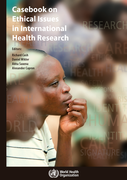
This casebook collects 64 case studies, each of which raises an important and difficult ethical issue connected with planning, reviewing, or conducting health-related research. The book’s purpose is to contribute to thoughtful analysis of these issues by researchers and members of research ethics ...
Global Happiness Council
Lancet Glob Health 2018, Published Online September 12, 2018 http://dx.doi.org/10.1016/S2214-109X(18)30387-5
Environmental Pollution
http://dx.doi.org/10.1016/j.envpol.2013.05.046
La demencia es una enfermedad gravemente incapacitante para aquellos que la padecen y suele ser devastadora para sus cuidadores y familiares. Se estima que en la actualidad 35.6 millones de personas viven con demencia a nivel mundial. Este número se habrá casi duplicado para el 2030 y más que tri...

This integrated operational framework provides an overview of the connections between mental health, neurological and substance use (MNS) conditions, and their links to health, well-being and the broader public health and sustainable development agenda. The need for integrated approaches is increasi...
In the Region of the Americas, the leishmaniases are a group of diseases caused by various species of Leishmania, which cause a set of clinical syndromes in infected humans that can involve the skin, mucosa, and visceral organs. The spectrum of clinical disease is varied and depends on the interacti...