
Filter
4747
Filtered Results: 4747
Text search:
civil
rights
Featured
Recommendations
357
New Publications
1334
Language
Document type
No document type
2744
Studies & Reports
867
Guidelines
438
Manuals
254
Strategic & Response Plan
247
Training Material
64
Fact sheets
64
Situation Updates
42
Brochures
10
Resource Platforms
9
Infographics
6
Online Courses
2
Countries / Regions
Global
241
India
151
Kenya
120
Myanmar / Burma
113
Sierra Leone
108
Uganda
98
Syria
95
Liberia
95
Nepal
92
Western and Central Europe
92
Nigeria
89
Bangladesh
80
Ethiopia
76
Latin America and the Carribbean
71
South Africa
71
Zambia
71
Ukraine
63
Malawi
63
Rwanda
61
Ghana
59
Africa
58
Congo, Democratic Republic of
54
South Sudan
47
Venezuela
44
Namibia
44
South–East Asia Region
42
Philippines
41
Tanzania
40
Lesotho
38
Cambodia
36
Asia
36
Indonesia
35
Eastern Europe
34
Yemen
31
Mozambique
30
Guinea
28
Germany
28
Senegal
26
Zimbabwe
25
Brazil
23
Central African Republic
21
Botswana
21
West and Central Africa
19
Afghanistan
18
Thailand
17
Eastern Europe and Central Asia
17
East and Southern Africa
17
Lebanon
17
Colombia
16
Haiti
16
Middle East and North Africa
15
Jordan
14
Moldova
13
China
12
Paraguay
12
Eswatini/ Swaziland
12
Burkina Faso
11
Vietnam
11
Russia
11
Pakistan
11
Tajikistan
10
Cameroon
10
Western Pacific Region
10
Sudan
10
Mali
10
Iraq
10
Somalia
10
Turkey
8
Albania
8
Laos
8
Peru
8
Sri Lanka
7
Georgia
7
Benin
6
Romania
6
Palestine
6
North Macedonia
5
Mexico
5
Iran
5
Kyrgyzstan
5
Papua New Guinea
5
Greece
5
Poland
5
Madagascar
5
Timor Leste/ East Timor
4
El Salvador
4
Chile
4
USA
4
Guinea-Bissau
4
Hungary
4
North America
4
Portugal
4
Côte d’Ivoire / Ivory Coast
4
Bolivia
4
Argentina
4
Angola
4
Libya
4
Bhutan
4
Serbia
3
Togo
3
Kazakhstan
3
Niger
3
Turkmenistan
3
Southern Africa
3
Egypt
3
Ecuador
3
Singapore
2
Estonia
2
Uzbekistan
2
Malaysia
2
Bulgaria
2
Italy
2
Armenia
2
Croatia
2
Lithuania
2
Mauritius
2
Spain
2
Belarus
2
Israel
2
Slovakia
2
Chad
2
Guatemala
2
North Korea
1
Switzerland
1
Gambia
1
Canada
1
Fiji
1
Burundi
1
Morocco
1
Mongolia
1
Mauritania
1
Dominican Republic
1
Ireland
1
Jamaica
1
Japan
1
United Kingdom
1
Norway
1
Azerbaijan
1
Bosnia and Herzegovina
1
Honduras
1
Authors & Publishers
Publication Years
Category
Countries
1704
Key Resources
355
Public Health
259
Women & Child Health
247
Clinical Guidelines
189
Capacity Building
56
Pharmacy & Technologies
12
Annual Report MEDBOX
1
Toolboxes
HIV
448
Mental Health
340
COVID-19
330
Disability
321
TB
239
Conflict
239
Planetary Health
188
Refugee
156
Global Health Education
119
Ebola & Marburg
113
Caregiver
81
Rapid Response
76
Health Financing Toolbox
72
AMR
70
Natural Hazards
64
NTDs
64
NCDs
51
2.0 Rapid Response
49
Malaria
44
Social Ethics
40
Specific Hazards
30
Pharmacy
28
Polio
21
Zika
17
Cholera
11
Typhoon
3
South Sudan
1
On 30thJanuary 2020 the World Health Organization (WHO) declared the outbreak of coronavirus disease 2019 (COVID-19) in the People’s Republic of China to be a Public Health Emergency of International Concern (PHEIC) under the international Health Regulations. The following day, the Italian Governm...
International Journal of Infectious Diseases 32 (2015) 111–117

Lao People’s Democratic Republic (Lao PDR), also referred to as Laos, or Lao, is exposed to natural disasters such as flooding, typhoons, cyclones, drought, and earthquakes. The country is vulnerable to recurrent, sudden-onset and slow onset natural disasters with flooding, storms and typhoons hav...
The Antimicrobial Resistance Benchmark has evaluated for the second time how the most important players in the antibiotic market are addressing the rise of resistance and the global need for appropriate access to antibiotics. Although we can see progress — it’s hanging by a thread.
We have reac...
This baseline survey and report examine the Durable Peace Programme (DPP) in Myanmar, which delivers a broad range of activities. The report provides an insight into the current situation facing both internally displaced persons (IDPs) and conflict-affected non-IDP communities in Kachin state, Myanm...
Nat Med (2021). https://doi.org/10.1038/s41591-021-01381-y

WHO Information Leaflet COVID-19: Considerations on tuberculosis (TB) care
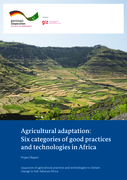
The threats posed by climate change to agriculture are now well known. Climate change has already resulted in a negative trend in mean crop yield per decade, and this is likely to continue as the century unfolds. In Africa, 650 million people are currently dependent on rain- fed agriculture and, des...

The protracted humanitarian situation in northeastern Nigeria, particularly in Borno, Adamawa, and Yobe (BAY) States, remains a concern due to ongoing insecurity, displacement, food insecurity, disease outbreaks, and climate-related shocks. To address these complex challenges, the health sector has ...

An interdisciplinary study within the framework of the dialogue project on the contribution of the Catholic Church to a socio-ecological transformation.
The study examines the obstacles to the implementation of the socio-ecological transformation and develops recommendations for action.
The SAARC Member States have more than an estimated 2.0 million TB cases accounting for close to one-third of the total cases of TB in the world. India alone had almost one-fifth of the global disease burden due to TB. India, Pakistan and Bangladesh followed by Afghanistan are the major contributors...
The 5 years plan to scale up HIV Testing and Counselling Services in Malawi 2006-2010

On 14 August 2024, the Director-General of the World Health Organization determined that the upsurge of mpox in a growing number of countries in Africa constitutes a new public health emergency of international concern (PHEIC) under the International Health Regulations (IHR) (2005)
ACT Alliance appeal: Global Response to the COVID-19 Pandemic – ACT201 - Sub-Appeal - ACT 201-BGD -
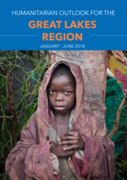
The report covers: drivers of humanitarian crises in the region, particularly the intensification of violence in the DRC; manifestations of humanitarian needs, including record levels of displacement and food insecurity; and constraints to meeting humanitarian needs, including obstacles to humanitar...
The National Institute of statistics of Rwanda (NISR) in collaboration with the worldwide Demographic and Health Surveys Program implemented the 2014-15 Rwanda Demographic and Health Survey (RDHS) to collect data for monitoring progress on health programs and policies in Rwanda. This publication ill...
