
Filter
1724
Filtered Results: 1724
Text search:
South
African
Medical
Journal
Featured
Recommendations
126
New Publications
315
Language
Document type
No document type
990
Studies & Reports
383
Guidelines
193
Manuals
73
Strategic & Response Plan
33
Training Material
18
Fact sheets
17
Situation Updates
9
Resource Platforms
7
Brochures
1
Countries / Regions
South Africa
106
Global
80
Africa
66
Kenya
54
Nigeria
46
Ethiopia
35
Uganda
32
India
31
Zambia
26
Lesotho
22
Sierra Leone
22
Syria
21
Tanzania
20
Western and Central Europe
19
Nepal
18
Congo, Democratic Republic of
18
Liberia
18
Namibia
17
Ghana
16
Malawi
16
South Sudan
16
Bangladesh
15
Rwanda
14
Zimbabwe
14
Mozambique
13
Myanmar / Burma
13
Latin America and the Carribbean
11
Eastern Europe
11
Ukraine
10
Burkina Faso
10
Guinea
10
Asia
10
Cameroon
9
Senegal
9
East and Southern Africa
9
Yemen
9
Colombia
8
West and Central Africa
8
South–East Asia Region
8
Russia
8
Benin
7
Cambodia
7
Middle East and North Africa
7
Brazil
7
Botswana
7
Indonesia
7
Thailand
6
Eswatini/ Swaziland
6
China
5
Philippines
5
Madagascar
5
Haiti
4
Jordan
4
Germany
4
Southern Africa
4
Vietnam
4
Somalia
4
Pakistan
4
Mexico
3
Albania
3
Afghanistan
3
Central African Republic
3
Angola
3
Canada
2
Morocco
2
France
2
Argentina
2
Lebanon
2
North Macedonia
1
Tajikistan
1
Timor Leste/ East Timor
1
Turkey
1
Chile
1
Iran
1
Kyrgyzstan
1
Malaysia
1
Qatar
1
Guinea-Bissau
1
Venezuela
1
Hungary
1
Eastern Europe and Central Asia
1
Paraguay
1
Jamaica
1
Japan
1
Mauritius
1
Norway
1
Portugal
1
Israel
1
Sri Lanka
1
Egypt
1
Sudan
1
Palestine
1
Georgia
1
Chad
1
Iraq
1
Authors & Publishers
Publication Years
Category
Countries
496
Clinical Guidelines
164
Public Health
117
Women & Child Health
108
Key Resources
70
Capacity Building
24
Pharmacy & Technologies
11
Toolboxes
Mental Health
201
HIV
181
TB
133
COVID-19
116
Disability
89
NCDs
64
NTDs
56
Caregiver
55
AMR
50
Planetary Health
44
Conflict
38
Rapid Response
36
Ebola & Marburg
35
Global Health Education
32
Refugee
29
Pharmacy
27
Health Financing Toolbox
21
2.0 Rapid Response
15
Social Ethics
14
Natural Hazards
13
Malaria
11
Specific Hazards
9
Zika
8
Cholera
5
Polio
3
This report presents the key findings of the end-of-project assessment of households and
community health volunteers, conducted in 2017 in the Kamukunji and Embakasi sub-counties
of Nairobi, Kenya, for a Community Health Volunteers’ Decision Support System (CHV DSS)
intervention project. The re...
Silicosis is not a new disease; the impact of silica dust on respiratory function was observed by Hippocrates in 430 B.C. and in the 16th century by Agricol. In 1713, Rammazini described silicotic nodules in post-mortems of stone cutters presenting with respiratory symptoms. In the mid-late 1800s,...
These guidelines have been developed specifically to address ethical issues of conducting research in children.

This resulting toolkit is a practical guide intended to assist users to become advocates for palliative care in a practical and effective
way. It is not necessarily a resource to read from cover to cover; rather, it can also be used selectively to each reader’s needs to engage audiences and...
Research Article
Received: August 21, 2017; Accepted: August 29, 2017; Published: Spetember 05,
2017
This article is available in: http://www.imedpub.com/advanced-techniques-in-clinical-microbiology/
The project was developed by the International Federation of Medical Students’ Associations (IFMSA), in line with the Federation’s statement “a world in which students are equipped with knowledge, skills and value to take on health leadership roles locally and globally so to...

In resource-limited countries, the number of available antiretroviral (ARV) drugs is relatively limited. Hence, caregivers face some caution and constraints in the changes of ARV treatment (ART) in people living with HIV (PLHIV). Our objective was to calculate the incidence, to describe the main cau...

There are social and environmental barriers faced by persons with disabilities which have been reported in literature. In discussing these barriers, attention is yet to be given to the support from families to members with disabilities. This study aimed to examine family support and its impact on th...
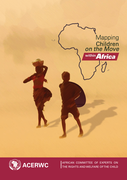
Mapping Children on the Move
recommended
In reviewing State Parties report on the implementation of the Charter, the Committee has identified children on the move as an emerging child protection issue in African, and therefore commissioned a study in view of making recommendations to tackle the problem in Member States. The Committee obse...

The article outlines the prioritized research agenda for the prevention and control of chronic respiratory diseases (CRDs) as part of the World Health Organization's (WHO) action plan on noncommunicable diseases (NCDs) from 2008 to 2013. It highlights the significant global impact of CRDs, including...
Zhou et al. Int J Ment Health Syst (2019) 13:10 https://doi.org/10.1186/s13033-019-0263-1
Researchers focused on mental health of conflict-affected children are increasingly interested in the concept of resilience. Knowledge on resilience may assist in developing interventions aimed at improving positive outcomes or reducing negative outcomes, termed promotive or protective interventions...

Asthma is the most common chronic condition in children worldwide. It affects daytime activities, sleep and school attendance and causes anxiety to parents, families and other carers. The quality of asthma diagnosis and management globally still needs substantial improvement. From infancy to the tee...


Conclusion: To ensure that people with disabilities can successfully access the necessary health services, the barriers on the demand side (the individuals requiring healthcare) as well as the barriers that are part of the healthcare system, should be attended to.
