
Filter
5112
Filtered Results: 5112
Text search:
Datta,
B.
et
al.
Featured
Recommendations
374
New Publications
1073
Language
Document type
No document type
2608
Studies & Reports
1247
Guidelines
658
Manuals
252
Strategic & Response Plan
128
Fact sheets
105
Training Material
69
Situation Updates
21
Resource Platforms
10
Infographics
9
Dashboards/Maps
2
Online Courses
2
Brochures
1
Countries / Regions
Global
235
India
155
Kenya
126
South Africa
125
Latin America and the Carribbean
111
Western and Central Europe
108
Ethiopia
96
Africa
94
Brazil
83
Malawi
76
Nigeria
74
Zambia
74
Nepal
70
Sierra Leone
69
Tanzania
68
Uganda
62
Liberia
56
Bangladesh
54
Myanmar / Burma
54
Russia
53
Ukraine
50
Ghana
50
Indonesia
48
Rwanda
44
Mozambique
40
Eastern Europe
39
Germany
38
Namibia
37
Zimbabwe
35
Syria
34
Philippines
33
Senegal
32
Congo, Democratic Republic of
32
South–East Asia Region
30
Asia
27
Burkina Faso
26
Lesotho
25
Guinea
23
Benin
21
Middle East and North Africa
21
Colombia
20
Cameroon
19
Haiti
19
Cambodia
19
West and Central Africa
19
Venezuela
18
Eastern Europe and Central Asia
18
Botswana
17
East and Southern Africa
16
South Sudan
16
Pakistan
16
Yemen
14
Thailand
12
Chile
12
Sudan
12
Jordan
11
Angola
11
Albania
10
Paraguay
10
Vietnam
10
Tajikistan
9
China
9
USA
9
Lebanon
9
Argentina
8
Eswatini/ Swaziland
8
North America
7
Mali
7
Somalia
7
Madagascar
7
Kyrgyzstan
6
Peru
6
Southern Africa
6
Ecuador
6
Afghanistan
5
Guinea-Bissau
5
Portugal
5
Moldova
5
Egypt
5
Georgia
5
Chad
5
Libya
5
Iraq
5
Timor Leste/ East Timor
4
El Salvador
4
Turkey
4
Laos
4
Western Pacific Region
4
United Kingdom
4
Spain
4
Côte d’Ivoire / Ivory Coast
4
Sri Lanka
4
Guatemala
4
Mexico
3
Kazakhstan
3
Iran
3
Canada
3
Estonia
3
Niger
3
Burundi
3
Qatar
3
Italy
3
Saudi Arabia
3
France
3
Tunisia
3
Israel
3
Romania
3
Palestine
3
Honduras
3
North Macedonia
2
Morocco
2
Armenia
2
Jamaica
2
Bosnia and Herzegovina
2
Bolivia
2
Papua New Guinea
2
Djibouti
2
Greece
2
Central African Republic
2
North Korea
1
Switzerland
1
Togo
1
Singapore
1
Congo-Brazzaville
1
Mauritania
1
Dominican Republic
1
Hungary
1
Lithuania
1
Turkmenistan
1
Japan
1
Mauritius
1
Belarus
1
Latvia
1
Nicaragua
1
Slovakia
1
Poland
1
Bhutan
1
Solomon Islands
1
Cuba
1
Authors & Publishers
Publication Years
Category
Countries
1684
Clinical Guidelines
408
Public Health
289
Women & Child Health
241
Key Resources
231
Capacity Building
72
Pharmacy & Technologies
42
Toolboxes
HIV
502
Mental Health
486
COVID-19
456
TB
318
Planetary Health
260
NTDs
223
Disability
166
AMR
155
NCDs
152
Caregiver
149
Ebola & Marburg
101
Health Financing Toolbox
88
Global Health Education
86
Rapid Response
81
Pharmacy
74
Conflict
70
Refugee
68
Natural Hazards
41
Malaria
39
2.0 Rapid Response
39
Zika
32
Polio
24
Specific Hazards
20
Cholera
20
Social Ethics
17
South Sudan
1
Typhoon
1
Environment International Volume 146, January 2021, 106245.
We use soils to provide 98.8% of our food, but we must ensure that the pressure we place on soils to provide this food in the short-term does not inadvertently push the Earth into a less hospitable state in the long-term. Using the planeta...
European Journal of Biomedical and Pharmaceutical Sciences, vol.3 (2016) 1, 192-206
This review shows that if all sub areas of pharmaceutical waste management can efficiently work back to back environmental pollution and dangers to human health can reduce significantly.
Open access book describing tools for engaging communities in resilience strategies
Based on practical experience from participatory positive futures visioning in nine Latin American and US cities
For students and professionals of different sectors including sustainability, engineering, ec...
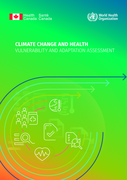
In 2013 the World Health Organization (WHO) published the report Protecting health from climate change:vulnerability and adaptation assessment. The aim was to provide basic and flexible guidance on conducting national or subnational assessments of current and future vulnerability (the susceptibilit...
Journal of the International AIDS Society, vol. 21 Issue no. 6 e 25142
Weaknesses in care programmes providing anti‐retroviral therapy (ART) persist and are often instigated by late HIV diagnosis and poor linkage to care. We investigated the potential for a home‐based counselling and testin...
Weaknesses in care programmes providing anti‐retroviral therapy (ART) persist and are often instigated by late HIV diagnosis and poor linkage to care. We investigated the potential for a home‐based counselling and testin...
Int. J. Environ. Res. Public Health 2021, 18(24), 13339; https://doi.org/10.3390/ijerph182413339
The climate crisis threatens to exacerbate numerous climate-sensitive health risks, including heatwave mortality, malnutrition from reduced crop yields, water- and vector-borne infectious diseases, and...
THELANCETID-D-16-00800 S1473-3099(16)30318-8

The mandate of the National Tuberculosis Control Programme is to provide leadership and stewardship to accelerate intense and coordinated efforts to reduce the adult TB burden of 290 per 100,000 population recently established in the 2013 National TB Prevalence Survey. Other key challenges are low T...

People with disabilities experience significant health inequalities. In Malawi, where most individuals live in low-income rural settings, many of these inequalities are exacerbated by restricted access to health care services. This qualitative study explores the barriers to health care access experi...
7. Rev Panam Salud Publica. 2020;44:e13
Haiti faces a double burden of disease. Infectious diseases continue to be an issue, while non-communicable diseases have become a significant burden of disease. More attention must also be focused on the increase in worrying public health issues such as road...

A Situational Assessment and Five-YearAction Plan for the Africa CDC Strengthening Regional Public Health Institutions and Capacity for Surveillance and Response Program
Each unit builds on the one prior, and they all combine to provide key information for developing an SBCC strategy. It is not essential, however, to work through the I-Kit from start to finish. Users can choose to focus on specific aspects for which they need support in their emergency communication...
Current and expected problems such as ageing, increased prevalence of chronic conditions and multi-morbidity, increased emphasison healthy lifestyle and prevention, and substitution for care from hospitals by care provided in the community encourage countries worldwide to develop new models of prima...
Background paper for the Oslo Summit on Education for Development.
This paper covers the four topics of the Oslo Summit: investment in education, quality of learning, education in emergencies and girls’ education. Disability continues to be one of the primary causes of educational disadvantage a...
Health Evidence Network synthesis report 72
The global increase of healthcare-associated infections (HAI) presents a growing concern in healthcare worldwide. According to the European Centre for Disease Prevention and Control (ECDC), the annual number of HAI exceeds 2.6million and produces the highest estimated amou...
The Lancet Regional health Americas, vol.10 (2022) June 1, March 04, 2022DOI:https://doi.org/10.1016/j.lana.2022.100222
Development assistance for health (DAH) has grown substantially, totaling more than $31.3 billion in 2013. However, the degree that countries with high concentrations of armed conflict, ethnic violence, inequality, debt, and corruption have received this health aid and how that assistance might be d...
