Filter
3722
Filtered Results: 3722
Text search:
drug
supply
Featured
Recommendations
359
New Publications
1099
Language
Document type
No document type
2184
Studies & Reports
570
Guidelines
509
Manuals
184
Strategic & Response Plan
141
Training Material
54
Fact sheets
46
Situation Updates
18
Infographics
6
Resource Platforms
5
Brochures
3
App
1
Online Courses
1
Countries / Regions
India
249
Kenya
117
Global
117
Ethiopia
107
Uganda
104
South Africa
89
Nigeria
82
Tanzania
78
Western and Central Europe
74
Nepal
71
Malawi
69
Sierra Leone
68
Liberia
66
Myanmar / Burma
61
Zambia
60
Ghana
57
Bangladesh
54
Africa
52
Namibia
42
Rwanda
37
Ukraine
36
Eastern Europe
36
Philippines
34
Latin America and the Carribbean
34
Zimbabwe
32
Asia
30
Cambodia
28
Lesotho
26
Russia
26
South–East Asia Region
25
Botswana
22
Syria
20
Indonesia
20
Senegal
16
Mozambique
16
Congo, Democratic Republic of
15
Burkina Faso
14
East and Southern Africa
13
Middle East and North Africa
11
South Sudan
11
Eswatini/ Swaziland
11
Germany
10
Eastern Europe and Central Asia
10
Brazil
10
Georgia
10
Cameroon
9
Haiti
9
West and Central Africa
9
Thailand
8
Albania
8
Venezuela
8
Vietnam
8
Pakistan
8
Tajikistan
7
Colombia
7
Guinea
7
Sudan
7
Afghanistan
6
Western Pacific Region
6
North Macedonia
5
Benin
5
Laos
5
USA
5
Moldova
5
Sri Lanka
5
Timor Leste/ East Timor
4
China
4
Argentina
4
Lebanon
4
Yemen
4
Iraq
4
Turkey
3
Kyrgyzstan
3
Peru
3
Armenia
3
Jordan
3
Paraguay
3
North America
3
Jamaica
3
United Kingdom
3
Bhutan
3
Madagascar
3
Mexico
2
Iran
2
Canada
2
Fiji
2
Estonia
2
Morocco
2
Hungary
2
Saudi Arabia
2
France
2
Portugal
2
Papua New Guinea
2
Central African Republic
2
Poland
2
Angola
2
Libya
2
Somalia
2
North Korea
1
Switzerland
1
El Salvador
1
Serbia
1
Australia
1
Gambia
1
Kazakhstan
1
Chile
1
Singapore
1
Uzbekistan
1
Bulgaria
1
Guinea-Bissau
1
Gabon
1
Turkmenistan
1
Denmark
1
Belgium
1
Maldives
1
Tunisia
1
Norway
1
Spain
1
Belarus
1
Bolivia
1
Greece
1
Palestine
1
Honduras
1
Solomon Islands
1
Authors & Publishers
Publication Years
Category
Countries
1609
Clinical Guidelines
323
Public Health
163
Women & Child Health
140
Key Resources
124
Pharmacy & Technologies
62
Capacity Building
50
Annual Report MEDBOX
1
Toolboxes
HIV
403
TB
330
Mental Health
232
AMR
184
COVID-19
175
Pharmacy
149
NTDs
144
Caregiver
80
NCDs
71
Malaria
71
Ebola & Marburg
56
Planetary Health
53
Conflict
52
Rapid Response
41
Global Health Education
38
Refugee
33
Health Financing Toolbox
28
Disability
23
Cholera
17
2.0 Rapid Response
17
Polio
17
Natural Hazards
16
Specific Hazards
12
Social Ethics
7
Zika
6
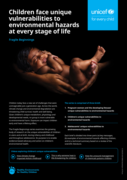
Fragile Beginnings. The Fragile Beginnings series examines the growing body of research on the unique vulnerabilities of children: in utero and at birth, during infancy and childhood and throughout adolescence. Its purpose is to enable evidence-based advocacy and action on children’s environmental...

According to the WHO, there were an estimated 251 million malaria cases (95% of global cases) and 579,414 malaria deaths (97% of global deaths) in African Union Member States in 2023. 76% of these deaths were children under the age of five.

A historic funding crisis is threatening to unravel decades of progress unless countries can make radical shifts to HIV programming and funding. The report highlights the impact that the sudden, large-scale funding cuts from international donors are having on countries most affected by HIV. Yet it a...
A historic funding crisis is threatening to unravel decades of progress unless countries can make radical shifts to HIV programming and funding. The report highlights the impact that the sudden, large-scale funding cuts from international donors are having on countries most affected by HIV. Yet it a...

This global guidance was developed to support malaria-free countries and those that are close to malaria elimination to prevent re-establishment. The document outlines key concepts and principles for preventing re-establishment and provides guidance on strategies, interventions, planning and managem...

The 2024 edition reviews more than 50 health-related indicators from the Sustainable Development Goals and WHO’s Thirteenth General Programme of Work. It also highlights the findings from the Global health estimates 2021, notably the impact of the COVID-19 pandemic on life expectancy and healthy l...

Despite being a preventable and curable infectious disease, tuberculosis (TB) has continued to elude global controll efforts. In 2023, 8.2 milion people with TB were diagnosed and notified to the WHO, the hightest number ever reported since WHO began tracking.

Noncommunicable diseases (NCDs) (e.g., cardiovascular diseases, cancers, diabetes, and chronic respiratory diseases) and mental health conditions (e.g., Alzheimer’s disease and related dementias, depression, anxiety, autism spectrum disorders) are the world’s leading cause of preventable illness...
2023 was another year of significant progress in the fight against HIV, tuberculosis (TB) and malaria. In countries where the Global
Fund invests, there has been a full recovery from the disruptive impact of the COVID-19 pandemic. The results we have achieved in the last year build on our extraord...

Non-Communicable Diseases (NCDs) have emerged as conditions of great public health concern in Kenya accounting for 39% of deaths annually. The Ministry of Health through the Department of Non-Communicable Diseases has adopted the vision of achieving a nation free from preventable burden of NCDs. Fur...

WHO guideline on HIV service delivery
recommended
Updated guidance on the integration of diabetes, hypertension and mental health services, and interventions to support adherence to antiretroviral therapy. The guideline offers practical implementation guidance for countries and key stakeholders as well as outlining key research gaps. As life expec...
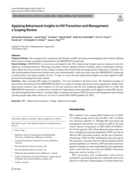
Current HIV/AIDS Reports (2022) 19:358–374. https://doi.org/10.1007/s11904-022-00615-z.
MINDSPACE is an acronym developed by the UK's behavioural insights team to summarise nine key influences on human behaviour: Messenger, Incentives, Norms, Default, Salience, Priming, Affect, Commitment, and E...

Adolescents and young adults aged 10-24 remain underserved in the global response against HIV. Combination prevention, treatment and care programmes use a mix of evidence-based interventions to meet the current HIV prevention needs of adolescents and young adults. However, there needs to be a focus ...
This resource was written to support persons who seek to initiate a support group for suicide loss survivors. Suicide bereavement support groups offer a wide range of benefits that can help individuals to navigate the difficult time following a loss. First and foremost, a support group provides a ch...

Building true health security in a global age. Findings and recommendations of the Global Council. In landmark findings based on two years of research and convenings around the world, the new report shows that high levels of inequality are linked to outbreaks becoming pandemics and that inequality i...

The findings of the report are both urgent and devastating. At the current rate of progress, by 2040 we would still have 1.9 million new HIV infections and 990,000 AIDS-related deaths in children. But if funding for HIV prevention and treatment continues to fall as current trends suggest, the world ...

Program Considerations

These guidelines update earlier WHO recommendations to maximize the HIV prevention impact of safe VMMC services and aim to guide the transition to the sustained provision of interventions with a focus on the health and well-being of both adolescent boys and men.

We can't stop at almost. 2025 Goalkeeper Report
recommended
2025 is the first year of this century where child deaths will increase.
But we can stop this reversal before it becomes a trend, even in a time of tight budgets.
With proven solutions and next-generation innovations that do more with less, we can save millions of children's lives, protect the pro...