Filter
10558
Filtered Results: 10558
Text search:
practice
Featured
Recommendations
950
New Publications
2500
Language
Document type
No document type
5595
Studies & Reports
1656
Guidelines
1549
Manuals
674
Strategic & Response Plan
324
Training Material
273
Fact sheets
249
Resource Platforms
70
Situation Updates
54
Online Courses
35
Brochures
32
Infographics
29
Videos
16
App
2
Countries / Regions
Global
462
India
413
Kenya
267
South Africa
231
Sierra Leone
205
Western and Central Europe
189
Ethiopia
189
Nepal
185
Nigeria
185
Uganda
171
Liberia
170
Myanmar / Burma
160
Africa
145
Tanzania
136
Latin America and the Carribbean
134
Bangladesh
128
Ghana
124
Rwanda
121
Zambia
121
Malawi
116
Syria
106
Ukraine
99
Indonesia
91
Namibia
83
Eastern Europe
81
Philippines
75
Germany
72
Russia
71
Congo, Democratic Republic of
70
Zimbabwe
58
Lesotho
54
Guinea
54
West and Central Africa
53
South–East Asia Region
53
South Sudan
53
Senegal
51
Cambodia
50
Asia
50
Brazil
50
Mozambique
48
East and Southern Africa
48
Colombia
45
Haiti
40
Burkina Faso
38
Venezuela
38
Middle East and North Africa
38
Botswana
35
Paraguay
32
Cameroon
31
Yemen
31
Eastern Europe and Central Asia
30
Mali
28
Benin
26
Lebanon
26
Vietnam
26
Eswatini/ Swaziland
26
Chile
22
Central African Republic
22
Pakistan
20
Thailand
19
China
19
Afghanistan
19
USA
19
Jordan
19
Laos
17
Peru
17
Côte d’Ivoire / Ivory Coast
17
Argentina
16
Sudan
16
Western Pacific Region
15
Iraq
15
Somalia
15
Ecuador
15
United Kingdom
14
Spain
14
Angola
14
Tajikistan
13
Albania
13
Bolivia
13
Guinea-Bissau
12
Moldova
12
Sri Lanka
11
Georgia
11
Chad
11
Madagascar
10
El Salvador
9
Turkey
9
Niger
9
North Macedonia
8
Mexico
8
Togo
8
Kazakhstan
8
North America
8
Palestine
8
Southern Africa
7
Papua New Guinea
7
Gambia
6
Portugal
6
Greece
6
Guatemala
6
Timor Leste/ East Timor
5
Canada
5
Estonia
5
Kyrgyzstan
5
Malaysia
5
Armenia
5
Saudi Arabia
5
Egypt
5
Romania
5
Poland
5
Libya
5
Serbia
4
Iran
4
Hungary
4
Ireland
4
Turkmenistan
4
Jamaica
4
Japan
4
Honduras
4
Bhutan
4
Fiji
3
Burundi
3
Italy
3
Dominican Republic
3
Croatia
3
Mauritius
3
Bosnia and Herzegovina
3
Switzerland
2
Australia
2
Singapore
2
Uzbekistan
2
Morocco
2
Bulgaria
2
Uruguay
2
Maldives
2
Belarus
2
Israel
2
Nicaragua
2
Slovakia
2
Austria
1
Qatar
1
Lithuania
1
Denmark
1
Belgium
1
France
1
Tunisia
1
Norway
1
South Korea
1
Azerbaijan
1
Latvia
1
Belize
1
Costa Rica
1
Guyana
1
Oman
1
Panama
1
Djibouti
1
Authors & Publishers
Publication Years
Category
Countries
3572
Clinical Guidelines
782
Key Resources
733
Women & Child Health
642
Public Health
554
Capacity Building
288
Pharmacy & Technologies
101
Annual Report MEDBOX
3
Toolboxes
Mental Health
968
COVID-19
885
HIV
661
TB
483
Disability
482
Caregiver
398
Planetary Health
386
AMR
312
Ebola & Marburg
292
Refugee
267
NTDs
261
Conflict
261
NCDs
225
Pharmacy
221
Global Health Education
178
Rapid Response
171
Natural Hazards
132
Malaria
122
2.0 Rapid Response
119
Health Financing Toolbox
107
Social Ethics
86
Cholera
75
Specific Hazards
71
Zika
61
Polio
44
Typhoon
4
South Sudan
1
This inter-agency guidance document aims to supplement the COVAX demand creation package for COVID-19 vaccines with key considerations for humanitarian contexts and marginalized populations with specific access and communication needs.
21 Sept.2021
Cards for Facilitators (including birth preparedness, complication readiness and recognition of danger signs) are also available
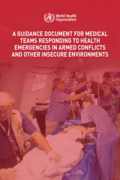
Medical care for people caught up in armed conflict and other insecure environments saves lives and alleviates suffering. It is one of the most immediate and high priority needs of an affected population and is often the first type of response activated and/or requested by authorities and affected c...
A guide to protocol development for low-income countries
Alternative Report to the UN Committee on the Rights of Persons with Disabilities in response to South Africa’s Baseline Country Report of March 2013 on the UN Convention on the Rights of Persons with Disabilities, with particular reference to the provisions of Article 24
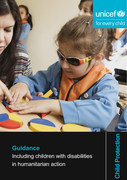
Guidance | Preparedness - Response and early recovery - Recovery and reconstruction
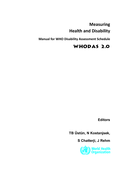
The World Health Organization Disability Assessment Schedule (WHODAS 2.0) is a generic assessment instrument developed by WHO to provide a standardized method for measuring health and disability across cultures. It was developed from a comprehensive set of International Classification of Functioning...
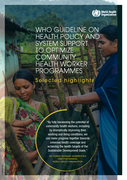
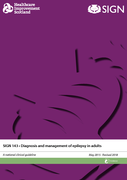
SIGN 143. A national clinical guideline
Published May 2015, Revised 2018
Analysis of survey data looking at 25 years of progress in and the future challenges for tropical medicine and global health
Accessed: 26.10.2019
Investigación original / Original research
Rev Panam Salud Publica 35(1), 2014

The extensive use of antimicrobials in human and veterinary medicine in recent years has accelerated the emergence and spread of resistant microorganisms. This situation has been worsened by the lack of investment in developing new effective antibiotics. The severity of the consequences is clear to ...