
Filter
4104
Filtered Results: 4104
Text search:
Resilience
Featured
Recommendations
319
New Publications
1054
Language
Document type
No document type
2031
Studies & Reports
951
Guidelines
402
Manuals
236
Strategic & Response Plan
234
Fact sheets
81
Training Material
69
Situation Updates
50
Resource Platforms
19
Infographics
15
Brochures
11
Online Courses
3
Videos
2
Countries / Regions
Global
233
India
120
Myanmar / Burma
111
Kenya
98
Latin America and the Carribbean
97
Syria
96
Sierra Leone
90
Western and Central Europe
82
Ethiopia
82
Liberia
80
Bangladesh
77
Nepal
73
Nigeria
67
Ukraine
66
Malawi
58
Uganda
56
Tanzania
50
Rwanda
49
South Africa
49
Africa
48
Ghana
47
Zambia
47
Congo, Democratic Republic of
44
South Sudan
42
Germany
41
Venezuela
40
Philippines
39
Guinea
32
Zimbabwe
31
Haiti
31
Lesotho
28
Yemen
28
Indonesia
27
Mozambique
26
Cambodia
25
West and Central Africa
23
East and Southern Africa
23
Eastern Europe
23
Brazil
23
Colombia
22
Senegal
21
Burkina Faso
21
South–East Asia Region
20
Namibia
20
Jordan
18
Middle East and North Africa
18
Eastern Europe and Central Asia
17
Somalia
17
Lebanon
15
Sudan
15
Pakistan
15
Afghanistan
14
Asia
14
Russia
14
Cameroon
12
Central African Republic
12
Chile
11
Laos
11
Peru
11
Western Pacific Region
10
Vietnam
10
USA
9
Moldova
9
Mali
9
Thailand
8
Argentina
8
Sri Lanka
8
Botswana
8
Ecuador
8
Turkey
7
Paraguay
7
Bolivia
7
Palestine
7
Iraq
7
Eswatini/ Swaziland
7
Papua New Guinea
6
Egypt
6
Togo
5
Iran
5
Burundi
5
Guinea-Bissau
5
North America
5
Angola
5
Madagascar
5
Tajikistan
4
Timor Leste/ East Timor
4
El Salvador
4
Benin
4
China
4
Greece
4
Honduras
4
Libya
4
Mexico
3
Canada
3
Niger
3
Armenia
3
Belarus
3
Southern Africa
3
Côte d’Ivoire / Ivory Coast
3
Chad
3
Switzerland
2
Gambia
2
Albania
2
Singapore
2
Kyrgyzstan
2
Uzbekistan
2
Vanuatu
2
Mauritania
2
Croatia
2
Turkmenistan
2
Jamaica
2
Mauritius
2
Portugal
2
Azerbaijan
2
Georgia
2
Guatemala
2
North Macedonia
1
North Korea
1
Serbia
1
Fiji
1
Estonia
1
Malaysia
1
Austria
1
Mongolia
1
Bulgaria
1
Italy
1
Dominican Republic
1
Hungary
1
Lithuania
1
Saudi Arabia
1
Japan
1
Belgium
1
Tunisia
1
Spain
1
Bosnia and Herzegovina
1
Djibouti
1
Romania
1
Poland
1
Bhutan
1
Solomon Islands
1
Authors & Publishers
Publication Years
Category
Countries
1526
Key Resources
351
Public Health
182
Women & Child Health
167
Clinical Guidelines
108
Capacity Building
39
Pharmacy & Technologies
14
Toolboxes
COVID-19
466
Mental Health
386
Planetary Health
341
Conflict
231
HIV
217
Refugee
183
Disability
138
Ebola & Marburg
124
Natural Hazards
115
Global Health Education
105
TB
92
Caregiver
75
Rapid Response
74
Health Financing Toolbox
71
2.0 Rapid Response
70
NTDs
56
Malaria
39
NCDs
38
AMR
36
Specific Hazards
18
Pharmacy
17
Cholera
15
Zika
13
Social Ethics
11
Polio
11
Typhoon
5
South Sudan
2

The COVID-19 pandemic exposed critical gaps in the global response to health crises, particularly in the financing of pandemic prevention, preparedness, response, recovery, and reconstruction. This chapter presents a comprehensive framework for pandemic financing that spans the entire pandemic cycle...
Questions concerning the relevance and reform of official development assistance (ODA), and how ODA and broader development finance could—or should—change to better reflect shifting demands are not new, with academics and policymakers suggesting a range of options for reform. In this background ...
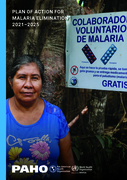
The Plan subscribes to the goals and pillars of the WHO Global Technical Strategy against Malaria 2016-2030 (GTS), while presenting key elements to address the specific challenges of the Region.

The Malaria Ministerial Conference, co-hosted by WHO and the Government of Cameroon on 6 March 2024, brought together more than 400 stakeholders, including Ministers of Health and senior representatives from the African countries hardest hit by malaria, global health leaders, scientists, civil socie...

Community led-monitoring is based on the principle that «Nothing that is done for us should
be done without us”. The combination of this principle with evidence shows that community-led
monitoring is an important driver of improved service delivery and health outcomes that needs to
be re-empha...

Malaria Journal (2021) 20:190

Offering additional pre-exposure prophylaxis (PrEP) choices has the potential to increase uptake and effective use of PrEP, and of HIV prevention overall, as it allows people to choose a method that they prefer.
In this guideline, WHO recommends an offering long-acting injectable lenacapavir (LEN...

Guidelines on lenacapavir for HIV prevention and testing strategies for long-acting injectable pre-exposure prophylaxis. Web Annex B

This policy brief presents a summary of current evidence on vulnerability to TB and proposes interventions for equitable, person-centred, and human rights-based TB prevention and care. It aligns with WHO policies and guidance on TB prevention and screening, management of TB and comorbidities, access...

This document highlights the latest WHO recommendations designed to optimize health outcomes, streamline delivery and address persistent barriers to prevention and care. It especially focuses on people often left behind in service delivery, including adolescents and young people, key populations and...

STANDARD OPERATING PROCEDURES - PREVENTION AND CARE FOR CHILD SURVIVORS

Access to safe, effective and quality-assured health products and technologies is crucial for achieving universal health coverage and primary health care goals. The continued growth of the aging population; increasing burden of noncommunicable diseases; growing burden of mental health issues; climat...

The Compendium of Solid Waste Management in Humanitarian Contexts is a comprehensive, structured and userfriendly manual and planning guide that provides a systematic overview of existing Solid Waste Management (SWM) technologies and approaches appropriate for use in humanitarian contexts.

The Multi-Hazard Early Warning System (MHEWS) Checklist is a practical tool consisting of major components and actions that national governments, community organizations and partners within
and across all sectors can refer when developing or evaluating early warning systems

Growing emergencies and displacements across the world demand increasingly complex interventions and responses. The World Health Organization (WHO) has developed Malaria control in emergencies: a field manual to provide technical guidance to help partners respond effectively to malaria in emergency ...

Tuberculosis (TB) remains a significant global health challenge, with an estimated annual death rate of approximately one per 100,000 people in countries with low TB prevalence. Rapid reductions in TB cases and deaths worldwide depend on research breakthroughs, including the development of new vac...

Non-Communicable Diseases (NCDs) have emerged as conditions of great public health concern in Kenya accounting for 39% of deaths annually. The Ministry of Health through the Department of Non-Communicable Diseases has adopted the vision of achieving a nation free from preventable burden of NCDs. Fur...

Drawing on the World Health Organization’s package of NCD best buys, the report demonstrates how these evidence-based measures can help countries reduce premature deaths, strengthen health systems, and advance progress towards the Sustainable Development Goals. It provides policymakers, donors, ad...

WHO, as the coordinating authority on international health, supports countries in protecting public health through evidence-based policies and actions. Considering the significant health burden and the multiple potential benefits of interventions, the WHO Air Quality, Energy and Health Unit aims to ...

PHSM are vital in reducing the risk and scale of infectious disease transmission and lowering hospitalization and deaths. Examples include contact tracing, quarantine and isolation, mask use, ventilation, school or workplace measures, mobility restrictions and travel requirements.
While these mea...
