
Filter
3599
Filtered Results: 3599
Text search:
World
Health
Organization
WHO
-
Regional
Office
Africa
Featured
Recommendations
356
New Publications
938
Language
Document type
No document type
1901
Studies & Reports
703
Guidelines
443
Manuals
209
Strategic & Response Plan
164
Training Material
66
Fact sheets
48
Situation Updates
42
Resource Platforms
12
Infographics
5
Brochures
2
Videos
2
App
1
Online Courses
1
Countries / Regions
Global
190
Kenya
117
Ethiopia
117
Sierra Leone
111
Africa
107
Liberia
95
Uganda
88
South Africa
83
Nigeria
76
Zambia
71
Tanzania
67
Ghana
63
Malawi
54
Namibia
51
India
49
Rwanda
44
West and Central Africa
43
Guinea
41
South Sudan
41
Mozambique
40
Western and Central Europe
40
East and Southern Africa
40
Congo, Democratic Republic of
38
Syria
35
Middle East and North Africa
33
Lesotho
31
Nepal
30
Senegal
30
Asia
26
Latin America and the Carribbean
24
Zimbabwe
22
South–East Asia Region
22
Bangladesh
21
Ukraine
19
Yemen
19
Central African Republic
18
Cameroon
16
Botswana
16
Eswatini/ Swaziland
16
Eastern Europe
15
Angola
14
Myanmar / Burma
14
Somalia
13
Burkina Faso
12
Madagascar
12
China
11
Mali
11
Guinea-Bissau
10
Brazil
10
Russia
10
Sudan
10
Pakistan
10
Thailand
9
Benin
9
Afghanistan
9
Cambodia
9
Eastern Europe and Central Asia
9
Indonesia
9
Philippines
8
Haiti
8
Côte d’Ivoire / Ivory Coast
8
Togo
7
Burundi
7
Venezuela
7
Lebanon
7
Chad
7
Colombia
6
Gambia
6
Southern Africa
6
Sri Lanka
6
Jordan
5
Iran
4
Germany
4
Western Pacific Region
4
Iraq
4
North Macedonia
3
Mexico
3
Laos
3
Peru
3
Mauritius
3
Vietnam
3
Papua New Guinea
3
Moldova
3
Greece
3
Georgia
3
Kazakhstan
2
Albania
2
Kyrgyzstan
2
Niger
2
Morocco
2
Saudi Arabia
2
Portugal
2
Bosnia and Herzegovina
2
Djibouti
2
Libya
2
Tajikistan
1
Timor Leste/ East Timor
1
Serbia
1
Turkey
1
Canada
1
Estonia
1
Mongolia
1
Qatar
1
Bulgaria
1
Mauritania
1
Armenia
1
USA
1
Cape Verde
1
Hungary
1
North America
1
Gabon
1
Turkmenistan
1
Jamaica
1
Japan
1
Belgium
1
Tunisia
1
United Kingdom
1
Norway
1
Spain
1
Belarus
1
Israel
1
Argentina
1
Romania
1
Palestine
1
Poland
1
Ecuador
1
Authors & Publishers
Publication Years
Category
Countries
1222
Clinical Guidelines
265
Key Resources
235
Women & Child Health
216
Public Health
203
Capacity Building
72
Pharmacy & Technologies
40
Toolboxes
HIV
318
COVID-19
268
Mental Health
211
TB
181
Ebola & Marburg
170
Planetary Health
162
Disability
158
NTDs
112
Rapid Response
104
AMR
100
Conflict
92
Global Health Education
91
Caregiver
90
Refugee
71
2.0 Rapid Response
64
Pharmacy
57
Health Financing Toolbox
56
NCDs
53
Malaria
52
Natural Hazards
39
Zika
26
Cholera
22
Polio
21
Social Ethics
14
Specific Hazards
11
Typhoon
3
South Sudan
1
Despite the increasing population of refugees stuck in protracted situations and our awareness of the vulnerability of children and adolescents growing in up these contexts, relatively little is known about community based child protection mechanisms (CBCPMs) in refugee communities. CBCPMs, defined ...
PLoS Negl Trop Dis 16(11): e0010885. https://doi.org/10.1371/journal.pntd.0010885
HAT diagnosis in non-endemic countries is rare and can be challenging, but alertness and
surveillance must be maintained to contribute to WHO’s elimination goals. Early detection is
particularly important as it co...
Training leaders in public health
IMDP 2016 Training Catalogue
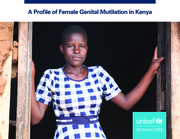
Kenya is home to 4 million girls and women who have experienced FGM. Overall, 21 per cent of girls and women aged 15 to 49 years have undergone the practice, varying from 98 per cent in the North Eastern region to 1 per cent in the Western region

Zambia has recognised the Public Health threat of antimicrobial resistance and its impact on morbidity and mortality, as well as the subsequent economic consequences. The country has recorded microorganisms which have developed resistance to antimicrobial drugs. Notable among these are; Multidrug Re...
Examining the needs of at‐risk youth in the Middle East and North Africa: A multi‐method landscape analysis and systematic literature review

Namibia has, for many years, had a strong legislative and policy framework for the protection of children. These policies and laws have been developed through the combined expertise of those working in the field of child protection who have ensured Namibia has a robust legal framework that is in li...
The Lab identifies, develops, and launches sustainable finance
instruments that can drive billions to a low-carbon economy. The
2019 Global Lab Cycle targets four specific sectors across
mitigation and adaptation: blue carbon in marine & coastal
ecosystems; sustainable agriculture for smallholde...
Data from the 2011 Ethiopia Demographic and Health Survey
World's largest Science, Technology & Medicine Open Access book publisher
Chapter 7 from the book People's Movements in the 21st Century - Risks, Challenges and Benefits
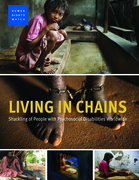
The report examines how people with mental health conditions are often shackled by families in their own homes or in overcrowded and unsanitary institutions, against their will, due to widespread stigma and a lack of mental health services.
Many are forced to eat, sleep, urinate, and defecate in t...
Government Barriers to Condom Use by Men Who Have Sex With Men
Public Health Action
vol 5 no 3 published 21 september 2015
BioMed Central; BMC International Health and Human Rights (2016) 16:20; DOI 10.1186/s12914-016-0094-y
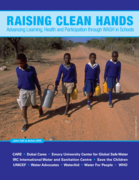
Advancing Health, Learning and Equity through WASH in Schools
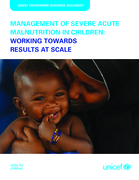
This Guidance Document provides practical assistance to Country Offices scaling up programmes to manage SAM in young children. It outlines a step-by-step process through which countries can analyse their current situation, identify barriers and bottlenecks through the MoRES approach, and plan action...
‘Psychosocial Support of Children in Emergencies’ is a reference document for humanitarian workers who want to increase their understanding of the experiences of children in emergency situations and how to support them in mitigating the negative effects of these experiences and how to prevent fu...
International Journal for Quality in Health Care, 2018, 30(9), 724–730
Promoting hand hygiene in a neonatal intensive care unit.
(August 28 – October 10, 2017)
A nutrition and mortality assessment using SMART methodology was applied and the survey covered 15 statistical (14 districts plus 1) domains countrywide. The main objective of the survey was to assess the current nutrition status of the population, especially ch...
A nutrition and mortality assessment using SMART methodology was applied and the survey covered 15 statistical (14 districts plus 1) domains countrywide. The main objective of the survey was to assess the current nutrition status of the population, especially ch...
USAID/KENYA Evaluation Services and Program Support (ESPS)
The United States Agency for International Development (USAID) has a solid track record of supporting health and development initiatives in Kenya. AIDS, Population, and Health Integrated Assistance (APHIA) is the agency’s flagship hea...
The United States Agency for International Development (USAID) has a solid track record of supporting health and development initiatives in Kenya. AIDS, Population, and Health Integrated Assistance (APHIA) is the agency’s flagship hea...
