
Filter
5398
Filtered Results: 5398
Text search:
Health
Policy
Project
Featured
Recommendations
350
New Publications
1487
Language
Document type
No document type
3243
Studies & Reports
1062
Guidelines
451
Manuals
269
Strategic & Response Plan
187
Training Material
85
Fact sheets
45
Situation Updates
34
Resource Platforms
8
Brochures
6
Infographics
4
Online Courses
2
App
1
Videos
1
Countries / Regions
Global
243
Kenya
184
India
174
Nepal
136
Uganda
127
Ethiopia
119
Nigeria
113
Western and Central Europe
109
Myanmar / Burma
108
Malawi
104
Zambia
100
Sierra Leone
94
Bangladesh
93
South Africa
90
Liberia
86
Tanzania
77
Rwanda
76
Africa
75
Ghana
73
Namibia
66
Syria
63
Ukraine
61
Latin America and the Carribbean
55
Eastern Europe
46
Philippines
42
Lesotho
41
Cambodia
40
Mozambique
39
Asia
39
Zimbabwe
38
Congo, Democratic Republic of
37
South Sudan
35
Senegal
32
Guinea
31
Haiti
31
Indonesia
27
South–East Asia Region
26
Cameroon
25
Germany
25
Botswana
25
Burkina Faso
22
Russia
22
Eswatini/ Swaziland
18
Benin
17
West and Central Africa
17
Colombia
16
Eastern Europe and Central Asia
16
East and Southern Africa
16
Thailand
15
Yemen
15
Pakistan
15
Afghanistan
14
Tajikistan
13
China
13
Jordan
13
Lebanon
13
Central African Republic
13
Vietnam
12
Brazil
12
Moldova
12
Laos
11
Venezuela
11
Middle East and North Africa
11
Sudan
10
Iraq
10
North Macedonia
9
Albania
9
Georgia
9
Mali
9
Turkey
8
Kyrgyzstan
7
USA
7
Côte d’Ivoire / Ivory Coast
7
Sri Lanka
7
Somalia
7
Burundi
6
Peru
6
Timor Leste/ East Timor
5
Kazakhstan
5
Niger
5
Jamaica
5
Libya
5
Ecuador
5
El Salvador
4
Chile
4
Iran
4
Western Pacific Region
4
Paraguay
4
North America
4
Southern Africa
4
Argentina
4
Madagascar
4
Serbia
3
Gambia
3
Togo
3
Estonia
3
Morocco
3
Italy
3
Armenia
3
Croatia
3
Hungary
3
Turkmenistan
3
Japan
3
Bosnia and Herzegovina
3
Romania
3
Greece
3
Poland
3
Honduras
3
Chad
3
Guatemala
3
Canada
2
Uzbekistan
2
Dominican Republic
2
Lithuania
2
Gabon
2
Belgium
2
Tunisia
2
Portugal
2
Belarus
2
Bolivia
2
Papua New Guinea
2
Nicaragua
2
Angola
2
Bhutan
2
Mexico
1
Singapore
1
Malaysia
1
Qatar
1
Bulgaria
1
Guinea-Bissau
1
Saudi Arabia
1
Mauritius
1
United Kingdom
1
Norway
1
Spain
1
Azerbaijan
1
Belize
1
Costa Rica
1
Panama
1
Egypt
1
Slovakia
1
Palestine
1
Authors & Publishers
Publication Years
Category
Countries
2073
Key Resources
407
Women & Child Health
281
Public Health
277
Clinical Guidelines
244
Capacity Building
88
Pharmacy & Technologies
37
Annual Report MEDBOX
2
Toolboxes
Mental Health
465
HIV
456
Disability
285
TB
269
Planetary Health
267
COVID-19
237
Conflict
166
AMR
139
Caregiver
129
Global Health Education
128
Refugee
119
NTDs
110
Health Financing Toolbox
104
Ebola & Marburg
92
Pharmacy
81
NCDs
72
Natural Hazards
71
Rapid Response
63
Malaria
60
2.0 Rapid Response
44
Specific Hazards
34
Social Ethics
25
Polio
17
Cholera
13
Zika
8
South Sudan
1
Typhoon
1
Цель настоящего доклада — повысить осведомленность о деменции как
одной из приоритетных проблем общественного здравоохранения, сформу-
лировать подход к этой пÑ...
March - June 2018
Myanmar introduced Child Death Surveillance and Response (CDSR) in 2015 as an initiative to reduce child (under-5) mortality, an initiative that will contribute to the country’s efforts to meet the Sustainable Development Goals (SDG). Technical Guidelines for CDSR were devel...
Myanmar introduced Child Death Surveillance and Response (CDSR) in 2015 as an initiative to reduce child (under-5) mortality, an initiative that will contribute to the country’s efforts to meet the Sustainable Development Goals (SDG). Technical Guidelines for CDSR were devel...
Antimicrobial resistance has become a serious public health threat for effective treatment of an ever increasing range of infections caused by bacteria, parasites, viruses and fungi. When infections can no longer be treated by first-line antibiotics, other antibiotics must be used, which are both mo...

This guideline covers making people aware of how to correctly use antimicrobial medicines (including antibiotics) and the dangers associated with their overuse and misuse. It also includesmeasures to prevent and control infection that can stop people needing antimicrobials or spreadinginfection to o...
The toolkit provides practical guidance and tools that can support efforts, including planning and implementation activities, to create dementia-inclusive societies.
The toolkit is divided into two parts. Part I contains background information and a conceptual framework for creating dementia-incl...
The mhGAP community toolkit: field test version is an integral part of WHO's Mental Health Gap Action Programme (mhGAP), and aims at scaling up services for people with mental health conditions to achieve universal health coverage.
The toolkit provides guidance for programme managers on how to i...
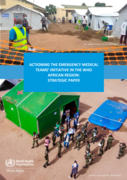
Emergency medical teams (EMT) are first response health care providers – doctors, nurses, paramedics, and others – during outbreaks and emergencies or disasters, working with governments, charities such as nongovernmental organizations (NGOs), armies, and international organizations such as the ...
2nd edition .
This Framework applies to the sharing of H5N1 and other influenza viruses with human pandemic potential and the sharing of benefits. This Framework does not apply to seasonal influenza viruses or other non-influenza pathogens or biological substances that may be contained in clinical ...
Guidelines on hepatitis B and C testing
recommended
Testing and diagnosis of hepatitis B (HBV) and C (HCV) infection is the gateway for access to both prevention and treatment services, and is a crucial component of an effective response to the hepatitis epidemic. Early identification of persons with chronic HBV or HCV infection enables them to recei...

Report of a regional workshop, New Delhi, India, 29–30 September 2014
To reduce the burden of cardiovascular disease and its subsequent problems, the WHO Regional Office for South-East Asia organized a regional workshop on sodium intake and iodized salt for Member States in the South-East Asi...
To reduce the burden of cardiovascular disease and its subsequent problems, the WHO Regional Office for South-East Asia organized a regional workshop on sodium intake and iodized salt for Member States in the South-East Asi...
The internationally recognized criteria for diagnosis of neurocysticercosis include a requirement for neuroimaging techniques, such as computerized tomography (CT) and/or magnetic resonance imaging (MRI), ideally supported by serology. These facilities are not available in all settings, especially i...
his document, a first of its kind, clearly sets out the standards for rehabilitation and provides guidance on building or strengthening the capacity of EMTs in this area.The importance of early rehabilitation for functional outcomes is well documented. Rehabilitation needs can pe...
WHO operational handbook on tuberculosis: module 4: treatment: tuberculosis care and support
recommended
The consolidated guidelines are complemented by an operational handbook which is designed to assist with implementation of the WHO recommendations by Member States, technical partners and others who are involved in the management of patients with DR-TB. The WHO Operational Handbook on Tuberculosis, ...

This interim operational guide outlines infection prevention, control, and water, sanitation, and hygiene measures for home care and isolation of mpox in resource-limited settings. It focuses on practical strategies to manage and prevent the spread of the virus when persons with mpox are isolated at...
This field workbook supports the implementation of the interagency (FAO, UNICEF, WHO) “Communication for Behavioural Impact (COMBI): A toolkit for behavioural and social communication in outbreak response”. It is a handheld guide and notebook for applying the WHO COMBI methodology in 7-steps, du...
Guidelines for the prevention, care and treatment of persons with chronic hepatitis B infection
recommended
The recommendations in these guidelines promote the use of simple, non-invasive diagnostic tests to assess the stage of liver disease and eligibility for treatment; prioritize treatment for those with most advanced liver disease and at greatest risk of mortality; and recommend the preferred use of n...
Coordinated Use of Anthelminthic Drugs in Control Interventions: a Manual for Health Professionals and Programme Managers

This purpose of this guide is to inform robust evaluations of the WHO training package – a package aimed at personnel whose primary role in health-care facilities is environmental cleaning, hereafter referred to as cleaners.
The WHO training package – Environmental cleaning and infection prev...
