
Filter
2649
Filtered Results: 2649
Text search:
liver
cancer
Featured
Recommendations
256
New Publications
647
Language
Document type
No document type
1322
Studies & Reports
558
Guidelines
351
Manuals
142
Strategic & Response Plan
110
Fact sheets
62
Training Material
54
Situation Updates
17
Brochures
15
Infographics
9
Resource Platforms
6
Online Courses
2
App
1
Countries / Regions
India
174
Global
157
Kenya
85
South Africa
69
Western and Central Europe
56
Ethiopia
49
Tanzania
47
Latin America and the Carribbean
44
Zambia
42
Uganda
41
Africa
39
Malawi
35
Philippines
33
Nigeria
32
Myanmar / Burma
32
Syria
29
Ghana
27
Rwanda
27
Namibia
27
Nepal
26
Sierra Leone
26
South–East Asia Region
26
Bangladesh
26
Lesotho
22
Ukraine
20
Liberia
20
Eastern Europe
16
Haiti
15
Zimbabwe
14
Germany
14
Brazil
14
Botswana
14
Indonesia
14
Congo, Democratic Republic of
13
Cameroon
12
Asia
12
Eastern Europe and Central Asia
12
Senegal
11
Mozambique
11
South Sudan
11
Guinea
10
Cambodia
10
West and Central Africa
10
Eswatini/ Swaziland
10
Russia
9
Benin
8
Venezuela
8
Lebanon
8
Vietnam
8
Burkina Faso
7
Middle East and North Africa
7
East and Southern Africa
7
USA
6
Jordan
6
Colombia
5
China
5
Laos
5
Peru
5
Argentina
5
Sudan
5
Tajikistan
4
Thailand
4
Turkey
4
Afghanistan
4
Western Pacific Region
4
North America
4
Moldova
4
Georgia
4
Pakistan
4
Mexico
3
Albania
3
Niger
3
United Kingdom
3
Portugal
3
Spain
3
Sri Lanka
3
Yemen
3
Iraq
3
Somalia
3
Madagascar
3
North Macedonia
2
Timor Leste/ East Timor
2
Kazakhstan
2
Iran
2
Kyrgyzstan
2
Qatar
2
Guinea-Bissau
2
Hungary
2
Paraguay
2
Jamaica
2
Israel
2
Southern Africa
2
Côte d’Ivoire / Ivory Coast
2
Papua New Guinea
2
Egypt
2
Central African Republic
2
Poland
2
Mali
2
Angola
2
Libya
2
Switzerland
1
El Salvador
1
Gambia
1
Chile
1
Canada
1
Burundi
1
Morocco
1
Mongolia
1
Bulgaria
1
Italy
1
Armenia
1
Dominican Republic
1
Lithuania
1
Ireland
1
Saudi Arabia
1
Luxembourg
1
Japan
1
Belgium
1
France
1
Mauritius
1
Norway
1
Morocco
1
Azerbaijan
1
Belarus
1
Latvia
1
Bolivia
1
Belize
1
Costa Rica
1
Panama
1
Nicaragua
1
Djibouti
1
Palestine
1
Honduras
1
Bhutan
1
Guatemala
1
Authors & Publishers
Publication Years
Category
Countries
1015
Clinical Guidelines
238
Public Health
211
Women & Child Health
144
Key Resources
80
Capacity Building
60
Pharmacy & Technologies
15
Annual Report MEDBOX
2
Toolboxes
COVID-19
233
Mental Health
216
HIV
189
Planetary Health
116
NCDs
111
Caregiver
105
TB
94
Global Health Education
72
Disability
68
Refugee
61
NTDs
59
Conflict
59
Pharmacy
51
AMR
49
Health Financing Toolbox
31
Ebola & Marburg
30
Social Ethics
30
Specific Hazards
25
Rapid Response
18
Natural Hazards
17
Cholera
7
Polio
7
2.0 Rapid Response
5
Malaria
4
Zika
2
This document outlines Rwanda's policy on non-communicable diseases. The overall goal of NCDs Policy is to alleviate the burden of NCDs and their risk factors and protect Rwandan population from premature morbidity and mortality related to NCDs. This policy was developed through a series of consulta...
Report of the 23rd WHO Expert Committee on the selection and use of essential medicines
This executive summary reports the recommendations made by the Expert Committee for the 2021 update of the WHO Model List of Essential Medicines (EML) and the Model List of Essential Medicine for Children (EMLc)...
Part of Comprehensive Primary Health Care

The World Health Organization (WHO) fact sheet on ambient (outdoor) air quality and health highlights the significant health risks posed by outdoor air pollution. It reports that in 2019, ambient air pollution was responsible for approximately 4.2 million premature deaths globally, primarily due to ...
The World Health Organization (WHO) fact sheet on ambient (outdoor) air quality and health highlights the significant health risks posed by outdoor air pollution. It reports that in 2019, ambient air pollution was responsible for approximately 4.2 million premature deaths globally, primarily due to ...
The World Health Organization (WHO) fact sheet on ambient (outdoor) air quality and health highlights the significant health risks posed by outdoor air pollution. It reports that in 2019, ambient air pollution was responsible for approximately 4.2 million premature deaths globally, primarily due to ...
The World Health Organization (WHO) fact sheet on ambient (outdoor) air quality and health highlights the significant health risks posed by outdoor air pollution. It reports that in 2019, ambient air pollution was responsible for approximately 4.2 million premature deaths globally, primarily due to ...
The World Health Organization (WHO) fact sheet on ambient (outdoor) air quality and health highlights the significant health risks posed by outdoor air pollution. It reports that in 2019, ambient air pollution was responsible for approximately 4.2 million premature deaths globally, primarily due to ...
The World Health Organization (WHO) fact sheet on ambient (outdoor) air quality and health highlights the significant health risks posed by outdoor air pollution. It reports that in 2019, ambient air pollution was responsible for approximately 4.2 million premature deaths globally, primarily due to ...
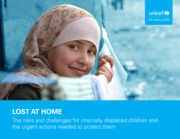
Today, more children than ever before are displaced within their own countries. Their harrowing stories of displacement are unfolding every day, and with increasing frequency. At the end of 2019, approximately 45.7 million people were internally displaced by conflict and violence (Fig. 1.1). Nearly ...
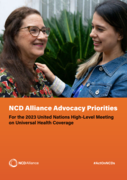
The document is a policy brief by the NCD Alliance for the 2023 United Nations High-Level Meeting on Universal Health Coverage (UHC). It highlights the importance of integrating non-communicable diseases (NCDs) into UHC efforts, with the goal of ensuring equitable health access worldwide.
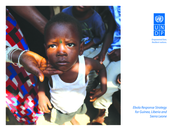
The only way to prevent future Ebola epidemics of this magnitude is to address the fundamental social and political vulnerabilities that have allowed the virus to flourish, such as weak health systems and local services, poor governance, chronic poverty, and a legacy of conflict and social divisions

World Health Organization. (2022). Toolkit for developing a multisectoral action plan for noncommunicable diseases: module 4: developing an implementation plan.

A framework for action provides a guide for those involved in the development of the multisectoral action plan. It starts with a wide-ranging vision and, through a series of increasingly specific intentions, brings into focus actions with measurable outcomes that can be taken to achieve that vision.
