
Filter
10256
Filtered Results: 10256
Text search:
terms
Featured
Recommendations
838
New Publications
2565
Language
Document type
No document type
5409
Studies & Reports
2035
Guidelines
1193
Manuals
595
Strategic & Response Plan
395
Training Material
202
Fact sheets
178
Situation Updates
113
Online Courses
54
Resource Platforms
36
Brochures
24
Infographics
18
Videos
4
Countries / Regions
Global
491
India
415
Kenya
299
Sierra Leone
225
South Africa
224
Uganda
212
Ethiopia
210
Liberia
197
Nigeria
180
Myanmar / Burma
176
Nepal
170
Western and Central Europe
169
Latin America and the Carribbean
151
Bangladesh
149
Africa
148
Syria
145
Malawi
137
Zambia
136
Tanzania
134
Rwanda
133
Ghana
123
Ukraine
113
Congo, Democratic Republic of
103
Namibia
102
Philippines
89
South Sudan
82
Germany
77
Guinea
69
Zimbabwe
65
Mozambique
65
Lesotho
62
Indonesia
61
Senegal
57
Asia
57
South–East Asia Region
57
Haiti
55
West and Central Africa
55
East and Southern Africa
53
Yemen
53
Cambodia
50
Eastern Europe
50
Brazil
48
Burkina Faso
41
Middle East and North Africa
40
Botswana
38
Afghanistan
37
Pakistan
37
Cameroon
36
Russia
36
Eastern Europe and Central Asia
33
Central African Republic
33
Venezuela
32
Colombia
29
Eswatini/ Swaziland
28
Lebanon
26
Sudan
25
Mali
25
Jordan
24
Benin
23
China
23
Thailand
21
Somalia
20
Western Pacific Region
19
Vietnam
19
Madagascar
18
Côte d’Ivoire / Ivory Coast
17
Turkey
16
Iraq
16
Moldova
15
Tajikistan
13
Laos
13
Peru
13
Sri Lanka
13
Angola
13
Togo
12
Albania
12
USA
12
Niger
11
Georgia
11
Iran
10
Palestine
10
Chad
10
Paraguay
9
North America
9
United Kingdom
9
Chile
8
Burundi
8
Guinea-Bissau
8
Southern Africa
8
Argentina
8
Papua New Guinea
8
Egypt
8
Libya
8
North Macedonia
7
Timor Leste/ East Timor
7
Kyrgyzstan
7
Poland
7
Ecuador
7
Serbia
6
Kazakhstan
6
Portugal
6
Greece
6
Mexico
5
El Salvador
5
Gambia
5
Malaysia
5
Armenia
5
Hungary
5
Spain
5
Bolivia
5
Romania
5
Honduras
5
Bhutan
5
Guatemala
5
Canada
4
Singapore
4
Italy
4
Turkmenistan
4
Japan
4
Morocco
3
Dominican Republic
3
Croatia
3
Saudi Arabia
3
Gabon
3
Jamaica
3
Mauritius
3
Tunisia
3
North Korea
2
Switzerland
2
Fiji
2
Estonia
2
Uzbekistan
2
Vanuatu
2
Mongolia
2
Qatar
2
Bulgaria
2
Mauritania
2
Lithuania
2
Denmark
2
Azerbaijan
2
Belarus
2
Israel
2
Nicaragua
2
Djibouti
2
Slovakia
2
Australia
1
Ireland
1
France
1
Maldives
1
Norway
1
Bosnia and Herzegovina
1
Belize
1
Costa Rica
1
Guyana
1
Panama
1
Solomon Islands
1
Authors & Publishers
Publication Years
Category
Countries
3736
Clinical Guidelines
644
Key Resources
643
Public Health
542
Women & Child Health
475
Capacity Building
255
Pharmacy & Technologies
99
Annual Report MEDBOX
3
Toolboxes
Mental Health
816
COVID-19
814
HIV
698
Disability
433
Planetary Health
423
TB
421
Ebola & Marburg
361
Conflict
340
Caregiver
307
NTDs
306
AMR
264
Refugee
242
Rapid Response
194
NCDs
194
Global Health Education
177
Natural Hazards
164
Pharmacy
158
Health Financing Toolbox
155
Malaria
120
2.0 Rapid Response
119
Social Ethics
78
Cholera
70
Specific Hazards
63
Polio
58
Zika
43
Typhoon
9
South Sudan
1

This toolkit is a comprehensive set of practical tools and resources designed to support country-level risk communication and community engagement (RCCE) practitioners, decision-makers, and partners to plan and implement readiness and response activities for yellow fever outbreaks. The toolkit conta...

This guide provides strategic direction for host countries, event organizers, health authorities, and key stakeholders to effectively plan and conduct Simulation Exercises (SimEx) and After Action Reviews (AARs) for mass gathering events. Packed with practical tools, it empowers users to seamlessly ...

This publication provides guidance for planning country-specific programming to achieve the triple elimination of mother-to-child (or vertical) transmission of HIV, syphilis and hepatitis B virus. It is based on the WHO Triple Elimination Framework, which promotes an integrated, person-centred appro...

National tuberculosis (TB) prevalence surveys provide a nationally representative measurement of the burden of TB disease in the population, at a given point in time. Repeat surveys allow assessment of trends and tracking of progress towards national and global targets for reductions in TB disease b...
This operational guidance provides a structured approach to support countries in sustaining priority services for HIV, viral hepatitis and sexually transmitted infections in the context of reduced external funding. The guidance is intended for national governments, public health programmes, communit...

WHO guidelines for clinical management of arboviral diseases: dengue, chikungunya, Zika and yellow fever
recommended
The new WHO guidelines provide clinical management recommendations for four of the most widespread arboviruses affecting humans: dengue, chikungunya, Zika, and yellow fever.
An integrated approach is vital, as these four diseases often present with similar symptoms, especially in the early stages...
Access to safe, effective and quality-assured health products and technologies is crucial for achieving universal health coverage and primary health care goals. The continued growth of the aging population; increasing burden of noncommunicable diseases; growing burden of mental health issues; climat...

The 2024 edition reviews more than 50 health-related indicators from the Sustainable Development Goals and WHO’s Thirteenth General Programme of Work. It also highlights the findings from the Global health estimates 2021, notably the impact of the COVID-19 pandemic on life expectancy and healthy l...
Buruli ulcer (BU) is a skin-related neglected tropical disease (skin NTD) caused by infection with
Mycobacterium ulcerans. BU is the third most common mycobacterial disease after tuberculosis and leprosy
in people who are not immunocompromised. The infection manifests in non-ulcerative forms as no...

This document on logistics management information systems (LMIS) was developed to address the increasing need for harmonization and standardization of core indicators for managing medicines and health products for neglected tropical diseases (NTDs) at country level (i.e. for last-mile logistics). It...
Effective surveillance and monitoring of noncommunicable diseases (NCDs) and their risk factors are essential for informing evidence-based public health policies, addressing health inequities, and ensuring progress toward global and regional targets. By tracking trends in NCDs, their modifiable risk...

Noncommunicable diseases (NCDs) (e.g., cardiovascular diseases, cancers, diabetes, and chronic respiratory diseases) and mental health conditions (e.g., Alzheimer’s disease and related dementias, depression, anxiety, autism spectrum disorders) are the world’s leading cause of preventable illness...
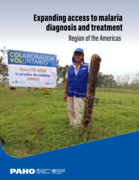
The overall objective of this approach is to accelerate efforts toward malaria elimination by increasing
access to early diagnosis and treatment. The specific objectives are to: Minimize the barriers that the population faces in accessing timely, quality diagnosis and treatment. Reduce the time bet...

Early Adolescent Skills for Emotions (EASE) is an evidence-based group psychological intervention to help 10–15-year-olds affected by internalizing problems (e.g. stress and symptoms of anxiety, depression) in communities exposed to adversity. Published by the World Health Organization (WHO) and U...

This publication provides an overview of evidence and guidance on the growing challenge of workplace heat stress in the context of climate change. It highlights the health and productivity risks faced by billions of workers, especially in manual labor sectors. The report details the physiological, s...
This document provides technical guidance for manufacturers seeking World Health Organization (WHO) prequalification of in vitro diagnostic devices (IVDs) for malaria, with a focus on rapid diagnostic tests (RDTs) for symptomatic patients. It summarises the minimum performance requirements, includin...

The annual bulletin of the Mekong Malaria Elimination (MME) programme is a yearly report that reviews ongoing efforts to combat multidrug resistance and eliminate malaria in the 6 countries of the Greater Mekong subregion (GMS): Cambodia, China (Yunnan province), Lao People's Democratic Republic, My...
This document provides technical guidance for manufacturers seeking World Health Organization (WHO) prequalification of in vitro diagnostic devices (IVDs) for malaria, with a focus on rapid diagnostic tests (RDTs) for symptomatic patients. It summarises the minimum performance requirements, includin...

WHO guideline on balanced national controlled medicines policies to ensure medical access and safety
Access to medicines is essential for attainment of universal health coverage, which is central to achievement of the health-related Sustainable Development Goals. Controlled medicines include those such as opioids, benzodiazepines, barbiturates, amphetamines and others with identified or emergent cl...

WHO guideline on HIV service delivery
recommended
Updated guidance on the integration of diabetes, hypertension and mental health services, and interventions to support adherence to antiretroviral therapy. The guideline offers practical implementation guidance for countries and key stakeholders as well as outlining key research gaps. As life expec...
