
Filter
3488
Filtered Results: 3488
Text search:
national
drug
authority
Featured
Recommendations
328
New Publications
974
Language
Document type
No document type
1993
Studies & Reports
558
Guidelines
490
Manuals
187
Strategic & Response Plan
148
Training Material
40
Fact sheets
37
Situation Updates
20
Resource Platforms
5
Infographics
4
Brochures
3
Online Courses
3
Countries / Regions
India
176
Global
127
Kenya
104
Uganda
97
Ethiopia
95
Western and Central Europe
89
Nigeria
68
South Africa
68
Liberia
65
Ghana
64
Tanzania
61
Latin America and the Carribbean
56
Sierra Leone
55
Zambia
53
Myanmar / Burma
52
Nepal
50
Bangladesh
50
Malawi
49
Africa
45
Rwanda
42
Eastern Europe
36
Ukraine
35
Namibia
32
Zimbabwe
31
Cambodia
31
Asia
30
South–East Asia Region
30
Philippines
26
Lesotho
22
Congo, Democratic Republic of
19
Botswana
18
Syria
15
Indonesia
14
Mozambique
13
Eastern Europe and Central Asia
13
Senegal
12
South Sudan
12
Eswatini/ Swaziland
12
Venezuela
11
Burkina Faso
10
Haiti
10
East and Southern Africa
10
Vietnam
10
Russia
10
Germany
9
Brazil
9
Colombia
8
Albania
8
Laos
8
Guinea
8
West and Central Africa
8
Middle East and North Africa
8
Pakistan
8
Thailand
7
China
7
Tajikistan
6
Cameroon
6
Afghanistan
6
USA
6
Western Pacific Region
6
Sri Lanka
6
Georgia
6
North America
5
Moldova
5
Sudan
5
Central African Republic
5
North Macedonia
4
Mexico
4
Iran
4
Jordan
4
Yemen
4
Iraq
4
Timor Leste/ East Timor
3
El Salvador
3
Turkey
3
Benin
3
Fiji
3
Jamaica
3
Lebanon
3
Papua New Guinea
3
Palestine
3
Mali
3
Libya
3
Somalia
3
Serbia
2
Chile
2
Kyrgyzstan
2
Uzbekistan
2
Peru
2
Morocco
2
Mongolia
2
Armenia
2
Hungary
2
Saudi Arabia
2
United Kingdom
2
Portugal
2
Bolivia
2
Argentina
2
Poland
2
Honduras
2
Bhutan
2
North Korea
1
Switzerland
1
Australia
1
Kazakhstan
1
Canada
1
Estonia
1
Qatar
1
Bulgaria
1
Italy
1
Dominican Republic
1
Guinea-Bissau
1
Lithuania
1
Ireland
1
Paraguay
1
Gabon
1
Turkmenistan
1
Denmark
1
France
1
Maldives
1
Mauritius
1
Tunisia
1
Norway
1
Spain
1
Belarus
1
Southern Africa
1
Côte d’Ivoire / Ivory Coast
1
Belize
1
Costa Rica
1
Panama
1
Nicaragua
1
Egypt
1
Romania
1
Greece
1
Angola
1
Madagascar
1
Guatemala
1
Authors & Publishers
Publication Years
Category
Countries
1309
Clinical Guidelines
325
Public Health
190
Women & Child Health
144
Key Resources
132
Pharmacy & Technologies
59
Capacity Building
54
Toolboxes
HIV
376
TB
323
Mental Health
286
AMR
207
COVID-19
149
Pharmacy
141
NTDs
125
Malaria
75
Caregiver
66
Rapid Response
60
Ebola & Marburg
58
NCDs
52
Planetary Health
51
Refugee
49
Conflict
45
Global Health Education
39
Disability
33
2.0 Rapid Response
25
Health Financing Toolbox
22
Polio
18
Zika
17
Cholera
15
Specific Hazards
14
Natural Hazards
14
Social Ethics
5
Good mental health is integral to human health and well being. A person’s mental health and many common mental disorders are shaped by various social, economic, and physical environments operating at different stages of life. Risk factors for many common mental disorders are heavily associated wit...
Ensuring reproductive rights for all
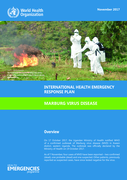
On 17 October 2017, the Ugandan Ministry of Health notified WHO of a confirmed Marburg outbreak of Marburg Virus disease (MVD) in Kween district, Eastern Uganda. The outbreak was officially declared by the Ministry of health on 19 October 2017.
As of 7 November, four cases of MVD have been reported...

During the first two years of the project (2019–2020), through a ‘One Health’ approach, comprehensive engagement was established with AMR coordinating committees, WHO regional and country offices and SORT IT partners in Asia, Africa, Europe and the Americas. Thirty-seven research studies were ...

These country profiles present progress on implementation of policy recommendations of the Global Action Plan on Physical Activity (GAPPA) 2018-2030 in each country. They also present an estimate of the cost to health systems of not taking action to improve physical activity levels and reinforce th...
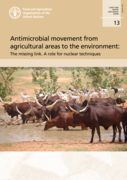
A role for nuclear techniques
Antimicrobials play a critical role in the treatment of human and animal (aquatic and terrestrial) diseases, which has led to their widespread application and use. Antimicrobial resistance (AMR) is the ability of microorganisms to stop an antibiotic, such as an antimic...
State of Health in the EU Cycle.
With the coronavirus (COVID-19) once again spreading rapidly, and the re-introduction of containment measures to flatten the curve of the epidemic, it is crucial for policymakers to plan effective strategies to re-open their economies to avoid further re-confinement...

The main message emerging from this new comprehensive global assessment is that premature death and disease can be prevented through healthier environments – and to a significant degree. Analysing the latest data on the environment-disease nexus and the devastating impact of environmental hazards ...
6 July 2021. The “WHO consolidated guidelines on tuberculosis. Module 3: Diagnosis - Rapid diagnostics for tuberculosis detection 2021 update” is the latest document replacing the one issued in 2020. Three new nucleic acid amplification test (NAAT) classes are endorsed by WHO and included in the...
A guide to support implementation of health service Quality Improvement activities in Ethiopian health facilities
Female Genital Schistosomiasis (FGS) is a gynaecological disease caused by Schistosoma haematobium, a parasitic worm that is acquired by skin contact with freshwater contaminated by schistosome cerceriae. Communities in which the infection is most endemic have limited access to clean water and healt...
Policy statement.
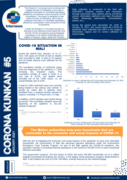
Internews’ Rooted In Trust (RiT) Project tracks COVID-19-related rumors circulating among social media users and vulnerable communities in Mali, as well as other countries around the globe. The rumors are used to inform risk communication efforts by humanitarians and public health actors, and to s...
Key populations brief.
This manual addresses all the issues. It focus on the cycle of microbes, antibiotics, vaccination, AMR,
infection prevention and control. It will support nurses on better action and also on communication towards
their patients and families.

Development of one or more vaccines for Neisseria gonorrhoeae is an important objective for sexual and reproductive health worldwide, and for the fight against antimicrobial resistance.
WHO preferred product characteristics (PPCs) provide strategic guidance as to WHO’s preferences for new vacci...
This assessment tool for HIV and internally displaced persons (IDPs) is an outcome of multisectoral, multi-agency assessment missions in Côte d’Ivoire, the Democratic
Republic of Congo, Nepal and the United Nations High Commissioner for Refugees (UNHCR) first global consultation on HIV and inter...
