
Filter
10073
Filtered Results: 10073
Text search:
development
countries
Featured
Recommendations
786
New Publications
2431
Language
Document type
No document type
5359
Studies & Reports
2115
Guidelines
1118
Manuals
508
Strategic & Response Plan
398
Fact sheets
232
Training Material
172
Situation Updates
81
Resource Platforms
34
Infographics
26
Brochures
18
Online Courses
5
Videos
4
App
2
Dashboards/Maps
1
Countries / Regions
Global
547
Kenya
309
India
289
Ethiopia
225
Western and Central Europe
186
Liberia
184
Sierra Leone
179
Nepal
176
Nigeria
174
Uganda
172
South Africa
167
Africa
160
Latin America and the Carribbean
155
Myanmar / Burma
151
Rwanda
138
Malawi
133
Tanzania
133
Bangladesh
130
Zambia
122
Ghana
118
Syria
118
Ukraine
101
Namibia
99
Congo, Democratic Republic of
85
Eastern Europe
76
South Sudan
76
Philippines
75
South–East Asia Region
73
Zimbabwe
71
Lesotho
68
Asia
66
Senegal
64
Cambodia
64
Guinea
63
Indonesia
62
East and Southern Africa
57
West and Central Africa
55
Mozambique
52
Haiti
51
Cameroon
45
Yemen
45
Burkina Faso
43
Venezuela
43
Middle East and North Africa
43
Germany
40
Russia
39
Botswana
39
Afghanistan
36
Brazil
36
Pakistan
35
Colombia
32
Eastern Europe and Central Asia
29
Sudan
28
Eswatini/ Swaziland
28
Central African Republic
27
Vietnam
26
Thailand
24
Mali
23
Somalia
23
Lebanon
22
Benin
21
China
21
Jordan
21
Western Pacific Region
21
Tajikistan
17
Moldova
17
Albania
15
Sri Lanka
15
Iraq
15
Laos
14
Paraguay
14
Peru
13
Côte d’Ivoire / Ivory Coast
13
USA
12
Argentina
12
Turkey
11
Madagascar
11
Iran
10
North America
10
Palestine
10
Chad
10
Chile
9
Burundi
9
Egypt
9
Libya
9
North Macedonia
8
Togo
8
Niger
8
Papua New Guinea
8
Georgia
8
Angola
8
Mexico
7
El Salvador
7
Gambia
7
Armenia
7
Southern Africa
7
Poland
7
Honduras
7
Ecuador
7
Guatemala
7
Timor Leste/ East Timor
6
Kyrgyzstan
6
Jamaica
6
Bolivia
6
Romania
6
Kazakhstan
5
Guinea-Bissau
5
Hungary
5
Turkmenistan
5
Spain
5
Serbia
4
Malaysia
4
Saudi Arabia
4
Japan
4
Portugal
4
Nicaragua
4
Greece
4
Estonia
3
Morocco
3
Italy
3
Croatia
3
Mauritius
3
Tunisia
3
United Kingdom
3
Belarus
3
Bosnia and Herzegovina
3
North Korea
2
Canada
2
Singapore
2
Congo-Brazzaville
2
Uzbekistan
2
Mongolia
2
Qatar
2
Bulgaria
2
Mauritania
2
Dominican Republic
2
Lithuania
2
Gabon
2
France
2
Azerbaijan
2
Israel
2
Djibouti
2
Slovakia
2
Bhutan
2
Switzerland
1
Fiji
1
Vanuatu
1
Ireland
1
Uruguay
1
Denmark
1
Belgium
1
Maldives
1
Norway
1
French Guyana
1
Latvia
1
Belize
1
Costa Rica
1
Eritrea
1
Panama
1
Solomon Islands
1
Authors & Publishers
Publication Years
Category
Countries
3412
Clinical Guidelines
662
Key Resources
625
Public Health
564
Women & Child Health
551
Capacity Building
166
Pharmacy & Technologies
87
Annual Report MEDBOX
3
Toolboxes
Mental Health
763
HIV
760
COVID-19
734
TB
528
Disability
470
Planetary Health
442
NTDs
326
AMR
308
Conflict
293
Ebola & Marburg
272
Caregiver
255
Health Financing Toolbox
237
NCDs
211
Global Health Education
211
Refugee
210
Rapid Response
186
Pharmacy
159
Natural Hazards
129
Malaria
129
2.0 Rapid Response
109
Zika
63
Cholera
61
Social Ethics
53
Polio
51
Specific Hazards
46
Typhoon
5
South Sudan
2
Communities can play a critical role in suicide prevention. Facilitating community engagement in suicide prevention is an important task. The toolkit is a step-by-step guide for communities to engage in suicide prevention activities and have ownership of the process and keep efforts sustained. It is...

In this document, the Inter-American Committee of Cardiovascular Prevention and Rehabilitation, together with the South
American Society of Cardiology, aimed to formulate strategies, measures, and actions for cardiovascular disease prevention
and rehabilitation (CVDPR). In the context of the imple...
The primary audience for the guideline is health programme managers, including governmental and non-governmental organizations, and policy makers who are responsible for designing maternal, newborn and child health programmes, primarily in low-income settings. The guideline is also aimed at health p...
There is growing international consensus that food systems transformation is important to address the challenges of malnutrition in all its forms, the burden of noncommunicable diseases (NCDs), environmental sustainability, increasing inequality and ensuring the welfare of workers and animals. In li...
Cervical cancer is the fourth most common cancer in women worldwide in 2018, with 570,000 new cases and 311,000 deaths occurring annually.T he highest incidence rates are in Southern Africa, Eastern Africa, SubSaharan Africa, Western Africa, Melanesia, and Middle Africa . It also ranks as the leadin...
Event-based surveillance (EBS) is defined as the organized collection, monitoring, assessment and interpretation of mainly unstructured ad hoc information regarding health events or risks, which may represent an acute risk to health. Both indicator-based and event-based surveillance components serve...
External quality assessment (EQA) is an important component of quality systems for blood transfusion services. Establishing external quality assessment programmes for screening of donated blood for transfusion-transmissible infections (TTI): implementation guide aims to support WHO member States in ...
Nature Reviews Microbiology Vol. 17 (2019)pp.51-62
Antimicrobial susceptibility testing (AST) technologies help to accelerate the
initiation of targeted antimicrobial therapy for patients with infections and could potentially
extend the lifespan of current narrow- spectrum antimicrobials. Althoug...

The study analyses the current situation of children with disabilities in relation to realizing their rights and accessing basic services, as well as their life experiences in their communities. It also focuses on identifying the barriers created by society that prevent children with disabilities fr...
Environmental Research Volume 151, November 2016, Pages 115-123
Dengue is the world’s most important arboviral disease in terms of number of people affected. Over the past 50 years, incidence increased 30-fold: there were approximately 390 million infections in 2010. Globalization, trade, travel,...
During this work, a survey on essential medicines availability was conducted. This article was first written on this subject for sharing the poor financial availability of the essential medicines in the hospital and secondly, a call for an action to be taken in improving hospital pharmacies developm...
This report addresses the future of basic education, ICT use in deprived locations, and the use of ICTs in primary school learning in 2020 and 2025, especially in deprived contexts. It draws on research evidence from the literature, the authors’ experiences of ICT use in education initiatives, int...

As Uganda builds back from the COVID-19 shock, the Ugandan government is strengthening its commitment to a more gender-inclusive and sustainable economy. This report supports these efforts by describing the gendered impacts of COVID-19 and provides recommendations for Ugandan policy makers and World...

The Country Cooperation Strategy is the World Health Organization’s corporate framework developed in response to a country’s needs and priorities. The 2022–2025 CCS is the fourth for WHO in Sierra Leone. It is a medium-term strategic document that defines a broad framework for WHO’s work, at...
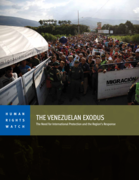
The Need for a Regional Response to an Unprecedented Migration Crisis.
This report provides an overview of where the more than 2 million Venezuelans who have left the country since 2014, at least half of them in the past year and a half alone, are now living, the conditions they face, their prospe...
In order to meet changing global population needs and consumer expectations, healthcare systems worldwide are under transformation and face restructuring. As systems adapt and shift their emphasis in response to the disparate requests for healthcare services, oppor-tunities emerge for nurses, especi...

All young people, including those with special needs and from the most vulnerable groups, have the right to quality health care services. Unfortunately, this right is not a reality, particularly in the case of sexual and reproductive health services. Many youth in need of sexual and reproductive hea...
This document highlights the key aspects of safe health-care waste management in order to guide policy-makers, practitioners and facility managers to improve such services in health-care facilities. It is based on the comprehensive WHO handbook Safe management of wastes from health-care activities (...

Cholera is a major health risk in many parts of the world, affecting millions of people every year. Since mid-2021, the world has been facing an acute upsurge of the 7th cholera pandemic, which is characterized by the number, size and concurrence of multiple outbreaks, the spread to areas that had b...
WHO TRS N°1012.
Key updates include: (i) surveillance strategies, including cross-sectoral linking of systems and suitable diagnostics; (ii) the latest recommendations on human and animal immunization; (iii) palliative care in lowresource settings; (iv) risk assessment to guide management of bite...
