
Filter
4094
Filtered Results: 4094
Text search:
community
event
based
surveillance
Featured
Recommendations
403
New Publications
1113
Language
Document type
No document type
2044
Studies & Reports
780
Guidelines
609
Strategic & Response Plan
260
Manuals
233
Fact sheets
57
Situation Updates
49
Training Material
45
Resource Platforms
6
Infographics
6
Brochures
4
Online Courses
1
Countries / Regions
Global
195
India
144
Kenya
115
Sierra Leone
113
Liberia
111
Ethiopia
94
Western and Central Europe
91
Uganda
83
Nigeria
78
Latin America and the Carribbean
73
Africa
72
Malawi
70
South Africa
70
Nepal
63
Zambia
59
Bangladesh
58
Rwanda
54
Tanzania
54
Ghana
50
Myanmar / Burma
48
Guinea
45
Syria
42
Congo, Democratic Republic of
42
South–East Asia Region
39
South Sudan
39
Ukraine
37
Philippines
37
Namibia
33
Eastern Europe
32
West and Central Africa
31
Asia
30
Mozambique
28
East and Southern Africa
27
Zimbabwe
24
Cambodia
24
Senegal
21
Yemen
21
Pakistan
19
Lesotho
18
Russia
18
Indonesia
18
Middle East and North Africa
16
Botswana
15
Haiti
14
Brazil
14
Eastern Europe and Central Asia
13
Afghanistan
12
Western Pacific Region
12
Sudan
12
Thailand
11
Burkina Faso
11
Somalia
11
Eswatini/ Swaziland
11
Colombia
10
Albania
10
Mali
10
USA
9
Vietnam
9
Cameroon
8
Angola
8
Tajikistan
7
North America
7
Georgia
7
Madagascar
7
Timor Leste/ East Timor
6
Laos
6
Venezuela
6
Central African Republic
6
China
5
Burundi
5
Peru
5
Guinea-Bissau
5
Jordan
5
Lebanon
5
Moldova
5
Sri Lanka
5
Benin
4
Chile
4
Iran
4
Argentina
4
Papua New Guinea
4
Palestine
4
Chad
4
North Macedonia
3
Gambia
3
Togo
3
Germany
3
Paraguay
3
Côte d’Ivoire / Ivory Coast
3
Bolivia
3
Honduras
3
Iraq
3
Mexico
2
Turkey
2
Kyrgyzstan
2
Niger
2
Mauritania
2
Dominican Republic
2
Saudi Arabia
2
Turkmenistan
2
Bosnia and Herzegovina
2
Southern Africa
2
Greece
2
Libya
2
Bhutan
2
Ecuador
2
North Korea
1
El Salvador
1
Australia
1
Kazakhstan
1
Fiji
1
Singapore
1
Estonia
1
Morocco
1
Bulgaria
1
Armenia
1
Gabon
1
Japan
1
Denmark
1
Belgium
1
Maldives
1
Mauritius
1
Tunisia
1
Portugal
1
Azerbaijan
1
Belize
1
Costa Rica
1
Panama
1
Nicaragua
1
Djibouti
1
Guatemala
1
Authors & Publishers
Publication Years
Category
Countries
1525
Clinical Guidelines
305
Public Health
245
Key Resources
241
Women & Child Health
142
Capacity Building
52
Pharmacy & Technologies
42
Toolboxes
COVID-19
426
HIV
364
TB
267
AMR
213
Ebola & Marburg
193
NTDs
169
Planetary Health
143
Rapid Response
139
Mental Health
116
Conflict
101
Malaria
83
2.0 Rapid Response
80
Caregiver
71
NCDs
69
Global Health Education
59
Natural Hazards
51
Cholera
51
Refugee
50
Pharmacy
45
Polio
40
Zika
38
Health Financing Toolbox
35
Disability
34
Specific Hazards
23
Social Ethics
6
Typhoon
1

Language influences the way we think, how we perceive reality, and how we behave. With respect to HIV, language can embody stigma and discrimination, which impacts access to testing, acquisition of HIV, and engagement with treatment. Language plays a role in supporting respect and empowerment of ind...
SITUATION ANALYSIS AND RECOMMENDATIONS
Part of Comprehensive Primary Health Care
The WHO laboratory biosecurity guidance follows and complements the revision of the Laboratory biosafety manual, fourth edition and provides principles and measures to prevent lapses and incidents throughout the whole value chain of handling high-consequence biological material, technology and infor...
Meeting of the Neglected Tropical Diseases Strategic and Technical Advisory
Group’s Monitoring and Evaluation Subgroup on Disease-specific Indicators
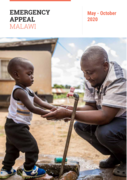
Coronavirus Disease-19 (COVID-19) was declared a global pandemic on 11 March 2020, and Malawi declared its first case on 2 April. As of 30 April, there were 36 confirmed positive cases of COVID-19 and 3 deaths. A State of Disaster was declared by President Arthur Peter Mutharika on 20 March and a 21...
A module from the suite of health service capacity assessments in the context of the COVID-19 pandemic, Interim Guidance 20 October 2020.
This self-assessment tool is designed for acute health-care facilities (i.e. tertiary and secondary) but can be modified for the use in long-term care facilities...
A manual intended for medical and other personnel responsible for humanitarian activities in armed conflicts. It covers the following topics: setting up a health-care system that meets the essential needs of war victims, particularly of displaced persons; public health tools most frequently used for...
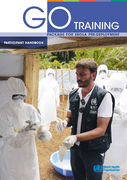
GO pre-deployment training: participant handbook
recommended
This is a pre-deployment training, tailored specially to the Ebola outbreak in West Africa, offered to WHO personnel, consultants, and key partners. The material covered in modules 1-4 is applicable and useful to frontline response workers, national and international. Only Module 5, which focuses on...
World Health Organization, Food and Agriculture Organization of the United Nations & World Organisation for Animal Health. (2021). Antimicrobial resistance and the United Nations sustainable development cooperation framework: guidance for United Nations country teams. World Health Organization
The African Development Bank has launched a consultation process with health ministers and other partners as it develops a strategy to drive enhanced access to health services across Africa through 2030.
Input from ministers in the Bank’s 54 regional member countries, development partners and c...
Taking a multisectoral, One Health approach is necessary to address complex health threats at the human-animal-environment interface, such as rabies, zoonotic influenza, anthrax, and Rift Valley fever. Such zoonotic diseases continue to have major impacts on health, livelihoods, and economies, and c...

In 2013 the World Health Organization (WHO) published the report Protecting health from climate change:vulnerability and adaptation assessment. The aim was to provide basic and flexible guidance on conducting national or subnational assessments of current and future vulnerability (the susceptibilit...

The 2012 NDRMP lays out the Disaster Risk Management (DRM) architecture of the country and provides guidance for DRM intervention at all levels. However, implementation has been slow and resource challenges exist throughout the government.
The PNG government’s policy and institutional framework...
The PNG government’s policy and institutional framework...
A Training Curriculum for Providers
