
Filter
10069
Filtered Results: 10069
Text search:
development
countries
Featured
Recommendations
785
New Publications
2430
Language
Document type
No document type
5359
Studies & Reports
2114
Guidelines
1117
Manuals
508
Strategic & Response Plan
397
Fact sheets
232
Training Material
171
Situation Updates
81
Resource Platforms
34
Infographics
26
Brochures
18
Online Courses
5
Videos
4
App
2
Dashboards/Maps
1
Countries / Regions
Global
547
Kenya
309
India
289
Ethiopia
225
Western and Central Europe
186
Liberia
184
Sierra Leone
179
Nepal
176
Nigeria
174
Uganda
172
South Africa
167
Africa
160
Latin America and the Carribbean
155
Myanmar / Burma
151
Rwanda
138
Malawi
133
Tanzania
133
Bangladesh
130
Zambia
122
Ghana
118
Syria
118
Ukraine
101
Namibia
99
Congo, Democratic Republic of
85
Eastern Europe
76
South Sudan
76
Philippines
75
South–East Asia Region
73
Zimbabwe
71
Lesotho
68
Asia
66
Senegal
64
Cambodia
64
Guinea
63
Indonesia
62
East and Southern Africa
57
West and Central Africa
55
Mozambique
52
Haiti
51
Cameroon
45
Yemen
45
Burkina Faso
43
Venezuela
43
Middle East and North Africa
43
Germany
40
Russia
39
Botswana
39
Afghanistan
36
Brazil
36
Pakistan
35
Colombia
32
Eastern Europe and Central Asia
29
Sudan
28
Eswatini/ Swaziland
28
Central African Republic
27
Vietnam
26
Thailand
24
Mali
23
Somalia
23
Lebanon
22
Benin
21
China
21
Jordan
21
Western Pacific Region
21
Tajikistan
17
Moldova
17
Albania
15
Sri Lanka
15
Iraq
15
Laos
14
Paraguay
14
Peru
13
Côte d’Ivoire / Ivory Coast
13
USA
12
Argentina
12
Turkey
11
Madagascar
11
Iran
10
North America
10
Palestine
10
Chad
10
Chile
9
Burundi
9
Egypt
9
Libya
9
North Macedonia
8
Togo
8
Niger
8
Papua New Guinea
8
Georgia
8
Angola
8
Mexico
7
El Salvador
7
Gambia
7
Armenia
7
Southern Africa
7
Poland
7
Honduras
7
Ecuador
7
Guatemala
7
Timor Leste/ East Timor
6
Kyrgyzstan
6
Jamaica
6
Bolivia
6
Romania
6
Kazakhstan
5
Guinea-Bissau
5
Hungary
5
Turkmenistan
5
Spain
5
Serbia
4
Malaysia
4
Saudi Arabia
4
Japan
4
Portugal
4
Nicaragua
4
Greece
4
Estonia
3
Morocco
3
Italy
3
Croatia
3
Mauritius
3
Tunisia
3
United Kingdom
3
Belarus
3
Bosnia and Herzegovina
3
North Korea
2
Canada
2
Singapore
2
Congo-Brazzaville
2
Uzbekistan
2
Mongolia
2
Qatar
2
Bulgaria
2
Mauritania
2
Dominican Republic
2
Lithuania
2
Gabon
2
France
2
Azerbaijan
2
Israel
2
Djibouti
2
Slovakia
2
Bhutan
2
Switzerland
1
Fiji
1
Vanuatu
1
Ireland
1
Uruguay
1
Denmark
1
Belgium
1
Maldives
1
Norway
1
French Guyana
1
Latvia
1
Belize
1
Costa Rica
1
Eritrea
1
Panama
1
Solomon Islands
1
Authors & Publishers
Publication Years
Category
Countries
3412
Clinical Guidelines
662
Key Resources
625
Public Health
564
Women & Child Health
551
Capacity Building
166
Pharmacy & Technologies
87
Annual Report MEDBOX
3
Toolboxes
Mental Health
763
HIV
756
COVID-19
734
TB
528
Disability
470
Planetary Health
442
NTDs
326
AMR
308
Conflict
293
Ebola & Marburg
272
Caregiver
255
Health Financing Toolbox
235
NCDs
211
Global Health Education
211
Refugee
210
Rapid Response
186
Pharmacy
159
Natural Hazards
129
Malaria
129
2.0 Rapid Response
109
Zika
63
Cholera
61
Social Ethics
53
Polio
51
Specific Hazards
46
Typhoon
5
South Sudan
2

WHO-OHCHR launch new guidance to improve laws addressing human rights abuses in mental health care
Ahead of World Mental Health Day, the World Health Organization (WHO) and the Office of the High Commissioner on Human Rights (OHCHR) are jointly launching a new guidance, entitled "Mental health, h...

Small drinking-water supplies commonly experience operational, managerial, technical and resourcing challenges that impact their ability to deliver safe and reliable services. The needs and opportunities associated with these supplies therefore warrant explicit consideration in policies and regulati...
EVALUATION REPORT | The purpose of the evaluation is to strengthen child protection programming in the context of emergencies by assessing UNICEF’s performance and drawing lessons and recommendations that will influence ongoing and future programmes, in both preparedness and response. Apart from g...
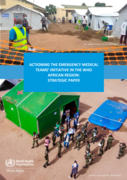
Emergency medical teams (EMT) are first response health care providers – doctors, nurses, paramedics, and others – during outbreaks and emergencies or disasters, working with governments, charities such as nongovernmental organizations (NGOs), armies, and international organizations such as the ...
The National Strategic Plan for HIV/AIDS and STIs 2017-2024 spells out the objectives and targets that we have jointly committed to achieve. The plan describes the strategies and activities that will need to be implemented on the ground across India's 36 States and Union Territories with the help of...
Severe asthma is associated with high morbidity, mortality, and health care utilization, but its burden in Africa is unknown. This article wants to determine the burden (prevalence,
mortality, and activity and work impairment) of severe asthma in 3 countries in East Africa: Uganda, Kenya, and Ethio...
Pneumonia kills more children than any other illness – more than AIDS, malaria and measles combined. Over 2 million children die from pneumonia each year, accounting for almost 1 in 5 under five deaths worldwide. Yet, little attention is paid to this disease. This joint UNICEF/WHO report examines ...

The primary audience for the guideline is policy makers and health programme managers of MNCH and immunization programmes in ministries of health where decisions are made and policies created on the use and implementation of homebased records.
The guideline is also aimed at health providers who use...
The attainment of Zambia’s goal of being a prosperous and middle-income country by 2030 as stipulated in its Vision 2030 is dependent on among others, a healthy and productive population. Therefore, the Government of the Republic of Zambia (GRZ) has prioritized health as a key socio-economic inves...

WHY THIS GUIDE?
Because, in the face of crises and emergencies, it is vital to include a human rights perspective in responses. Vulnerable groups face major obstacles to accessing and benefiting from prevention, mitigation, and health care policies due to structural barriers of inequality. To offer...
1.1 Why this course is needed
The first few hours and days of a newborn baby’s life are a critical window for establishing breastfeeding and for providing mothers with the support they need to breastfeed successfully. Since 1991, the Baby-friendly Hospital Initiative (BFHI) has helped to motivate...

There is growing understanding and high-level endorsement of the importance of strong collaborative multisectoral approaches to address a broad range of social, economic and governance issues for the prevention and control of noncommunicable disease (NCDs) and mental health conditions. In 2019, Worl...
Ethiopia saw a six-fold increase in confirmed COVID-19 cases between June and August, with 5,689 cases by end June compared to 34,058 cases as of 19 August. Ethiopia also registered more than 13,000 recoveries and more than 600 deaths. As of the last week of August, Ethiopia was leading eastern Afri...

WASH and Health working together: a ‘how-to’ guide for neglected tropical disease programmes
recommended
2nd edition. This toolkit provides step-by-step guidance to NTD programme managers and partners on how to engage and work collaboratively with the WASH community to improve delivery of water, sanitation and hygiene services to underserved population affected by many neglected tropical diseases. The ...

In the face of rapid increases in the number of hospitalizations due to COVID-19 in Latin America and the Caribbean, coupled with shortages of human and material resources, including medical equipment and gases, there is a need to redesign models of care in the Region to optimize available resources...
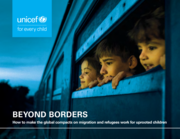
Beyond borders. How to make the global compacts on migration and refugees work for uprooted children
The report presents successful case studies from around the world, including the implementation of minimum protection standards for refugee children in Germany, cross border child protection systems in West Africa, and finding alternatives to the detention of migrant children in Zambia. Other countr...
Safe disposal of children’s feces is as essential as the safe disposal of adults’ feces. Th is brief provides an overview of the available data on child feces disposal in Burkina Faso and concludes with ideas to strengthen safe disposal practices, based on emerging good practice. Th e Joint Mon...
24 Nov. 2021
Action against gender-based violence being pushed to the outlying margins of the global COVID-19 response
A new Oxfam report shows an undeniable increase in gender-based violence (GBV) during the COVID-19 pandemic around the world to which too many governments and donors are not doi...
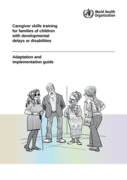
This adaptation and implementation guide is part of a five-part Caregiver skills training for families of children with developmental delays or disabilities (CST) package providing guidance on caregiver skills training for families of children aged 2–9 years with developmental delays or disabiliti...
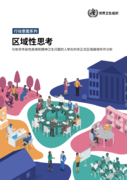
This report includes analysis from informal regional consultations in the African Region, the Caribbean and North America, Latin America, South-East Asia Region, European Region, Eastern Mediterranean Region, alongside three forums in the Western Pacific Region. It analyses the overarching similarit...
