Filter
3997
Filtered Results: 3997
Text search:
disability
act
Featured
Recommendations
360
New Publications
876
Language
Document type
No document type
2381
Studies & Reports
665
Guidelines
395
Manuals
228
Strategic & Response Plan
160
Training Material
64
Fact sheets
50
Situation Updates
26
Resource Platforms
9
Infographics
8
Brochures
7
Online Courses
3
Videos
1
Countries / Regions
Global
202
India
182
Kenya
101
South Africa
76
Myanmar / Burma
76
Western and Central Europe
75
Ethiopia
73
Uganda
66
Nepal
65
Bangladesh
64
Malawi
62
Latin America and the Carribbean
61
Ukraine
54
Syria
54
Zambia
54
Ghana
46
Sierra Leone
45
Namibia
44
Rwanda
43
Philippines
42
Africa
39
Nigeria
38
Liberia
38
Tanzania
35
Indonesia
30
Lesotho
28
Zimbabwe
28
Cambodia
28
South–East Asia Region
28
Lebanon
26
Eastern Europe
24
South Sudan
24
Mozambique
23
Asia
19
Congo, Democratic Republic of
19
Cameroon
18
Eastern Europe and Central Asia
14
Russia
14
Venezuela
13
Jordan
13
Vietnam
13
Yemen
13
Paraguay
12
Brazil
12
Thailand
11
Botswana
11
Pakistan
11
Afghanistan
10
Haiti
10
Germany
10
Middle East and North Africa
10
Western Pacific Region
10
Burkina Faso
9
Sudan
9
Iraq
9
Eswatini/ Swaziland
9
Laos
8
East and Southern Africa
8
China
7
Senegal
7
West and Central Africa
7
North America
7
Sri Lanka
7
Colombia
6
USA
6
Somalia
6
Turkey
5
Peru
5
Guinea
5
Moldova
5
Egypt
5
Central African Republic
5
Tajikistan
4
Iran
4
Albania
4
United Kingdom
4
Palestine
4
Madagascar
4
Guatemala
4
Mexico
3
Kazakhstan
3
Bolivia
3
Papua New Guinea
3
Libya
3
North Macedonia
2
Timor Leste/ East Timor
2
Serbia
2
Benin
2
Canada
2
Singapore
2
Estonia
2
Kyrgyzstan
2
Malaysia
2
Lithuania
2
Turkmenistan
2
Jamaica
2
Portugal
2
Spain
2
Azerbaijan
2
Belarus
2
Romania
2
Greece
2
Honduras
2
Angola
2
Bhutan
2
North Korea
1
Switzerland
1
El Salvador
1
Togo
1
Chile
1
Fiji
1
Niger
1
Uzbekistan
1
Burundi
1
Qatar
1
Italy
1
Armenia
1
Guinea-Bissau
1
Croatia
1
Hungary
1
Ireland
1
Saudi Arabia
1
Japan
1
Belgium
1
Mauritius
1
Israel
1
Bosnia and Herzegovina
1
Latvia
1
Southern Africa
1
Argentina
1
Nicaragua
1
Djibouti
1
Slovakia
1
Poland
1
Mali
1
Chad
1
Ecuador
1
Authors & Publishers
Publication Years
Category
Countries
1373
Public Health
273
Clinical Guidelines
269
Women & Child Health
230
Key Resources
219
Capacity Building
60
Pharmacy & Technologies
11
Annual Report MEDBOX
2
Toolboxes
Disability
675
Mental Health
559
COVID-19
236
NTDs
198
HIV
145
Conflict
143
Planetary Health
110
NCDs
108
TB
101
Caregiver
85
Refugee
74
Global Health Education
74
Natural Hazards
44
Health Financing Toolbox
37
Rapid Response
33
AMR
29
Ebola & Marburg
28
2.0 Rapid Response
27
Social Ethics
17
Pharmacy
17
Malaria
17
Zika
16
Specific Hazards
13
Polio
4
Cholera
2
Typhoon
1
This manual for trainers outlines the information and materials required to undertake training in line with the WASH FIT Guide, including background documents, the content of the recommended training modules and training evaluation approaches. The modular approach outlined enables trainers to decide...

The article "Non-communicable diseases, injuries, and mental ill-health in Africa: the role of the Africa Centres for Disease Control and Prevention" examines the role of the Africa CDC in addressing non-communicable diseases (NCDs), injuries, and mental health across the continent. It highlights ho...
The WHO Guidelines on risk reduction of cognitive decline and dementia provide evidence-based recommendations on lifestyle behaviours and interventions to delay or prevent cognitive decline and dementia. These WHO Guidelines are an important tool for health care providers as well as governments, pol...
Prevention of Cardiovascular Disease. Pocket Guidelines for Assessment and Management of Cardiovascular Risk
recommended
These pocket guidelines provide evidence-based guidance on how to reduce the incidence of first and recurrent clinical events due to coronary heart disease (CHD), cerebrovascular disease (CeVD) and peripheral vascular disease in two categories of people
The purpose of this TPP is to communicate the minimum and ideal characteristics desired to meet the need for discriminating low levels of risk for transmission, i.e. targeted prevalence thresholds in the surveyed areas. An in vitro diagnostic test is needed for the detection of analyte(s) specific t...
Part of Comprehensive Primary Health Care
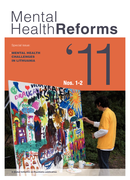
Special issue: Mental Health Challenges in Lithuania
Nos. 1-2 '11
By December of 2019, an estimated 5.3 million Venezuelans would have left the country, migrating in search of opportunities, health services and an overall search to improve the socio-economic conditions of themselves and their families. This is the largest migration in the history of the Americas. ...
The Lancet. 13 March 2022. doi: 10.1016/S0140-6736(21)02868-3. Previous Global Burden of Diseases, Injuries, and Risk Factors Study (GBD) studies have reported
national health estimates for Ethiopia. Substantial regional variations in socioeconomic status, population, demography, and access to hea...
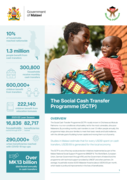
The Social Cash Transfer Programme (SCTP)—locally known in Chichewa as Mtukula Pakhomo—is a non-conditional critical safety net for the most vulnerable, ultra-poor Malawians. By providing monthly cash transfers to over 1.3 million people annually, this programme helps ultra-poor families to meet...

Schistosomiasis is a parasitic disease caused by infection with
Schistosoma trematodes. The disease affects poor rural communities
but has spread to urban areas and to tourists visiting endemic areas
The Kigali Declaration on neglected tropical diseases (NTDs) is a high-level, political declaration which aims to mobilise political will and secure commitments to achieve the Sustainable Development Goal 3 (SDG3) target on NTDs and to deliver the targets set out in the World Health Organization’s...
The World Health Organization (WHO) defines mental health as ‘a state of well-being in which the individual realizes his or her own abilities, can cope with the normal stresses of life, can work productively and fruitfully, and is able to make a contribution to his or her community’. Mental illn...

Myanmar 2019 Humanitarian needs overview
recommended
Over 244,000 displaced people remain in camps or camp-like situations in Kachin, Shan, Rakhine
and Kayin states. Children make up at least 50 per cent of this population, while women and„Myanmar: 2019 Humanitarian Needs Overview - Myanmar“. ReliefWeb. Zugegriffen 4. Januar 2019. https://reliefw...