
Filter
3137
Filtered Results: 3137
Text search:
Pediatric
Treatment
Featured
Recommendations
325
New Publications
746
Language
Document type
No document type
1840
Guidelines
511
Studies & Reports
409
Manuals
155
Training Material
65
Strategic & Response Plan
59
Fact sheets
54
Resource Platforms
18
Infographics
11
Situation Updates
6
Brochures
5
Online Courses
3
Videos
1
Countries / Regions
India
202
Global
115
Kenya
92
South Africa
83
Tanzania
62
Africa
59
Ethiopia
54
Malawi
53
Zambia
53
Uganda
51
Nigeria
49
Western and Central Europe
41
Bangladesh
41
Nepal
40
Sierra Leone
38
Rwanda
34
Latin America and the Carribbean
34
Namibia
33
Liberia
32
Lesotho
28
Zimbabwe
27
Brazil
24
Russia
24
Ghana
23
Eastern Europe
23
Mozambique
21
Ukraine
20
Syria
19
Myanmar / Burma
19
Philippines
18
Cambodia
18
Asia
15
Indonesia
15
Congo, Democratic Republic of
14
South–East Asia Region
13
Paraguay
13
Eswatini/ Swaziland
13
Germany
12
Colombia
11
Burkina Faso
10
Venezuela
10
Botswana
10
Haiti
9
Pakistan
9
Argentina
8
South Sudan
8
Chile
7
Senegal
7
Bolivia
7
Angola
7
Cameroon
6
Albania
6
Peru
6
USA
6
West and Central Africa
6
Middle East and North Africa
6
Eastern Europe and Central Asia
6
Mali
6
Ecuador
6
Thailand
5
Guinea-Bissau
5
East and Southern Africa
5
Benin
4
Jordan
4
Lebanon
4
Sudan
4
Georgia
4
Tajikistan
3
Turkey
3
Afghanistan
3
Guinea
3
Western Pacific Region
3
North America
3
Spain
3
Southern Africa
3
Yemen
3
Bhutan
3
Iraq
3
Madagascar
3
North Macedonia
2
Mexico
2
Iran
2
Estonia
2
Kyrgyzstan
2
Armenia
2
Saudi Arabia
2
France
2
Portugal
2
Papua New Guinea
2
Moldova
2
Sri Lanka
2
Egypt
2
Romania
2
Central African Republic
2
El Salvador
1
Gambia
1
Togo
1
China
1
Fiji
1
Laos
1
Malaysia
1
Morocco
1
Qatar
1
Bulgaria
1
Mauritania
1
Hungary
1
Lithuania
1
Japan
1
Tunisia
1
United Kingdom
1
Belarus
1
Israel
1
Latvia
1
Côte d’Ivoire / Ivory Coast
1
Oman
1
Vietnam
1
Nicaragua
1
Slovakia
1
Greece
1
Palestine
1
Poland
1
Chad
1
Libya
1
Somalia
1
Solomon Islands
1
Authors & Publishers
Publication Years
Category
Countries
1162
Clinical Guidelines
401
Women & Child Health
260
Public Health
121
Capacity Building
85
Key Resources
79
Pharmacy & Technologies
26
Annual Report MEDBOX
1
Toolboxes
HIV
337
Mental Health
297
TB
268
COVID-19
169
Caregiver
120
AMR
105
NTDs
103
Disability
88
NCDs
82
Pharmacy
77
Ebola & Marburg
55
Conflict
50
Rapid Response
38
Malaria
38
Refugee
35
Planetary Health
31
Zika
22
Cholera
18
Global Health Education
18
Health Financing Toolbox
13
Polio
13
Natural Hazards
11
2.0 Rapid Response
10
Specific Hazards
6
Social Ethics
5
Typhoon
1
HIV/AIDS Programme
A learning resource for facilitators, parents, caregivers, and persons with cerebral palsy | Version 1 - Released March 2008
These guidelines have been prepared by the Sub directorate: Maternal Health for the guidance of health workers (doctors and midwives) providing obstetric, surgical and anaesthetic services for pregnant women in district clinics, health centres and district hospitals. These guidelines are intended fo...
Towards a world free of tuberculosis
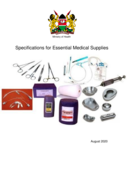
August 2020.
In December 2018, the President launched the UHC pilot covering four strategically selected counties-Isiolo, Kisumu, Machakos and Nyeri. It isplanned that by the year 2022, all persons in Kenya will be able to use the essential services they need for their health...

Evidence- and rights-based national policies, guidelines and legislation play a key role in improving sexual, reproductive, maternal, newborn, child and adolescent health (SRMNCAH), framing the enabling environment for equitable provision and accessibility of quality services. The SRMNCAH policy sur...
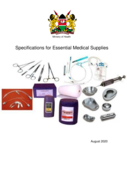
August 2020.
Essential diagnostic products areconsidered an integral part of UHC, they are an indispensable element for delivery ofservices andare also a requirement for qualitycare. Despite this realization, a review of the UHC pilot in September 2019 es...


This training module on malaria case management has been developed to support the staff involved in malaria control and elimination programmes in the effective organization of malaria diagnosis and case management services

A historic funding crisis is threatening to unravel decades of progress unless countries can make radical shifts to HIV programming and funding. The report highlights the impact that the sudden, large-scale funding cuts from international donors are having on countries most affected by HIV. Yet it a...
This operational guidance provides a structured approach to support countries in sustaining priority services for HIV, viral hepatitis and sexually transmitted infections in the context of reduced external funding. The guidance is intended for national governments, public health programmes, communit...

Growing emergencies and displacements across the world demand increasingly complex interventions and responses. The World Health Organization (WHO) has developed Malaria control in emergencies: a field manual to provide technical guidance to help partners respond effectively to malaria in emergency ...

Despite being a preventable and curable infectious disease, tuberculosis (TB) has continued to elude global controll efforts. In 2023, 8.2 milion people with TB were diagnosed and notified to the WHO, the hightest number ever reported since WHO began tracking.
Tuberculosis (TB) remains a significant global health challenge, with an estimated annual death rate of approximately one per 100,000 people in countries with low TB prevalence. Rapid reductions in TB cases and deaths worldwide depend on research breakthroughs, including the development of new vac...

Drawing on the World Health Organization’s package of NCD best buys, the report demonstrates how these evidence-based measures can help countries reduce premature deaths, strengthen health systems, and advance progress towards the Sustainable Development Goals. It provides policymakers, donors, ad...
The objective of this book is to provide health workers with easily accessible information on important aspects of the medicines commonly used at primary care level in Zimbabwe. Medicines are a crucial part of the management of most of our patients, yet many medicines are potentially dangerous if no...
