
Filter
5142
Filtered Results: 5142
Text search:
prevalence
surveys
Featured
Recommendations
315
New Publications
1510
Language
Document type
No document type
3260
Studies & Reports
1002
Guidelines
387
Strategic & Response Plan
168
Manuals
136
Fact sheets
93
Situation Updates
33
Training Material
31
Infographics
23
Resource Platforms
6
Online Courses
2
Brochures
1
Countries / Regions
India
190
Global
186
Kenya
185
Ethiopia
139
Nepal
133
Nigeria
123
Uganda
115
Malawi
110
South Africa
107
Rwanda
104
Tanzania
104
Zambia
97
Western and Central Europe
93
Myanmar / Burma
91
Sierra Leone
89
Bangladesh
87
Ghana
78
Latin America and the Carribbean
78
Senegal
73
Namibia
73
Liberia
73
Africa
71
Ukraine
61
Zimbabwe
59
Lesotho
58
Philippines
55
Cambodia
54
Indonesia
51
Congo, Democratic Republic of
50
Burkina Faso
42
Haiti
40
Asia
40
Eastern Europe
40
Syria
37
Mozambique
36
South Sudan
35
South–East Asia Region
34
Botswana
32
Russia
27
Benin
26
Cameroon
26
Eswatini/ Swaziland
25
East and Southern Africa
22
Pakistan
22
West and Central Africa
19
Brazil
19
Madagascar
18
Venezuela
16
Middle East and North Africa
15
Germany
14
Sudan
13
Yemen
13
Colombia
12
Afghanistan
12
Guinea
12
Tajikistan
11
Eastern Europe and Central Asia
11
Somalia
11
Thailand
10
Albania
10
Central African Republic
10
China
9
Peru
9
Jordan
9
Lebanon
9
Moldova
9
Paraguay
8
Vietnam
8
Georgia
8
Togo
7
North America
7
Egypt
7
Mali
7
Sri Lanka
6
Iraq
6
North Macedonia
5
Kyrgyzstan
5
Burundi
5
Southern Africa
5
Argentina
5
Turkey
4
Iran
4
Niger
4
Western Pacific Region
4
United Kingdom
4
Papua New Guinea
4
Timor Leste/ East Timor
3
Serbia
3
Chile
3
Singapore
3
Laos
3
Armenia
3
USA
3
Guinea-Bissau
3
Turkmenistan
3
Jamaica
3
Portugal
3
Spain
3
Belarus
3
Côte d’Ivoire / Ivory Coast
3
Palestine
3
Gambia
2
Kazakhstan
2
Canada
2
Estonia
2
Qatar
2
Saudi Arabia
2
France
2
Mauritius
2
Azerbaijan
2
Bosnia and Herzegovina
2
Bolivia
2
Romania
2
Poland
2
Honduras
2
Angola
2
Libya
2
Guatemala
2
Mexico
1
Congo-Brazzaville
1
Uzbekistan
1
Malaysia
1
Mongolia
1
Bulgaria
1
Dominican Republic
1
Croatia
1
Hungary
1
Ireland
1
Japan
1
Denmark
1
Belgium
1
Maldives
1
Israel
1
Latvia
1
Djibouti
1
Slovakia
1
Greece
1
Chad
1
Bhutan
1
Ecuador
1
Authors & Publishers
Publication Years
Category
Countries
2471
Public Health
264
Clinical Guidelines
251
Women & Child Health
226
Key Resources
165
Capacity Building
41
Pharmacy & Technologies
27
Toolboxes
HIV
522
Mental Health
469
TB
301
Disability
221
COVID-19
192
NTDs
190
AMR
168
NCDs
147
Conflict
103
Planetary Health
99
Global Health Education
66
Malaria
65
Caregiver
63
Refugee
56
Ebola & Marburg
44
Rapid Response
32
Natural Hazards
26
Pharmacy
25
Health Financing Toolbox
22
2.0 Rapid Response
20
Polio
18
Zika
12
Cholera
7
Social Ethics
5
Specific Hazards
2
South Sudan
2

This guide provides a practical overview of the process of developing a Theory of Change, focusing on using a stakeholder-driven, workshop approach to achieve this.

This document seeks to help health communication professionals working on the topic of immunization more effectively communicate about Events Supposedly Attributed to Vaccination and Immunization (ESAVI) by building trust in National Immunization Programs, understanding risk perceptions related to v...

An Indicator-based Approach - This manual presents an indicator-based approach for rapidly assessing pharmaceutical management systems and programs. The manual contains a set of 46 indicators of performance, grouped under eight topics of pharmaceutical management, with each topic being covered by a ...
Mood disorders
Chapter E.1
2015 edition
Responding to a polio outbreak. Guidelines
recommended
The occurrence of a case of wild polio in a previously polio free area as presently in Syria, whether through importation, laboratory accident, or mutation of vaccine virus (VDPV), should be considered a public health emergency, that requires a rapid and high quality response as utmost priority
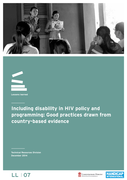
The purpose of this document is to share good practices and processes concerning the inclusion of disability issues in HIV policy and programming, drawing on specific experiences in Senegal, Ethiopia, Kenya, Rwanda and Cambodia and on lessons learned at international AIDS conferences.

Scientific Paper
Evaluation report
September 2014
The report provides the much-needed evidence to design interventions for children in Kenya and as such we urge partners to use this report as a document for planning for children.
Screening programmes for tuberculosis (TB) among immigrants rarely consider the heterogeneity of
risk related to migrants’ country of origin. We assess the performance of a large screening programme in asylum seekers by analysing (i) the difference in yield and numbers needed to screen (NNS) by c...
Submitted to the US Agency for International Development by the Systems for Improved Access to Pharmaceuticals and Services (SIAPS) Program. Arlington, VA: Management Sciences for Health. Submitted to the United Nations Children’s Fund by JSI, Arlington, VA: JSI Research & Training Institute, Inc....
n 2015, Member States of the United Nations adopted the 2030 Agenda for Sustainable Development and its accompanying Sustainable Development Goals (SDGs), with the third goal of the agenda focusing on health – good health and well-being. This has the attainment of universal health coverage (UHC) a...
PLOS ONE | DOI:10.1371/journal.pone.0133869 July 28, 2015, p.1-16

In Kenya, the bacterial infections that contribute most to human disease are often those in which re-‐sistance is most evident. Examples are multidrug-‐resistant enteric bacterial pathogens such as typhoid, ...
The aim of this “model contingency plan” is to assist programme managers and planners in devel-oping a national, context-specific, dengue outbreak response plan in order to: (a) detect a dengue outbreak at an early stage through clearly defined and validated alarm signals; (b) precisely define w...
