
Filter
5469
Filtered Results: 5469
Text search:
Impact
on
human
resources
for
health
and
policy
response
Featured
Recommendations
472
New Publications
1435
Language
Document type
No document type
2934
Studies & Reports
1071
Guidelines
658
Manuals
323
Strategic & Response Plan
281
Training Material
82
Fact sheets
58
Situation Updates
43
Resource Platforms
8
Infographics
8
Online Courses
2
Brochures
1
Countries / Regions
Global
307
Kenya
178
India
143
South Africa
104
Uganda
104
Western and Central Europe
103
Ethiopia
103
Sierra Leone
99
Myanmar / Burma
97
Liberia
94
Nepal
90
Nigeria
88
Africa
87
Latin America and the Carribbean
86
Malawi
78
Zambia
78
Syria
77
Tanzania
72
Bangladesh
71
Ghana
65
Namibia
64
Ukraine
63
Rwanda
58
South–East Asia Region
44
Lesotho
40
Philippines
40
Congo, Democratic Republic of
40
Asia
39
South Sudan
38
Eastern Europe
37
Zimbabwe
33
East and Southern Africa
32
Indonesia
32
Guinea
31
Cambodia
30
West and Central Africa
27
Senegal
26
Yemen
25
Botswana
25
Mozambique
22
Haiti
22
Middle East and North Africa
22
Russia
22
Venezuela
21
Pakistan
21
Afghanistan
19
Eastern Europe and Central Asia
19
Brazil
19
Thailand
15
Jordan
15
Western Pacific Region
15
Sudan
15
Lebanon
13
Eswatini/ Swaziland
13
Cameroon
12
Burkina Faso
12
Somalia
12
Colombia
11
Moldova
11
Central African Republic
11
Iraq
11
Laos
10
Germany
10
Vietnam
10
Mali
10
Turkey
9
China
9
Iran
8
Peru
8
Georgia
8
Albania
7
USA
7
North America
7
Sri Lanka
7
Côte d’Ivoire / Ivory Coast
6
Papua New Guinea
6
Libya
6
Tajikistan
5
Chile
5
Hungary
5
Jamaica
5
Southern Africa
5
Romania
5
Palestine
5
Poland
5
Ecuador
5
Timor Leste/ East Timor
4
Burundi
4
Egypt
4
North Macedonia
3
Mexico
3
Benin
3
Gambia
3
Fiji
3
Niger
3
Guinea-Bissau
3
Croatia
3
Saudi Arabia
3
Paraguay
3
Turkmenistan
3
Mauritius
3
Portugal
3
Belarus
3
Bolivia
3
Argentina
3
Greece
3
Angola
3
Guatemala
3
El Salvador
2
Serbia
2
Togo
2
Kazakhstan
2
Canada
2
Estonia
2
Kyrgyzstan
2
Morocco
2
Bulgaria
2
Italy
2
Armenia
2
Dominican Republic
2
Japan
2
Tunisia
2
Spain
2
Azerbaijan
2
Slovakia
2
Honduras
2
Chad
2
Bhutan
2
Singapore
1
Uzbekistan
1
Malaysia
1
Vanuatu
1
Qatar
1
Lithuania
1
Ireland
1
Belgium
1
France
1
Maldives
1
United Kingdom
1
Norway
1
Bosnia and Herzegovina
1
Belize
1
Costa Rica
1
Panama
1
Nicaragua
1
Djibouti
1
Authors & Publishers
Publication Years
Category
Countries
1869
Key Resources
436
Public Health
315
Clinical Guidelines
304
Women & Child Health
297
Capacity Building
81
Pharmacy & Technologies
33
Annual Report MEDBOX
2
Toolboxes
HIV
534
COVID-19
434
Mental Health
389
Planetary Health
287
TB
276
Disability
230
Conflict
200
AMR
162
Ebola & Marburg
130
Caregiver
129
Refugee
120
Global Health Education
119
Rapid Response
106
NTDs
100
Health Financing Toolbox
99
Natural Hazards
90
2.0 Rapid Response
84
NCDs
71
Malaria
64
Pharmacy
62
Specific Hazards
44
Polio
29
Zika
25
Social Ethics
21
Cholera
19
Typhoon
3
South Sudan
1
After the earthquake in Türkiye-Syria in February 2023 an emergency response was provided to the affected population. Young persons with disabilities were one of the social groups most affected by the crisis. These were either young persons who acquired a disability due to the earthquake, or young ...
The second edition of the WHPCA Global Atlas of Palliative Care was launched during World Hospice & Palliative Care Day 10 October. The Atlas is an update of the original WHPCA/WHO Global Atlas of Palliative care at the end of life published in 2014. It is full of useful facts and figures to support...

Country Strategic Plan Evaluations (CSPEs) encompass the WFP strategy and entirety of WFP activities during a specific period. Their purpose is twofold: 1) to provide evaluation evidence and learning on WFP's performance for country-level strategic decisions, specifically for developing the next Cou...
"National Disaster Management Guidelines: Management
of Chemical (Terrorism) Disasters (are intended to
focus on all aspects of the disaster management
cycle, including prevention measures such as
surveillance and intelligence, mitigation of direct
and indirect risks, preparedness in terms of
...
16 Days of Activism against gender-based violence campaign ended on 10 December. A series of events organized by UNHCR and other agencies operating in the Rohingya response increased attention on issues in particular affecting women and girls: The Refugee Relief an...
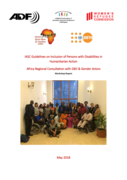
This one-day consultation workshop brought together both organizations of persons with disabilities (DPOs) and humanitarian actors to:-Identify priority areas for gender mainstreaming and GBV prevention and response across the Guidelines.-Collect useful resources, promising practices and other relev...

The annual Development Co-operation Report brings new evidence, analysis and ideas on
sustainable development to members of the OECD Development Assistance Committee (DAC) and the international community more broadly. The objectives are to promote best practices and innovation in development co-ope...
The BRACED Myanmar Alliance was a three-year project aiming to ‘build the resilience of 350,000 people across Myanmar to climate extremes’. The project worked in 7 states, 8 townships and 155 communities. The main impact for project populations was intended to be ‘improved well-being and reduc...
The purpose of this manual is to define a limited number of indicators that will objectively describe the management and use of antimicrobials in hospitals and to provide tools and step-by-step instructions for designing and carrying out an assessment of antibiotic use and management in hospitals. T...

This assessment is the first of its kind to be conducted in the south-eastern region of Myanmar. It is an important contribution to ensuring the full inclusion of women and children in Myanmar’s political, social, and cultural systems, with a specific focus on the issue of gender-based violence (G...

A Capstone Project submitted in partial fulfillment of the requirements for the Master of Science Degree in Counselor Education at Winona State University | This article reviews the use of Art Therapy to treat children who suffer from Posttraumatic Stress Disorder. It explores the clinical need for ...
This profile is part of a series of Climate Risk Country Profiles developed by the World Bank Group (WBG). The country profile synthesizes most relevant data and information on climate change, disaster risk reduction, and adaptation actions and policies at the country level. The country profile seri...

his profile is part of a series of Climate Risk Country Profiles developed by the World Bank Group (WBG). The country profile
synthesizes most relevant data and information on climate change, disaster risk reduction, and adaptation actions and policies
at the country level. The country profile ser...
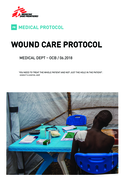
Wound care is a regular component of the package of care we offer in the majority of our health care facilities and represents a high volume of activities. The current practices in MSF projects are often based on the habits of each individual supervisor, the wound care material we off...
State of the Climate in Asia 2023
recommended
Asia remained the world’s most disaster-hit region from weather, climate and water-related hazards in 2023. Floods and storms caused the highest number of reported casualties and economic losses, whilst the impact of heatwaves became more severe, according to a new report from the World Meteorolog...
Environmental Research Volume 151, November 2016, Pages 115-123
Dengue is the world’s most important arboviral disease in terms of number of people affected. Over the past 50 years, incidence increased 30-fold: there were approximately 390 million infections in 2010. Globalization, trade, travel,...
Assessment and Guidance for Strengthening Integration of Mental Health into Primary Health Care and Community-Based Service Platforms in Ukraine
Analysis on World about Agriculture, Food and Nutrition and more; published on 23 Sep 2021 by ECA, ECLAC and 3 other organizations

The Sustainable Development Goals (SDGs) call for major societal transformations that will require significant fiscal outlays as well as private investments. The fiscal outlays cover public investments, the public provision of social services, and social protection for vulnerable populations. The ke...
The United Nations Environment Programme (UNEP) is stepping up its work on mapping zoonotic threat and protecting the environment to reduce the risk of future pandemics, such as the COVID-19 crisis currently sweeping the globe.
